Table of Contents
ToggleVintage cast iron patio furniture carries a quiet permanence that modern outdoor pieces rarely match. A weathered settee or ornate bistro chair can anchor a backyard for decades, gaining character rather than declining with age. But finding, restoring, and styling these timeless pieces requires knowledge, knowing what’s worth saving, how to strip rust without destroying patina, and where to place that heavy beauty in a contemporary setting. This guide walks you through assessing vintage cast iron, bringing tired pieces back to life, and integrating them into your outdoor space with confidence.
Key Takeaways
- Vintage cast iron patio furniture offers superior durability and timeless aesthetic appeal compared to modern outdoor pieces, with well-maintained pieces lasting decades while gaining character over time.
- Assess quality cast iron by listening for a clear ring when tapped, checking for consistent thickness of 1/4 inch or more, and inspecting for structural cracks rather than cosmetic surface damage.
- Use electrolysis or wire brushing for rust removal to preserve original metal detail, then apply rust-inhibiting primer and exterior-grade paint in 2 coats for optimal protection and longevity.
- Style vintage cast iron with intentional pairings using reclaimed wood, stone, aged metal, and plantings rather than mixing with synthetic materials to create a cohesive, curated outdoor aesthetic.
- Plan refresh cycles every 5–10 years depending on climate, and embrace weathered patina as part of the authentic charm rather than immediately repainting minor chips and wear.
Why Vintage Cast Iron Patio Furniture Is Worth the Investment
Cast iron’s longevity is its core appeal. Unlike aluminum or wrought steel furniture, cast iron doesn’t flex, fatigue, or weaken over time, a well-maintained piece from the 1920s will outlive the homeowner who restores it. The weight itself is a feature: a heavy chair won’t tip in wind, and a sturdy settee won’t rack or wobble under use.
The design language matters too. Vintage cast iron typically features ornamental detail, scrollwork, ball feet, or Art Deco geometric patterns, that reflects the era it was made. These pieces serve as functional sculpture: they’re conversation pieces in an age of stamped-metal outdoor furniture. Restoration costs (stripping, repainting, maybe minor welding) typically run $200–$800 per piece depending on size and damage, but a restored vintage settee may outperform any new equivalent in both durability and aesthetic impact.
Beyond practicality, there’s an environmental argument. Rehabbing existing furniture eliminates the embodied carbon of manufacturing new pieces and keeps material out of landfills.
Assessing Condition and Identifying Quality Cast Iron Pieces
Before committing to a restoration project, spend time understanding what you’re looking at. Quality vintage cast iron has consistent thickness throughout, typically 1/4 inch or more, with clean edges and balanced proportions. Listen for differences: tap a piece with your knuckles: good cast iron rings with a clear, true tone, not a dull thud.
Inspect seams carefully. Pieces assembled from multiple castings will have mold lines (seams where the mold was split). These are normal and add to authenticity. But, visible cracks radiating from corners or stress points signal structural trouble. A small surface crack might be cosmetic, but a deep crack through a load-bearing section (like a chair leg or settee arm) means the piece may not safely support weight.
Look at the paint or finish. Multiple layers suggest the piece has been repainted over decades, not inherently bad, but thick buildup can obscure detail. Rust under loose paint is manageable: deep pitting (erosion that creates small holes in the surface) is harder to fix without heavy grinding. Assess whether you’re willing to accept the patina or whether you want to restore to bare metal.
Spotting Rust and Structural Damage
Rust appears as orange-brown flaking or powder on the surface. Surface rust, which wipes away easily and hasn’t eaten into the metal, is almost always cosmetic. Pitting rust creates shallow craters: you can see and feel the damage but the metal beneath is sound. Deep rust appears as thick orange scale or black corrosion with white powder underneath, this indicates significant material loss.
Press a screwdriver point gently into suspect areas. If it sinks easily or punctures the metal, the rust has compromised structural integrity. On visible support points (chair legs, frame joinery), deep rust may require repair by a metal fabricator before the piece is safe to use.
Restoration Techniques for Cast Iron Furniture
Removing Rust and Preparing for Refinishing
Your approach depends on the extent of rust and the finish you want. For light surface rust on a piece you’re not disassembling, start with a wire brush or brass brush attached to a power drill, work at low speed (400–600 RPM) to avoid flinging rust everywhere. Wear safety glasses and work gloves: rust particles become sharp projectiles.
For heavier rust or prep before repainting, electrolysis is the gold standard among restorers. This electrochemical process removes rust without pitting or grinding away original metal. The setup involves a car battery charger, washing soda, steel electrode, and water in a plastic tub. Pieces soak for 12–72 hours depending on rust severity. It’s slower than sandblasting but preserves detail and avoids the aggressive heat of grinding or media blasting.
Sandblasting and grinding remove rust quickly but consume material and can round or blur fine detail on ornamental pieces. If using these methods, respect the skill curve: a novice with an angle grinder can gouge the cast iron irreversibly. Professionals rent sandblasting equipment for around $50–$100 per day: if you’re working on multiple pieces, it may be cost-effective.
Once rust is removed, immediately wipe the piece with a cloth dampened in white vinegar or a rust converter (like Ospho) to neutralize residual corrosion and prevent flash rusting. Allow to dry completely, at least 2–4 hours in warm, dry conditions. If you’re working outdoors or in humidity, a heat lamp can speed this.
Sand the surface lightly with 220-grit or 280-grit sandpaper to remove any remaining scale and provide tooth for primer adhesion. Don’t over-sand ornamental surfaces: a light once-over is enough. Vacuum and tack-wipe with a damp cloth to remove all dust.
Repainting and Sealing Your Cast Iron Pieces
Use a rust-inhibiting primer rated for metal, products like Rustoleum 7779 or Zinsser Bull’s Eye 1-2-3 work well outdoors. Apply in thin, even coats (avoid thick application that runs). Two primer coats are typical: allow drying between coats per product instructions (usually 1–3 hours).
For the finish coat, choose exterior-grade paint. Oil-based enamel or acrylic latex are both suitable: acrylic latex is easier cleanup and lower VOC, but oil-based enamel traditionally provides a harder, more durable finish. Satin or semi-gloss finishes hide dust better than flat and offer moderate sheen. Apply 2 coats, allowing proper drying time between.
For vintage accuracy, match historical colors. Art Deco furniture often featured deep forest green, burgundy, or black. Victorian pieces might be glossy black or deep blue. If you’re unsure, ask at the furniture’s source or research similar pieces from the same era and maker.
Once paint is fully cured (5–7 days for acrylic latex, longer for oil), consider a clear protective topcoat. Semi-gloss or satin polyurethane adds UV protection and water resistance, extending the life of your paint. Apply according to label directions, typically one thin coat is sufficient.
Styling Vintage Cast Iron Furniture in Modern Outdoor Spaces
Vintage cast iron works best when it’s clearly intentional. Mixing a restored 1920s settee with target-store plastic chairs reads as accidental: grouping it with complementary pieces, reclaimed wood, vintage metal accents, or quality reproductions, reads as curated.
Scale matters. A single ornate bistro chair disappears visually in a sprawling deck: it owns a corner patio or a defined seating nook. A matching pair of benches anchors a garden walkway. A large settee becomes the focal point of a small courtyard. Think about sightlines and traffic flow. Position the piece where it draws the eye without blocking passage.
Material pairings work well: cast iron with wood (a reclaimed pine table, timber pergola, or old barn siding in nearby fencing): cast iron with stone (a slate patio, brick planter, or limestone path): cast iron with aged metal (weathered copper gutters, galvanized planters, or steel fencing). These combinations create cohesion without feeling too “matched.” Avoid pairing cast iron with synthetic materials, vinyl cushions, plastic planters, or composite decking, which read as temporally mismatched.
Color can go two directions. Embrace nostalgia: dark greens, blacks, deep blues, and burgundy feel period-appropriate. Or contrast: a painted settee in white or sage green against a dark patio creates modern elegance while preserving the furniture’s historic character. If you’re indecisive, homedit interior design ideas offer visual inspiration for how vintage metals pair with contemporary palettes.
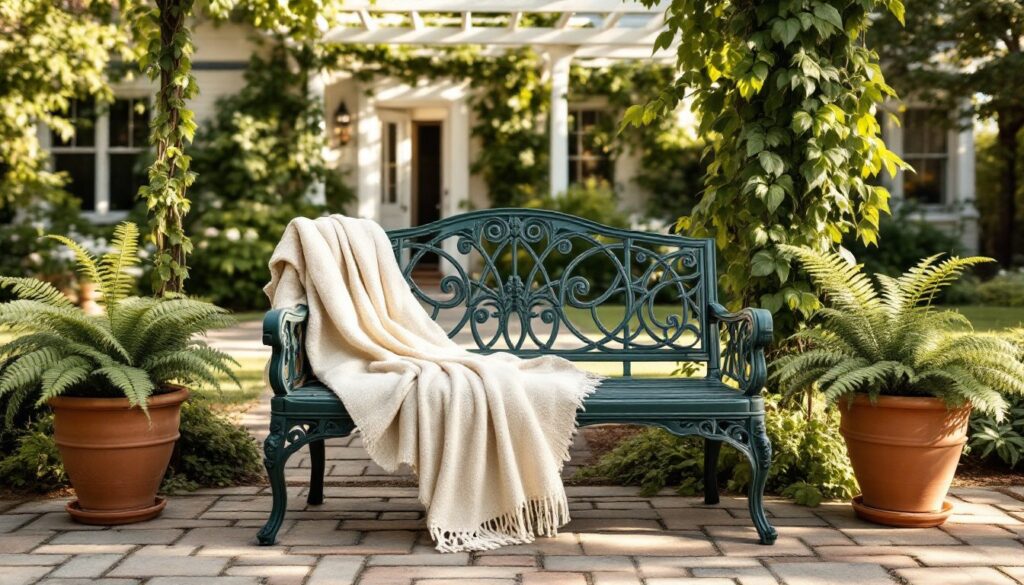
Planting softens cast iron. A trailing ivy or climbing jasmine around a settee’s frame, potted ferns flanking a bench, or a nearby shrub border contextualizes the furniture in a garden rather than making it feel orphaned. Textiles help: a vintage wool blanket draped over a bench, linen cushions with period-appropriate patterns, or a simple cotton throw warm up the metal without dominating the piece.
Weather exposure depends on your finish. Painted and sealed cast iron tolerates full sun and rain indefinitely, that’s the whole point. But, in harsh coastal climates with salt spray, consider covering pieces seasonally or placing them under a pergola or porch overhang. A light coat of paste wax applied annually (after cleaning) adds an extra water-beading layer. Country living garden plans often showcase vintage metal furniture positioned with seasonal adjustments and protective plantings worth studying.
Don’t be afraid to let cast iron age gracefully. Paint will eventually chip, exposing primer and base metal. Rather than immediately repainting, you can embrace a weathered aesthetic, it reads as authentically vintage. If the exposure becomes serious, plan a refresh cycle every 5–10 years depending on climate.
The Lasting Appeal of Restored Cast Iron
Vintage cast iron patio furniture rewards patience and thoughtful restoration. The effort to assess quality, remove rust carefully, and apply durable finishes results in pieces that improve with age, literally better-looking and more valuable five years after restoration than the day you finished.
Whether you’re furnishing a cottage garden, a formal patio, or a contemporary courtyard, Southern Living porch design ideas demonstrate how cast iron anchors outdoor spaces with permanent, sculptural grace. Start small, restore methodically, and let the pieces tell their history.