Table of Contents
ToggleYour entryway is the first visual statement guests make about your home, and it deserves more than a lonely console gathering mail and keys. An Ashley Furniture entryway table combines practical storage and display space with thoughtful design that sets the tone for your entire interior. Whether you’re outfitting a cramped apartment foyer or a grand two-story entry, Ashley’s range of sizes and styles offers solutions that work with your décor without requiring a contractor’s help or a second mortgage. These tables deliver function and form at a price point that doesn’t demand you sacrifice quality, making them a smart choice for homeowners and design-minded DIYers alike.
Key Takeaways
- Ashley Furniture entryway tables combine practical storage and quality construction at affordable prices, using engineered wood or hardwood veneers rather than hollow particleboard for lasting durability.
- Choosing the right size and design requires measuring your space, considering traffic flow, and matching proportions to ceiling height to avoid overcrowding or looking disproportionate.
- An Ashley Furniture entryway table transforms from basic storage into a design statement by starting with one anchor piece (lamp, mirror, or plant) and layering thoughtfully with two or three complementary accessories.
- Modern and contemporary styles feature clean lines and soft-close drawers in 36–48 inch widths, while rustic collections offer heavier wood and deeper shelving (42–54 inches) for extra display room.
- Regular maintenance—including dusting, immediate spill cleanup, and occasional furniture polish—keeps your Ashley table looking polished and prevents common damage like water rings and hardware loosening.
Why Ashley Furniture Entryway Tables Stand Out
Ashley Furniture has built a reputation for balancing affordability with solid construction, and their entryway tables are no exception. Most Ashley tables use quality engineered wood or hardwood veneers over a sturdy frame, not hollow particleboard that sags after a season. You’re paying for tables that will still be standing straight five years from now.
These pieces also think about real life. Drawers are deep enough to stash gloves and scarves: shelves accommodate boots and bins: tops are finished to resist water rings from wet umbrellas. Storage isn’t an afterthought, it’s built into the design from the start. That’s the difference between furniture that looks good and furniture that works hard.
Another win: Ashley’s tables come ready to install. No special tools, no mystery screws left over, no YouTube assembly rabbit hole. Most homeowners set one up in under an hour with just a screwdriver and a hex key. And because they’re mass-produced (not one-off artisan pieces), replacement hardware and parts are findable if something needs a repair down the road.
Popular Ashley Entryway Table Styles and Collections
Modern and Contemporary Options
If clean lines and minimalist appeal are your thing, Ashley’s contemporary entryway tables deliver. Look for pieces with chrome or brushed-nickel hardware, sleek tapered legs, and simple geometric shapes. Tables like the Jofran Kona collection feature dark wood tops with lower shelves in contrasting finishes, perfect for displaying a few carefully chosen decorative objects. These tables work especially well in open-concept homes where the entryway bleeds into a living room or kitchen.
Desktop dimensions typically run 36 to 48 inches wide and 12 to 16 inches deep, giving you enough surface without eating floor space. Drawers usually feature soft-close mechanisms, so they don’t slam (a nice touch if your entryway echoes into the rest of your home). Modern Ashley tables often skip ornate detailing, letting the wood grain or finish do the talking. Pairing one with Modern Entryway Furniture elevates your whole entry zone.
Rustic and Traditional Designs
For something with character, Ashley’s rustic and farmhouse collections are worth a look. These tables typically feature heavier wood, visible grain, and details like decorative corbels, turned legs, or distressed finishes that suggest age and craftsmanship. The Kinley or Gately collections are solid choices if you want that cozy, lived-in farmhouse aesthetic without building something from reclaimed barn wood yourself.
Rustic tables tend to be a bit more generous in size, often 42 to 54 inches wide with deeper shelving underneath. That extra surface is perfect if you need room for a table lamp, a few books, or a console mirror. The wood is usually in warmer tones, honey, walnut, or burnished brown, that pair naturally with vintage décor or eclectic styling. Design publications like Homedit often showcase these rustic-contemporary blends as a safe bet for homes that blend old and new.
Selecting the Right Size and Design for Your Space
The biggest mistake people make is choosing an entryway table based purely on looks, then realizing it doesn’t fit or doesn’t match the room’s visual weight. Here’s how to get it right.
Measure your space first. How much wall length do you have? A wall between two doorways? A corner? Entryway tables work best when they’re slightly smaller than the wall they’re against, aim for leaving 6 to 12 inches of clearance on either side. If you have a small foyer, a 36-inch table keeps things open: a generous hallway can handle 48 inches or more. Don’t forget to account for door swings: a console shouldn’t block a door’s path.
Consider traffic flow. If people brush past your entryway every time they come in from the garage, a deep table (16+ inches) becomes a shin-buster. A narrower 12-inch option keeps legs intact and the space feeling open. In contrast, if your entry is a real destination, a foyer where guests gather, extra depth gives you display room and prevents a cramped feeling.
Match proportions to ceiling height. A tall entryway needs a table that’s equally substantial: a short, cave-like entry gets visually smaller with a massive piece. Ashley’s table heights typically range from 30 to 36 inches. Pair that with Ashley Furniture Santa Fe collections for cohesive styling across your entry zone.
Choose a finish that complements your home. If your doors are dark wood, a lighter table creates contrast: if walls are dark, a lighter tabletop bounces light. Consider your home’s existing palette and lighting before committing.
Styling and Decorating Your Ashley Entryway Table
A bare entryway table is just furniture. A styled one is a design statement. The good news: you don’t need an interior designer’s budget to make it work.
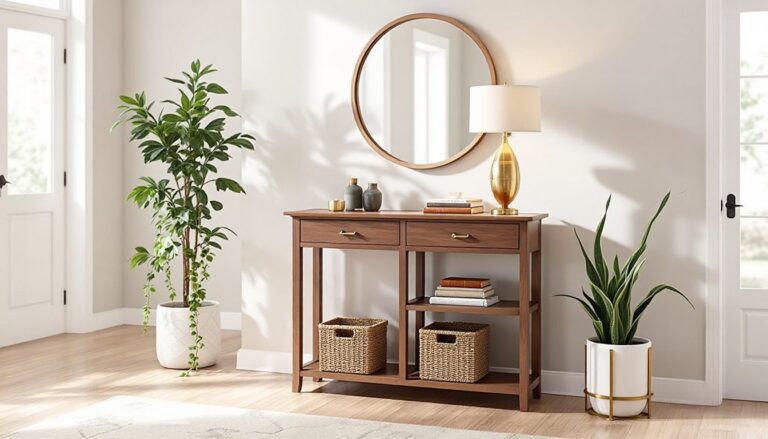
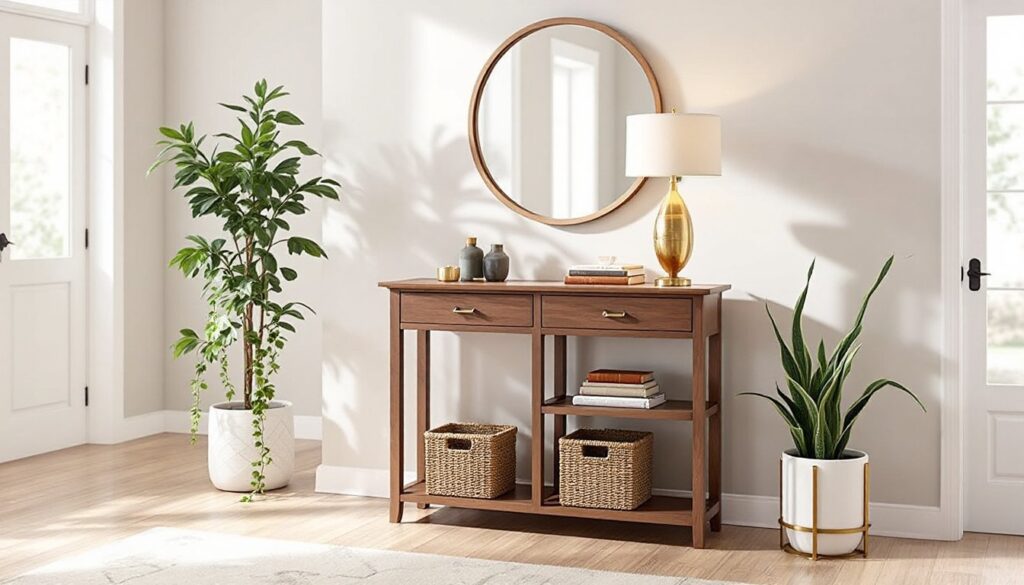
Start with one anchor piece. That could be a table lamp, a large mirror mounted on the wall above, or a statement plant. This gives the eye something to focus on and anchors the whole arrangement. A brass or ceramic lamp adds warmth: a round mirror softens angular furniture lines: a tall green plant brings life to an otherwise static space. Luxury design platforms like Elle Decor regularly feature entry styling that proves simplicity beats clutter.
Add layers, not stuff. Pair your anchor with two or three smaller items, a candle, a small bowl for keys, a framed photo. The rule of three is old, but it works because human eyes like odd numbers. Space them with intention: don’t cram them together.
Use the shelves intentionally. If your table has open shelving below, use baskets for hidden storage (keeps visual noise down) or stack a few leather-bound books and a decorative object. This keeps the look polished instead of cluttered.
Light matters. A table lamp with a warm-toned bulb instantly makes an entryway feel inviting. Aim for 2700K color temperature for a soft, welcoming glow. If natural light floods your entry, you can skip this and let daylight do the heavy lifting.
Care and Maintenance Tips
Ashley furniture is built to last, but like any wood piece, it needs basic care to stay in shape.
Dust regularly with a soft, lint-free cloth. A weekly wipe keeps dust from settling into the grain and scratching the finish when you inevitably run your hand across it. For stubborn dust, a barely damp microfiber cloth works, just wring it out so it’s not dripping.
Clean spills immediately. Water rings and water stains are the most common damage to entryway tables, which makes sense because they sit near doors and wet umbrellas. If something spills, blot it dry with a soft cloth right away. Don’t let liquid sit on the surface.
Use coasters for glasses and mugs. Even though the top is sealed, condensation underneath a drinking glass can cause marks. A simple wooden or cork coaster prevents 90% of ring damage.
Avoid direct sunlight. If your entryway gets intense afternoon sun, the wood can fade unevenly. Sunglasses on a window or a sheer curtain helps without blocking light completely.
Use furniture polish sparingly. Once or twice a year, a quality furniture oil or wax (not aerosol spray) maintains the finish and deepens the wood tone. Less is more, too much builds up and gets sticky. Freshome and other design sites often recommend natural wood care products that don’t leave residue.
Check hardware and tighten as needed. Drawer pulls and shelf supports can loosen with use. Every few months, do a quick check with a screwdriver or hex key to make sure everything’s snug. This prevents rattling and extends hardware life.