Table of Contents
TogglePatio furniture takes a beating, rain, UV rays, salt spray, and freeze-thaw cycles all work to degrade outdoor pieces. A chair that looks great in spring might crack or fade by midsummer if you haven’t chosen the right materials and finishes. Understanding what makes furniture truly waterproof rather than just “water-resistant” is the difference between a $300 mistake and an investment that lasts a decade. This guide walks you through the materials, features, and maintenance strategies that keep outdoor furniture performing year-round.
Key Takeaways
- Waterproof patio furniture requires material selection like teak, stainless steel, or solution-dyed acrylic fabrics that actively resist moisture rather than simply repel water.
- Drainage holes, sealed joinery, and stainless steel hardware are critical design features that prevent water pooling, mold growth, and rust stains on outdoor pieces.
- Annual water-repellent treatments and regular cleaning with mild soap and water extend the life of waterproof patio furniture by preventing mold, mildew, and UV fading.
- Proper placement away from full sun and sprinkler runoff, combined with breathable covers during harsh seasons, protects your investment from premature deterioration.
- Common mistakes like using vinyl tarps instead of breathable covers, neglecting sealed joints, or skipping hardware upgrades can cost you more in replacements than proper maintenance.
Understanding Waterproof Patio Furniture Materials
The foundation of durable outdoor furniture starts with material selection. Not all outdoor materials handle moisture equally, and “waterproof” claims vary widely from manufacturer to manufacturer.
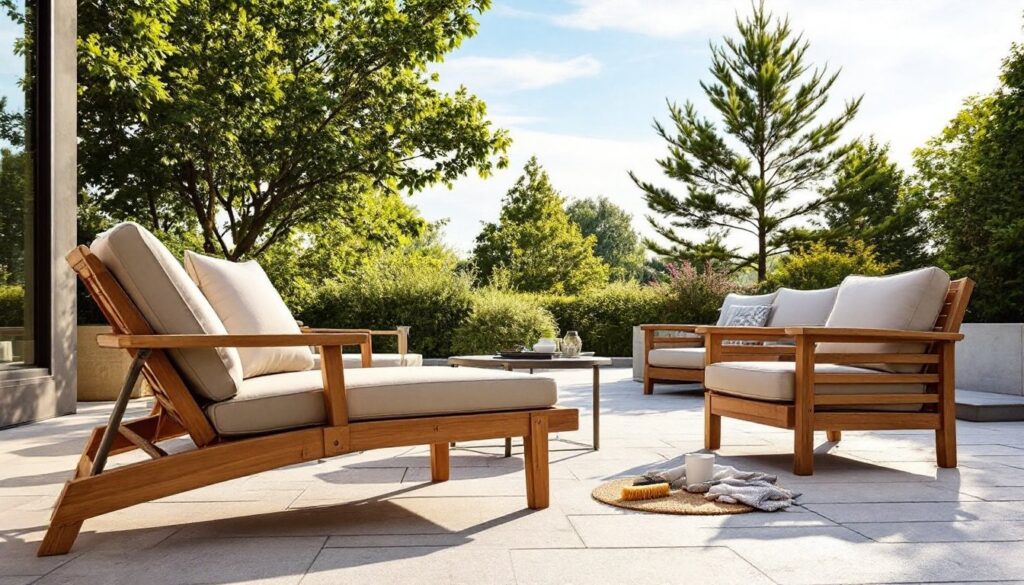
Teak, cedar, and composite wood are common choices. Teak naturally resists rot and insects because it contains silica and teak oil, which reduce water absorption. Cedar offers similar properties at a lower cost but requires more frequent sealing. Pressure-treated lumber is affordable but less aesthetically refined and needs regular staining or sealing to prevent rot.
Aluminum and powder-coated steel won’t rot, but they can corrode if the finish is damaged. Look for thick powder-coat finishes, typically 60–100 microns, that protect the metal underneath. Stainless steel costs more but resists corrosion naturally, making it ideal for salt-air environments.
Plastic and recycled plastic lumber (composites) mimic wood appearance without rotting. They’re lower maintenance but can fade and become brittle in intense UV exposure over years.
Weather-Resistant Fabrics and Coatings
Fabric choice matters as much as the frame. Solution-dyed acrylic (like Sunbrella) is the industry standard, dye is added during fiber production, not applied to the surface, so fading is minimal even after years of sun exposure. Olefin is cheaper but less UV-resistant. Polyester is quick-drying but absorbs water more readily than acrylics.
Look for coatings, not just the fabric itself. A water-repellent finish on cushions and slings keeps moisture from soaking in. Silicone, polyurethane, and acrylic-based coatings all work, but silicone tends to bead water most effectively. Check product tags for claims like “solution-dyed” and mention of UV rating or UPF (ultraviolet protection factor) numbers.
Key Features That Make Patio Furniture Truly Waterproof
Beyond material names, specific design features determine how well furniture actually sheds water and resists damage.
Drainage holes in seat frames and under cushions prevent water pooling. A chair frame with small drain holes molded into the seat pan won’t become a breeding ground for mold or mosquitoes. Likewise, cushion covers should have breathable backing or vent holes to allow moisture to escape instead of trapping dampness.
Sealed or mortise-and-tenon joinery stops water from entering joints where pieces connect. Bolted connections with rubber or silicone washers are better than nailed joints for outdoor use. If wood is used, check that all exposed end grain is sealed, end grain absorbs water fastest.
Stainless steel hardware, bolts, screws, hinges, prevents rust stains that bleed onto fabric and weaken connections. Galvanized hardware is acceptable if it’s thick-plated, but stainless lasts longer in coastal or wet climates.
Feet and leg caps matter too. Rubber or plastic feet keep the frame off wet ground and reduce rot risk at the base. Metal feet should be stainless steel or powder-coated. Wood feet sitting directly on damp pavers or grass rot quickly.
When shopping, ask whether the furniture has been tested for water resistance. Some manufacturers test by spray or immersion: others simply make claims. Third-party certifications or published test results (like ASTM standards for moisture resistance) carry more weight than marketing language alone. The Outdoor Furniture Council occasionally publishes standards, though adherence varies.
Practical Tips for Protecting Your Outdoor Investment
Smart placement and basic maintenance extend furniture life dramatically. Position seating in areas with good air circulation and partial shade when possible. Full sun accelerates UV fading and can warp plastic components. Proximity to sprinklers or gutters that dump runoff onto furniture increases mold and mildew risk.
Clean regularly, at least monthly during the season. Dirt, pollen, and debris trap moisture and can stain fabric. Use a soft brush or cloth with mild soap and water. For mildew on fabric, a 10-percent bleach solution works, but test on hidden fabric first and rinse thoroughly. Mineral deposits from hard water can be stubborn: a pressure washer on low setting (below 1500 PSI) helps, but keep the nozzle 12 inches away to avoid forcing water into seams or frame joints.
Apply a water repellent to fabric cushions annually. Consumer-grade products like Scotchgard or Aqua Seal are effective. Follow product instructions for application and drying time. Some furniture comes pre-treated, but the coating wears off with exposure.
For wood furniture, reapply sealant every 1–2 years depending on climate. Cedar or teak may fade to gray without sealing, but that’s cosmetic, the wood underneath remains sound if the grain isn’t checked or cracked. If wood does develop cracks, they’re entry points for water and rot, so address them promptly.
Seasonal Care and Storage Strategies
The harshest season determines how much protection you need. In freeze-thaw climates, water that soaks into cushions or crevices expands when it freezes, damaging fabric and wood. Store cushions indoors or in a dry shed over winter. For furniture you can’t move, use tight-fitting furniture covers (not tarps, which trap moisture underneath).
In humid or tropical climates, mildew is the threat. Even with covers, air circulation underneath matters. Elevate cover corners or leave small gaps for airflow. In salt-air environments (coastal areas), rinse furniture with fresh water every few weeks to remove salt deposits that accelerate corrosion.
Where regional codes permit and if you’re permanently installing patio structures, The Spruce offers comprehensive guidance on weatherproofing outdoor spaces, including drainage solutions and material selection tailored to your climate. If you’re considering lounge seating or casual arrangements, waterproof bean bag chairs and add comfort without the fabric durability concerns of traditional cushions.
Common Mistakes Homeowners Make With Outdoor Furniture
Most patio furniture failures come from avoidable habits, not defective products.
Ignoring prep work is the biggest mistake. Leaving grass clippings, leaves, or dirt on fabric speeds mold growth and staining. Taking five minutes to sweep a seating area and brush cushions weekly prevents months of cleaning headaches later.
Covering furniture improperly causes more damage than rain. Vinyl or plastic tarps trap moisture underneath and create a sauna for mildew. If you use covers, choose breathable fabric covers designed for outdoor storage, or at minimum, leave gaps at the corners.
Buying cheap cushions from big-box retailers with no water-repellent treatment or solution-dyed fabric leads to fading and quick deterioration. A $40 cushion that looks shabby in a year costs more than a $120 Sunbrella cushion that lasts a decade.
Skipping hardware upgrades when assembling furniture lets rust stains bloom within a season. Replacing galvanized bolts with stainless steel takes minutes and saves headaches.
Leaving furniture out unsecured in windy climates risks damage and injury. Wind doesn’t just blow things over, it flexes frames, stresses joints, and can snap aluminum pieces. Anchor heavy pieces or store them during storm season.
Mixing materials without compatibility causes problems. Placing wood furniture directly on concrete pavers without feet or spacers invites rot from ground moisture. Standing aluminum legs in pooled water accelerates corrosion. Think about water flow and drainage when you position each piece.
Conclusion
Waterproof patio furniture isn’t just about the sticker label, it’s about materials, design details, and the maintenance routine you commit to. Invest in solution-dyed fabrics, sealed joints, stainless hardware, and pieces with drainage built in. Clean regularly, reapply water repellents annually, and store or cover items during harsh seasons. Do this, and your patio seating will still be comfortable and attractive five, ten, or more years from now.