Table of Contents
ToggleConversation patio furniture has become the centerpiece of outdoor living, transforming backyards into inviting social hubs where families and friends gather. Unlike traditional single-seating arrangements, conversation patio furniture is designed to face inward, encouraging face-to-face interaction and making your outdoor space feel intentional and welcoming. Whether you’re working with a sprawling deck or a modest corner patio, the right conversation set can redefine how you use your outdoor area year-round. This guide walks you through selecting, arranging, and maintaining conversation patio furniture that fits your space, style, and lifestyle needs.
Key Takeaways
- Conversation patio furniture is designed with inward-facing seating to encourage face-to-face interaction and transform backyards into welcoming social gathering spaces.
- L-shaped sectionals and fire pit sets are popular conversation patio furniture configurations that maximize both large and small outdoor spaces, accommodating 4–8 people comfortably.
- Aluminum frames with woven wicker cushions offer the best value, lasting 5–8 years at $1,500–$3,500, while teak hardwood provides premium durability for 10–15 years at a higher cost.
- Proper seat height (16–18 inches) and depth (24–30 inches) with quality 4–5 inch cushions are essential for comfort and encouraging guests to stay longer.
- Seasonal cushion storage and weatherproof covers prevent mold and extend conversation furniture lifespan by 2–3 years, making maintenance investment far cheaper than replacement.
What Is Conversation Patio Furniture and Why You Need It
Conversation patio furniture refers to seating arrangements designed with pieces facing inward to create intimate, connected gathering spaces. Typical setups include sofas, chairs, and ottomans positioned to face a central focal point, often a fire pit, side table, or natural view, rather than oriented toward a TV or the landscape beyond.
This furniture style solves a real problem: standard patio layouts often leave guests scattered and disconnected. A proper conversation set naturally draws people together, encouraging actual dialogue instead of parallel sitting. It’s the furniture equivalent of pulling your chairs closer around a campfire.
You need conversation patio furniture if you entertain regularly, want to maximize small outdoor spaces, or simply prefer outdoor living that prioritizes connection. Even a modest two-seater and two chairs can create that intimate gathering feel. The investment pays dividends in usability, you’ll actually spend more time on your patio when it’s designed for real engagement.
Popular Styles and Configurations for Every Outdoor Space
Sectional and L-Shaped Arrangements
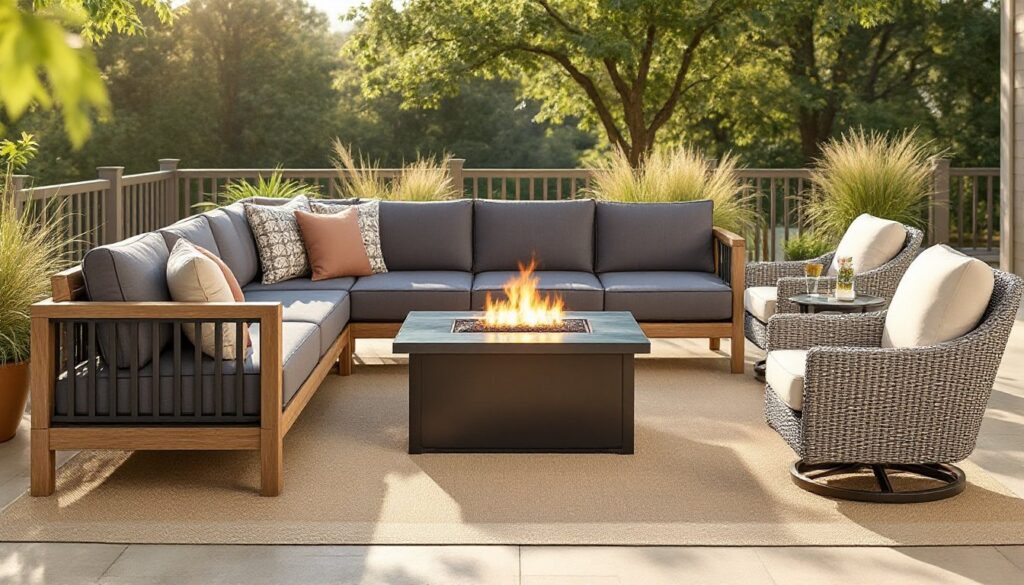
Sectional conversation sets dominate the market because they work in almost any footprint. An L-shaped sectional typically includes two perpendicular benches and can sleep two to four people comfortably when arranged around a 19- to 24-inch-tall side table or fire pit. L-shaped pieces fit snugly into corner spaces, making efficient use of awkward patio layouts.
Full sectional wraps (three or four sides) work best on larger decks, think 12 by 16 feet or bigger. These can accommodate six to eight people and create the feeling of an outdoor living room. When space is tight, a loveseat (two-seater) paired with two accent chairs can create equally functional conversation zones without the footprint of a full sectional.
Measurements matter here. Most sectional pieces measure 32 to 40 inches deep and 60 to 84 inches long per section. Ensure your patio can accommodate the total footprint plus 24 to 36 inches of circulation space around the grouping. Sectionals are modular, you can often swap, reconfigure, or add pieces as your needs evolve.
Intimate Fire Pit Sets and Small Spaces
Fire pit conversation sets are purpose-built for smaller patios and decks. These typically consist of four chairs, sometimes swivel models, arranged around a propane or gas fire table (not wood-burning, due to smoke and ash). A standard round fire table measures 36 to 48 inches in diameter and works perfectly for a 10-by-10-foot patio.
Wicker chairs and metal frames dominate this category because they’re lightweight, affordable, and easy to move if your layout changes. A quick tip: swivel chairs allow guests to rotate toward conversation or toward warmth, giving flexibility without adding depth to your footprint.
Small space solutions also include corner banquettes, built-in benches with storage underneath, paired with a pair of chairs. These work particularly well on narrow side yards or townhouse patios where a traditional sectional would dominate the space. The styles and configurations shown in design-focused resources can spark ideas for your specific layout.
Materials and Durability: Choosing Furniture That Lasts
The material you choose determines how long your conversation set survives sun, rain, and use. Your three main options each have trade-offs.
Teak and other hardwoods (cedar, mahogany) resist rot naturally and develop a silvery patina over time. Teak costs $2,000 to $6,000+ for a quality four-piece set, but pieces often last 10-15 years with minimal maintenance. Hardwoods are heavy and require occasional sealing to maintain color, but they’re genuinely durable.
Aluminum frames with woven wicker or polyester cushions are the sweet spot for most DIYers. Aluminum doesn’t rust (unlike steel), frames weigh 40-60% less than wood, and replaceable cushions cost $100 to $400 per seat. Expect 5-8 years of reliable service, especially if cushions are stored seasonally. Price typically runs $1,500 to $3,500 for a four-piece set.
Resin wicker (synthetic, not natural rattan) mimics wicker aesthetics but resists moisture and UV better than natural materials. Prices sit between aluminum and teak. Resin can yellow slightly over time if exposed to intense direct sun.
For all materials, cushion fabric grade matters as much as the frame. Solution-dyed fabrics (pigment added during fiber production) resist fading better than topically dyed fabrics. Look for ratings like Sunbrella or equivalent, these materials hold color for 5+ years outdoors. Budget $20 to $40 per linear foot for quality outdoor fabric if you need custom covers.
Don’t cheap out on cushion fill either. Dense, quick-drying foam (high-resiliency polyurethane or latex foam cores) resists moisture and mildew. Avoid low-density or natural fills for outdoor use, they trap water and degrade quickly. Comprehensive material comparisons are available through home improvement resources if you need deeper technical detail.
Design Tips for Comfort and Visual Appeal
Comfort isn’t accidental, it comes from thoughtful measurements and placement.
Seat height should measure 16 to 18 inches from the ground: anything lower requires awkward leg extension, and higher feels tippy. Pair your seating with an 18- to 24-inch-tall side table for drinks and remotes: this height aligns with the armrest on most conversation furniture. A coffee table or fire table should sit 10-12 inches lower than your seat to avoid kneeing guests when reaching across.
Depth and padding are equally critical. Seats deeper than 30 inches force you forward just to reach the backrest, while anything shallower than 24 inches won’t support your full leg. Quality cushions, at least 4 to 5 inches of compressed foam, make the difference between sitting for 20 minutes and staying for three hours.
For visual appeal, stick to a cohesive color palette. Neutral cushions (grays, taupes, off-whites) pair with nearly any patio finish and show less dirt than bright colors. If you want personality, add it through removable throw pillows and a coordinating outdoor rug, these are easy to swap seasonally without replacing furniture.
Scale matters. A single two-seater on a 20-by-20-foot deck looks lonely: add a rug, anchor it with a side table, and it feels intentional. Conversely, a full sectional wrap in a 12-by-14-foot space will feel cramped. Aim to leave 40-50% of your patio floor visible, it keeps the space breathable and leaves room for movement.
Design inspiration combining comfort, where you can see how proportions work in real patios. Pay attention to how experienced designers balance furniture size with overall deck square footage.
Maintenance and Care for Year-Round Enjoyment
Proper maintenance extends furniture life by 2-3 years and keeps your set looking sharp.
Seasonal cleaning matters most. At season start, hose down frames and let cushions air-dry completely before use. A soft brush or cloth with mild soap removes pollen, dust, and light grime. For stubborn stains, use a pressure washer on low setting (below 1,500 psi) at least 2 feet away, high pressure damages wicker and cushion seams.
Cushion storage is non-negotiable if you live anywhere with winter. Remove and stack cushions in a dry garage, shed, or storage bin during off-season (roughly November through March in temperate zones). Moisture trapped under cushions left on frames breeds mildew and mold. If storage space is tight, buy a weatherproof cushion storage box ($80-$300) and call it an investment, it’s cheaper than replacing cushions.
Cover your furniture if you can’t store it. A fitted furniture cover (not a tarp) lets moisture escape while blocking sun and rain. Tarps trap condensation and accelerate deterioration. Expect to spend $150-$400 on a decent cover that fits your specific set dimensions.
Annual treatments depend on material. Teak benefits from occasional oil (every 12-18 months) to maintain color, though it’ll gray without it, not a durability issue, just aesthetics. Aluminum frames need little beyond soap and water. Resin wicker benefits from UV protectant spray (same as you’d use on a car) annually.
Check hardware annually, bolts loosen, hinges wear, and welds can crack. A quick tightening with a socket wrench prevents armrests from wobbling or sections from separating. If you’re storing cushions seasonally, inspect zippers and seams for damage before packing them away: small repairs now prevent mildew spreading from leaks next season.
One last thing: don’t store furniture directly on concrete. Use concrete pads or wooden spacers underneath legs to allow air circulation, which prevents staining and rot on wooden frames.
<h2 id="” data-id=””>Takeaway: Investing in Conversation That Lasts
Conversation patio furniture works because it prioritizes people over aesthetics. Choose durable materials that fit your climate and budget, measure your space carefully, and invest in quality cushions and covers. Maintenance is minimal if you plan for it, storage and seasonal care cost far less than replacing a set every five years. Your outdoor space should draw your family outside and keep friends lingering. The right conversation set makes that happen.