Table of Contents
ToggleStickley bedroom furniture brings understated elegance and rock-solid construction to bedrooms in homes across America. If you’re furnishing a bedroom and want pieces that’ll outlast trends and actually hold up under daily use, Stickley’s approach to design and joinery is worth understanding. Unlike mass-produced bedroom sets that start wobbling after five years, Stickley pieces prioritize honest craftsmanship, quality wood, and functional design. Whether you’re building your first grown-up bedroom or refreshing a master suite, learning what makes Stickley furniture distinct will help you make smart choices about your space.
Key Takeaways
- Stickley bedroom furniture prioritizes solid hardwood construction and mortise-and-tenon joinery over mass-produced alternatives, ensuring pieces last decades without wobbling or structural failure.
- Mission style, the signature aesthetic of Stickley bedroom furniture, features straight lines, minimal ornamentation, and exposed wood grain—a timeless design that complements both traditional and contemporary bedrooms.
- White oak, cherry, and walnut are the primary wood options for Stickley pieces, each offering distinct grain patterns and tones; choice depends on your bedroom’s lighting and desired aesthetic rather than durability.
- Design a bedroom around Stickley pieces by keeping walls neutral, selecting lighting with exposed hardware, and minimizing accessories to let the furniture’s honest craftsmanship become the focal point.
- Proper maintenance—regular dusting with soft cloths, humidity control between 40–50%, and avoiding silicone products—preserves the patina and functionality that make Stickley bedroom furniture investment-worthy for generations.
What Defines Stickley Bedroom Furniture
Stickley bedroom furniture carries a specific design philosophy rooted in the Arts and Crafts movement of the early 20th century. The company was founded by Gustav Stickley, a furniture maker who believed in cutting out the middle-man markup, using solid wood construction, and showing the joinery rather than hiding it behind veneer and stain.
When you look at a Stickley bed frame or dresser, you’re seeing mortise-and-tenon joints (solid wood pieces fitted together without nails or heavy hardware in the joint itself), exposed wood grain, and minimal ornamentation. The pieces sit on tapered legs or simple frames, and drawers operate on center guides rather than cheap metal tracks. This isn’t furniture designed to impress at first glance, it’s designed to function reliably and age gracefully.
One key distinction: Stickley is intentionally expensive relative to big-box retailers. You’re paying for solid hardwood construction (usually oak, cherry, or walnut), careful joinery, and finishing that takes time. Compare this to bedroom sets where the frame is particleboard or veneered plywood, and you’ll quickly see why a Stickley nightstand costs what it does.
The brand has evolved over time. Gustav Stickley’s original company ran from 1898 to 1916, but the Stickley brand continued through family members and later acquisitions. Today, Stickley Furniture Company produces both authentic reproductions of original designs and new pieces that maintain the same construction standards and aesthetic. If you’re shopping, check whether you’re buying from the current Stickley company or from antique dealers selling original Gustav Stickley pieces, both have merit, but pricing and availability differ significantly.
Key Design Elements and Styles
Mission Style Characteristics
Stickley’s signature style is Mission (also called Mission Oak), which emerged directly from Gustav Stickley’s design philosophy. Mission bedroom furniture is defined by straight lines, minimal decoration, exposed joinery, and a focus on wood grain rather than applied ornament. The style rejects fussy Victorian curves and instead celebrates the beauty of solid wood construction.
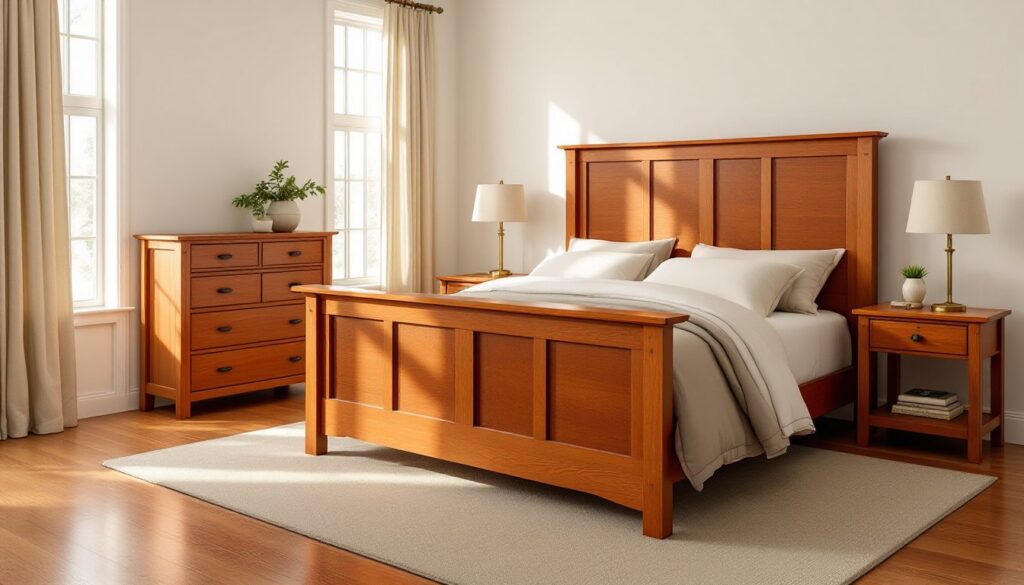
A typical Stickley bedroom set includes a panel bed with a simple headboard and footboard, a dresser with exposed tenons at the corners, and nightstands featuring similar construction details. The proportions are generous, drawers are deep, surfaces are substantial, and nothing feels delicate or overly refined. If you run your hand along a Stickley dresser, you’ll feel the solid edge of hardwood, not a thin veneer.
Mission style suits both traditional and contemporary bedrooms because the simplicity reads as timeless rather than dated. A Stickley dresser works alongside modern bedding, contemporary lighting, and minimalist décor. The wood tone matters more than the style of other furnishings in your room.
Wood Selection and Finishes
Stickley bedroom pieces are typically available in three primary wood types: white oak, cherry, and walnut. Each behaves differently and carries distinct visual characteristics.
White oak is the most traditional choice and shows prominent grain patterns with a honey or warm tan undertone. Oak is durable, takes stain evenly, and was Gustav Stickley’s preferred wood. Cherry has a finer grain, warmer reddish tone, and becomes richer with age and sunlight exposure. Walnut is darker, with chocolate or purple undertones, and offers a more formal appearance. None is “better”, it depends on your bedroom’s light, existing finishes, and personal preference.
Finishes are typically oil-based or water-based topcoats that enhance wood color without obscuring grain. Stickley doesn’t use high-gloss lacquer finishes: instead, they opt for satin or matte topcoats that look lived-in from day one. The finish is designed to develop a patina over years, which adds character rather than looking worn out. You might see finish options labeled as “natural,” “light,” “medium,” or “dark,” referring to how much stain is applied before topcoat.
This approach to finishing means a Stickley nightstand will show fingerprints and dust more readily than a polyurethane-coated piece, but that’s intentional, it’s meant to be cared for and lived with, not kept in pristine museum condition.
Designing Your Bedroom Around Stickley Pieces
Designing a bedroom around Stickley furniture requires thinking about how the wood tone, style, and construction quality will anchor the space. Unlike decorating around a trendy accent wall or a specific color palette, you’re building around honest, understated craftsmanship.
Start by selecting a primary Stickley piece, usually a bed frame, and let that set the foundation. The wood species and finish of your bed will influence everything else. If you’ve chosen a cherry bed with a medium finish, your nightstands, dresser, and any additional wooden furniture should either match or complement deliberately (pairing cherry with walnut can work if there’s intention behind it, but mixing cherry and oak often looks accidental).
Your wall color matters less with Mission furniture because the wood is the focal point. Neutral walls, warm whites, soft grays, or muted taupes, allow the furniture to stand out without competing for attention. Busy wallpaper or bold accent colors can overwhelm the subtlety of Stickley design. If you want color, consider it through textiles: bedding, curtains, and area rugs introduce warmth and personality without fighting the furniture’s honest aesthetic.
Lighting is worth thoughtful planning. Stickley furniture was designed in an era when homes relied on natural light and task lighting. Pairing a simple wooden dresser with a traditional desk lamp or bedside fixture that has exposed hardware and natural materials (wood, metal, linen) reinforces the aesthetic. Conversely, a high-tech LED fixture with touch controls and plastic elements will clash.
Bedrooms featuring thoughtfully designed pieces pair well conceptually with Stickley because both emphasize quality materials and longevity over disposability. If you’re drawn to Stickley’s values, you likely appreciate how other thoughtfully made pieces contribute to a cohesive space.
Accessorization should be minimal and functional. A simple wooden shelf, a few framed photographs, and natural fiber textiles (wool, linen, cotton) complement the style. Avoid plastic organizers, glossy décor objects, and anything that screams “mall home store.” The goal is to let the quality and simplicity of your Stickley pieces shine.
Care, Maintenance, and Longevity
Stickley bedroom furniture is built to last decades, but it does require intentional care, it’s not maintenance-free. Understanding how to keep your pieces in condition is part of owning them responsibly.
Dust regularly with a soft, dry cloth or a barely damp microfiber cloth. Avoid commercial furniture polish sprays, which contain silicone and build up over time, creating a cloudy film. Instead, use a wood-specific cleaner formulated for natural finishes, or simply use a cloth dampened with distilled water and a tiny amount of mild dish soap. Wring out the cloth thoroughly so it’s almost dry, excess water is wood’s enemy.
UV exposure darkens wood over time, which is normal and part of the patina that makes aged pieces beautiful. But, extreme sunlight can cause uneven fading if one side of a dresser is constantly exposed while the other isn’t. Rotate furniture occasionally or use simple window treatments to manage direct sun.
Drawers should operate smoothly and shouldn’t stick or bind. If a drawer begins to stick, it’s often because the home’s humidity has changed and the wood has swelled slightly. Check that the drawer is sitting level and that nothing is obstructing its path. You can apply a small amount of paste wax to the drawer guides (the wood or metal surfaces the drawer slides on), but avoid silicone-based lubricants. Humidity control in your bedroom, ideally between 40–50% relative humidity, will keep wood stable and prevent joints from separating.
If finish damage occurs (a water ring, a scratch, or wear on a tabletop), resist the urge to refinish the entire piece. Small touch-ups with matching wood stain and clear topcoat can address minor issues. Professional furniture restoration is worth the investment for significant damage, as refinishing a Stickley piece incorrectly can damage its value and character.
Joints should remain tight. If a mortise-and-tenon joint loosens (you’ll feel play or hear creaking), tightening it usually requires disassembly and reglueing, which is a job for a professional furniture restorer unless you have experience with furniture repair. Forcing it back together without proper technique can crack the wood.
A bedroom design featuring thoughtfully maintained pieces often outshines one with new furniture that’s neglected. The more carefully you treat your Stickley pieces, the more they’ll reward you with character and reliability.
Conclusion
Stickley bedroom furniture represents a deliberate choice to invest in quality, honest construction and timeless design. These pieces won’t go out of style because they were never chasing trends in the first place. They require space that values simplicity, consistent care that respects wood and joinery, and an appreciation for how objects improve with age.
If you’re building a bedroom that you want to live with for decades, not years, Stickley offers a proven formula. The craftsmanship is real, the design is purposeful, and with thoughtful maintenance and a complementary room design, these pieces will age beautifully and serve your bedroom reliably for generations.