Table of Contents
ToggleWicker patio furniture strikes a balance that few outdoor pieces achieve, it looks elegant enough for entertaining, yet rugged enough to survive seasons of use. Whether you’re furnishing a sprawling deck or a tight apartment balcony, wicker brings warmth and texture that metal or plastic can’t match. But wicker isn’t one-size-fits-all anymore. Modern patio furniture wicker comes in natural and synthetic varieties, each with its own durability profile, price point, and maintenance demands. Understanding the differences helps you invest in pieces that’ll look good and last years, not months.
Key Takeaways
- Wicker patio furniture uses a weaving technique over frames to create elegant, lightweight pieces that drain water quickly and hide dirt better than smooth outdoor surfaces.
- Synthetic wicker offers superior durability and lower maintenance than natural wicker, requiring only occasional rinsing and providing better long-term value despite 20–40% higher upfront costs.
- Measure your patio space before purchasing and invest in mid-range wicker collections ($500–$1,500 per piece) to balance durability, design quality, and functionality for 5–10 years of use.
- Prevent wicker failure through weekly rinsing, monthly cushion care, seasonal frame inspections, and proper winter storage with breathable covers—most damage results from neglect, not defect.
- Use neutral-colored wicker as a base and let cushions drive your design aesthetic, whether coastal, modern minimalist, or traditional, while keeping accessories layered and layouts focused on clear sightlines.
- Never use bleach, petroleum-based cleaners, or pressure washers on wicker patio furniture; stick to mild soap, water, and a 1:1 vinegar solution for mildew to preserve weave integrity and color.
What Is Wicker Patio Furniture and Why Homeowners Love It
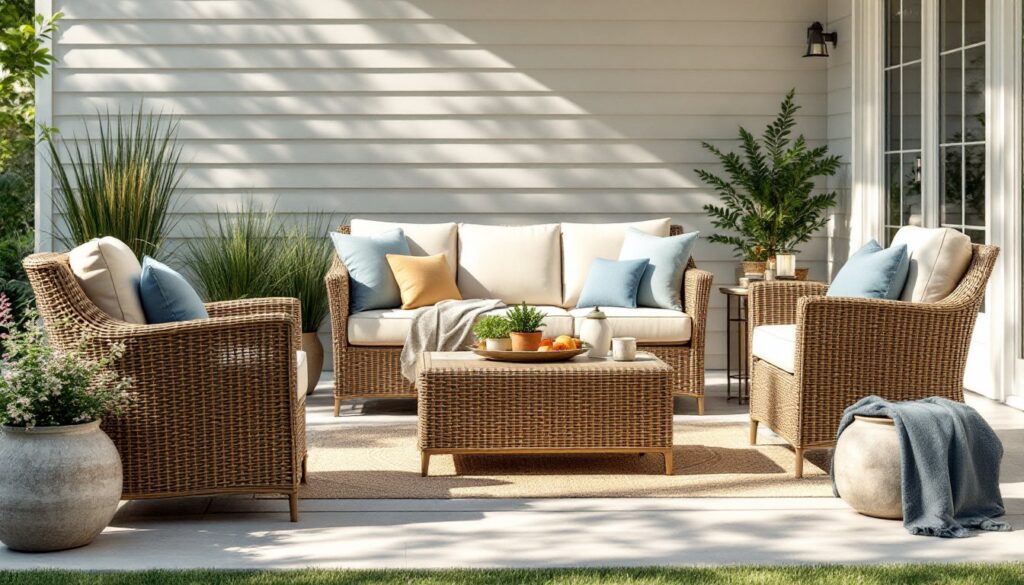
Wicker isn’t a material, it’s a weaving technique. Strands of flexible material get woven over a frame (usually aluminum, steel, or wood) to create seats, armrests, and decorative panels. What makes wicker appealing for outdoor spaces is its versatility. It pairs with modern minimalist decor, coastal themes, bohemian setups, or traditional design with equal ease.
Homeowners gravitate to wicker for three solid reasons. First, the open weave allows water to drain through, so sitting areas dry quickly after rain. Second, the textured surface hides minor dirt and dust better than smooth finishes. Third, wicker pieces feel lighter and airier than their solid counterparts, you can actually move a wicker chair without a second pair of hands.
The catch? Not all wicker performs equally outdoors. Sun exposure, humidity, temperature swings, and water saturation each take a toll. That’s where material choice becomes critical.
Types of Wicker Materials and Durability Factors
Natural vs. Synthetic Wicker Comparison
Natural wicker traditionally means rattan, willow, or reed woven around a wooden or metal frame. Rattan, harvested from tropical climbing palms, is the most common. It’s lightweight, takes stain beautifully, and feels authentic, which appeals to purists. The downside is obvious: natural fiber absorbs moisture, swells in humidity, splits in dry climates, and rots if left unsealed outdoors year-round. A single season of hard rain without a cover can set back the finish and weaken the weave.
Synthetic (resin) wicker mimics the look of rattan but uses polyethylene or polypropylene strands wrapped around an aluminum or steel frame. Modern synthetic wicker looks nearly identical to natural, especially from a distance. It won’t rot, splinter, or absorb water. UV-resistant formulations hold color in direct sun for years. Prices have dropped significantly over the past five years, making synthetic an attractive entry point for budget-conscious buyers.
Natural wicker costs less upfront but demands regular sealing, protective covers, and careful placement (away from direct spray). Synthetic costs 20–40% more initially but needs only occasional rinsing and covers in extreme weather. For most DIYers with outdoor exposure, synthetic offers better long-term value and less fuss. That said, if you’re in a covered porch with controlled humidity, natural can work beautifully if you commit to maintenance.
Frame material matters too. Aluminum frames resist rust and weigh almost nothing, ideal for pieces you’ll move. Steel frames are heavier but stronger, better for large sectional sofas that sit permanently. Wooden frames look premium but require the same sealing and care as natural wicker, more upkeep, not less.
Choosing the Right Wicker Pieces for Your Outdoor Space
Budget-Friendly Options and Premium Collections
Before hunting for pieces, measure your space. A common mistake is oversizing, a sectional that looks perfect in a showroom swallows a small deck whole. Measure the patio footprint, account for walking paths, and sketch furniture placement to scale.
Budget tiers exist for a reason. Entry-level wicker (synthetic, fixed cushions, simple frames, $200–500 per piece) works for renters or if you’re testing the waters. Expect decent durability, typically 3–5 years with minimal cover use. Mid-range ($500–1,500 per piece) offers better frame materials, removable cushions, and refined weaving. This tier hits the sweet spot for homeowners planning to keep pieces 5–10 years.
Premium collections ($1,500+) feature thick aluminum frames, high-quality resin strands, modular designs, and deep cushions. Brands emphasizing handwoven or artisanal construction occupy this space, and the durability often justifies the cost if you’re committed to care.
Key pieces to prioritize: chairs and a small table create an instant seating area, then add a sofa or loveseat if space allows. Storage ottomans double as seating and keep cushions dry. Some homeowners find that curated wicker furniture collections with matching pieces create a more cohesive look than mismatched finds. Articles like the best wicker furniture for your outdoor living space showcase curated collections to spark ideas on what combinations work visually.
Maintenance and Care Tips to Extend Your Wicker’s Lifespan
Most wicker failures stem from neglect, not defect. A straightforward maintenance routine keeps pieces looking good for a decade.
Weekly basics: Rinse off loose dust and pollen with a soft brush or a gentle spray from the hose. Don’t use a pressure washer, the force will push water into the weave and frame joints, leading to mildew and rust.
Monthly: Wipe cushions with a damp cloth and let them air-dry fully before use. If you notice mildew (gray or brown spots on the weave), spray a 1:1 white vinegar and water solution, let sit for 10 minutes, then rinse and air-dry. For stubborn growth, a soft-bristle brush helps, but avoid scrubbing the weave itself, you’ll fray it.
Seasonal:
- Spring: Inspect frames for rust (on steel) or corrosion (on aluminum). Sand light rust with 220-grit sandpaper and touch up with outdoor-grade paint. Check cushion zippers and seams: patch small tears early.
- Summer: Apply a UV-protective water sealer to synthetic wicker every 18–24 months if it gets full sun. Natural wicker needs sealing every 6 months during warmer months.
- Fall: Clean under cushions and around leg corners where debris traps moisture. Drain and dry fully before covering.
- Winter: In cold climates, cover wicker tightly with a breathable cover (not plastic, which traps condensation). In mild climates, a basic tarp works: elevate corners slightly for airflow.
Never use: Bleach (damages synthetic weave and fades color), petroleum-based cleaners (break down resin), or harsh chemicals. Stick to mild dish soap and water for stubborn stains.
Cushion care extends lifespan significantly. Remove cushions during heavy rain and winter storage. Wash covers annually in cool water with mild detergent, air-dry fully (direct sun fades), and store in a dry space. Invest in a cushion storage box, they’re inexpensive and eliminate one common failure point.
Styling Ideas to Complement Your Home’s Aesthetic
Wicker’s versatility means it adapts to nearly any design direction. The key is layering textures and thoughtful color choices.
Coastal and bohemian: Pair light gray or whitewashed wicker with soft blue and sandy cushions. Add a jute rug, driftwood accents, and potted grasses. Natural rattan works here if the patio is covered.
Modern and minimalist: Charcoal or dark brown synthetic wicker contrasts sharply with clean-lined cushions in cream or black. Keep accessories sparse, a single sculptural planter, simple side table. Metal accents (brass or stainless steel) reinforce the aesthetic.
Traditional and formal: Medium brown or honey-toned wicker pairs with patterned or solid cushions in jewel tones (emerald, navy, burgundy). Add lanterns, side tables with natural stone tops, and lush greenery.
Color strategy: Wicker itself is usually neutral (white, cream, gray, brown). Let cushions drive color. Solid cushion sets are practical and age well: patterned cushions make visual impact but fade faster and show stains. Consider mixing, solid base color with accent pillows in patterns that can be swapped seasonally.
Layout tips: Arrange seating to face an appealing view or focal point (water feature, garden, fireplace). Leave walking paths clear. A low coffee table anchors groupings without breaking sightlines. If your patio doubles as a dining space, position the wicker seating area slightly apart from the dining table to prevent visual clutter. Resources like wicker patio furniture ideas for your backyard oasis demonstrate how different layouts and color combinations create distinct moods and maximize function in various outdoor spaces.