Table of Contents
ToggleA small patio doesn’t mean sacrificing style or comfort, it just means getting smarter about what you choose and where you put it. Whether you’re working with a compact urban balcony, a modest deck, or a tight courtyard, small patio furniture ideas can transform even the tiniest outdoor space into a functional gathering spot. The key is selecting pieces that don’t overwhelm the area, serve multiple purposes, and match the scale of your surroundings. We’ll walk you through smart choices that maximize every square foot without cluttering or making your patio feel cramped.
Key Takeaways
- Folding, stackable, and multi-functional small patio furniture ideas maximize comfort and storage without overwhelming tight outdoor spaces.
- Choose lightweight materials like aluminum, resin, and synthetic wicker that create an airy visual feel and are easier to move and maintain.
- Respect furniture scale by selecting loveseats under 60 inches, tables no larger than 36 inches diameter, and chairs with shallow seat depths of 16–18 inches.
- Use vertical storage solutions like wall-mounted tables, hanging chairs, and tall shelving to pull the eye upward and make compact patios feel larger.
- Arrange furniture in floating or linear layouts while maintaining clear pathways and avoiding blocked sightlines to prevent cramped-hallway feelings.
- Stick to a limited color palette of two or three neutral tones to prevent visual chaos and let plants, cushions, and décor be the accent elements.
Choose Space-Saving Furniture Styles
Folding And Stackable Designs
Folding and stackable furniture is the MVP of small patios. A folding bistro chair or folding director’s chair takes up almost no storage space when not in use, just hang it on a hook or tuck it in a corner. When you need extra seating, unfold and go.
Stackable options work even better for frequent entertaining. Stackable resin chairs (often molded plastic in white, gray, or color) nest inside each other when stacked, so you can store four chairs in the footprint of one. They’re lightweight, weather-resistant, and affordable, usually $30–$80 per chair depending on material and brand.
Folding side tables and nesting tables solve the accent furniture puzzle without eating floor space. A nesting set of two or three tables lets you pull out what you need and tuck the rest away. Look for metal frames paired with wood, composite, or glass tops for durability and style.
Rattan or wicker bistro sets (a pair of chairs with a small round table) are classics for a reason: they’re compact, visually light, and work in almost any style. Actual footprint: a typical bistro set needs just 5–6 feet of patio width. The woven material also photographs well if you’re sharing your space online.
Another underrated option: ladder-style shelving units in wood or metal. They store cushions, planters, or decor without blocking sightlines. Vertical storage keeps your ground plane clear.
Multi-Functional Pieces That Serve Double Duty
A small patio demands that every piece earn its place. Storage benches are your secret weapon: they seat two to three people, hide gardening tools, cushions, or winter décor inside, and cost $150–$400 depending on material and size.
Ottomans with lift-top storage do the same job in less floor real estate. Pull up the hinged top, toss in seat cushions or a throw blanket, then use the flat surface for drinks, plants, or feet. Some models include a tray surface that converts them into a side table.
Console tables tucked against a fence or wall create surface space for lamps, plants, or a drink station without needing much depth, look for models 10–14 inches deep. A few stools can tuck underneath, then pull out when guests arrive.
If you have room for seating, a bench with back cushions can double as a divider that separates the patio from a garden bed or neighboring space. Benches take less floor room than individual chairs and feel more intentional in tight quarters.
Hanging chairs or swing seats mounted from a pergola or overhang are pure magic in small spaces. They take zero footprint on the ground, add layered seating, and create that “resort vibe” without stealing square footage. Installation does require a sturdy overhead structure and appropriate hardware rated for your weight load, this isn’t a cosmetic project, so verify load limits and local codes before hanging.
A sliding door coffee table or bar cart on wheels gives you mobility. When you’re not using it, roll it to the edge or tuck it into storage. It serves cocktails, appetizers, or plants depending on the moment.
Layout Strategies For Tiny Patios
Layout can make or break a small patio. Start by understanding your actual square footage and how light, shade, and wind move across the space throughout the day.
The floating arrangement: Rather than pushing all furniture against walls (which can feel smaller and prison-like), float a seating cluster in the center or one corner. A small loveseat, two chairs, and a coffee table create an intimate conversation zone that actually feels bigger because you’re using the whole space, not just edges. This works best when your patio is at least 8×10 feet.
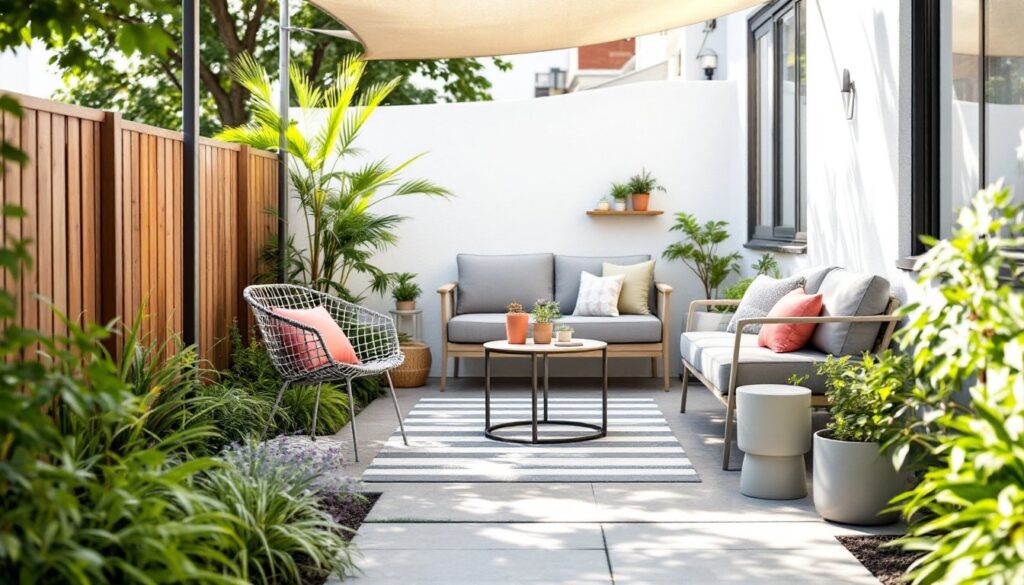
For tighter spaces (under 6×8 feet), linear layouts make sense. Arrange one bench or loveseat against the longest wall, add a side table at each end, and place one accent chair at a right angle if room permits. This creates clear sightlines and prevents the cramped-hallway feeling.
Vertical thinking is essential. Wall-mounted bistro tables, hanging planters, and tall shelving pull the eye upward so people notice height, not tight footprint. Southern Living’s outdoor living guides often showcase how vertical elements create breathing room.
Leave at least one clear path. Never block your door or the main walkway across the patio. If someone needs to move from the house to the garden, they should do it without stepping over furniture. Cramped traffic flow makes small spaces feel smaller.
Consider a corner bistro setup if your patio has an awkward nook. A round or square table (30–36 inches) with two chairs tucks perfectly into a corner and feels intentional rather than squeezed.
Shade and sightlines matter. A small umbrella or shade sail (fabric tensioned between posts) cools the seating area without blocking views outward. The visual openness to the surrounding garden or yard makes the patio feel larger.
Scale And Proportion For Small Outdoor Spaces
Furniture scale is non-negotiable in compact patios. A sofa scaled for a large living room will swallow a small patio, stick to loveseats (under 60 inches wide) or pairs of chairs instead. A standard loveseat (54–60 inches) with two side chairs creates intimate, balanced seating without overwhelming the zone.
Table proportions matter. A 36-inch round table works in most small patios: a 48-inch table starts eating the footprint. For a 6×8 patio, that smaller table leaves enough walking and standing room. Rectangular tables (like 36×48) can work too, but round tops feel less intrusive because there are no protruding corners to stub toes on.
Chair depth is an overlooked detail. Look for dining or bistro chairs with a seat depth of 16–18 inches rather than 20+ inches. Shallower seats take less space but remain comfortable for a meal or a drink.
Visual lightness counts. Low-profile furniture (chairs without bulky arms, slatted frames instead of solid panels) feels less heavy even if it takes the same footprint. A metal frame chair with a thin cushion appears to take less space than an upholstered club chair, even if they’re nominally the same size.
Height variation adds dimension without clutter. Pair a low coffee table (16–18 inches high) with taller side tables (24–26 inches) and backed seating (30–32 inches). This layered height makes the space feel intentional and prevents the flat, cramped look.
Resources like Gardenista’s garden design ideas regularly feature scaled outdoor furnishings that show how proportion affects how spacious an area feels.
Materials And Finishes That Enhance Small Patios
Material choice affects both durability and visual impact in a small space. Lightweight materials (aluminum, resin, wicker) create an airy feel compared to solid wood or heavy metal, especially important when every piece is visible.
Aluminum frames with cushions or sling fabric are rust-resistant, lightweight, and come in matte or powder-coated finishes (black, bronze, gray, white). They’re mid-range in cost ($100–$300 per chair) and require minimal maintenance, just occasional washing.
Resin or molded plastic chairs and tables are durable, affordable ($30–$150 each), and come in vibrant colors if you want personality. They’re genuinely weather-proof and stack easily. The downside: they can look cheap if poorly designed, but quality resin pieces hold up well.
Teak or cedar wood is premium but appropriate if your home style warrants it. These naturally resist rot, develop a silver patina over time, and age gracefully. They’re pricey ($200–$600+ per piece) and do require annual sealing to maintain color, but they last decades and improve with age.
Woven wicker or rattan (natural or synthetic) adds softness and warmth without bulk. Synthetic wicker resists weather and fading better than natural, and prices range widely ($150–$800 for a small set depending on materials). Pair with outdoor-grade cushions rated UV and mildew-resistant.
Color and finish choices: In small spaces, sticking to a limited palette, two or three colors, prevents visual chaos. Neutral frames (black, gray, white, or natural wood) let plants and décor be the accent: brightly colored cushions and throws add personality without overwhelming. Matte finishes feel softer than high-gloss.
Cushion strategy: High-quality outdoor cushions ($40–$150 each) are worth the investment. Look for solution-dyed acrylic (like Sunbrella) that resists fading and mildew. Store cushions in a waterproof bag or bench during off-season. Smaller cushions (14×14 or 16×16) suit tight patios better than oversized ones.
Sunset’s outdoor entertaining guides showcase how finish and color choices make small spaces feel intentional and curated.
Conclusion
Small patio furniture isn’t about sacrifice, it’s about intentionality. Choose pieces that fold, stack, or serve multiple purposes. Respect scale and proportion so furniture fits the space, not the other way around. Arrange strategically to maintain clear sightlines and traffic flow. Pick materials and finishes that feel light and durable. When you nail those basics, even a 5×7 patio becomes a genuine outdoor room you’ll actually use and enjoy.