Table of Contents
ToggleMatching bedroom furniture sets look neat in a catalog, but they often feel rigid and impersonal once they’re in your actual room. The good news? Mixing and matching bedroom furniture gives you far more flexibility, personality, and visual interest than sticking to one coordinated collection. Whether you’re working with hand-me-downs, salvaged finds, or budget pieces mixed with splurge-worthy items, learning to combine different woods, styles, and eras creates a bedroom that feels intentional rather than like a showroom. This guide walks you through the principles that make mixed furniture work, and shows you how to avoid the scattered, chaotic look that makes people hesitant to try it in the first place.
Key Takeaways
- Mix and match bedroom furniture offers superior flexibility and personality compared to matched sets, allowing you to prioritize function and style over uniformity.
- A cohesive color palette—using the 60-30-10 rule with dominant neutrals, secondary colors, and accent colors—is the primary tool that ties mixed furniture pieces together.
- Intentional wood tone selection, whether anchoring with one primary finish or deliberately pairing warm and cool woods, prevents a scattered appearance when mixing bedroom furniture.
- Start with a dominant style or era as your design anchor, then introduce secondary pieces that share a unifying thread like hardware details, materials, or craftsmanship.
- Practical success requires measuring before purchasing, creating visual balance with scale and symmetry, and using accessories like throw pillows and wall art to reinforce your design story.
- Mixing bedroom furniture is not a compromise but a smarter approach that respects your budget, accommodates hand-me-downs and salvaged finds, and creates a genuinely personal space.
Why Mix and Match Bedroom Furniture Works
A matched bedroom set served a purpose in the past: it was affordable and guaranteed visual harmony. But today’s design world has shifted. Mixing furniture pieces allows you to layer in color, texture, and personality without feeling obligated to buy five items at once just because they share a label.
The beauty of a mixed approach is flexibility. Your bed frame doesn’t have to match your nightstands, which don’t have to match your dresser. This opens the door to hunting for exactly the right piece for each job, a bedside table with the perfect depth and drawer configuration, a dresser with character, a bench at the foot of the bed that echoes the room’s overall feel. You’re not compromising on function or forced to choose between a style you love and dimensions that actually fit your space.
Mixed furniture also handles budget reality better. Splurge on a solid wood bed frame built to last decades, then mix in more affordable pieces for accent furniture. Or rescue quality vintage pieces from estate sales and nestle them alongside newer purchases. This approach is gentler on your wallet and more honest about how real people furnish their homes.
Establishing a Cohesive Color Palette
Before you start placing pieces, nail down your color story. This is what ties mixed furniture together, not matching wood tones or identical hardware, but a unified approach to color that makes everything feel intentional.
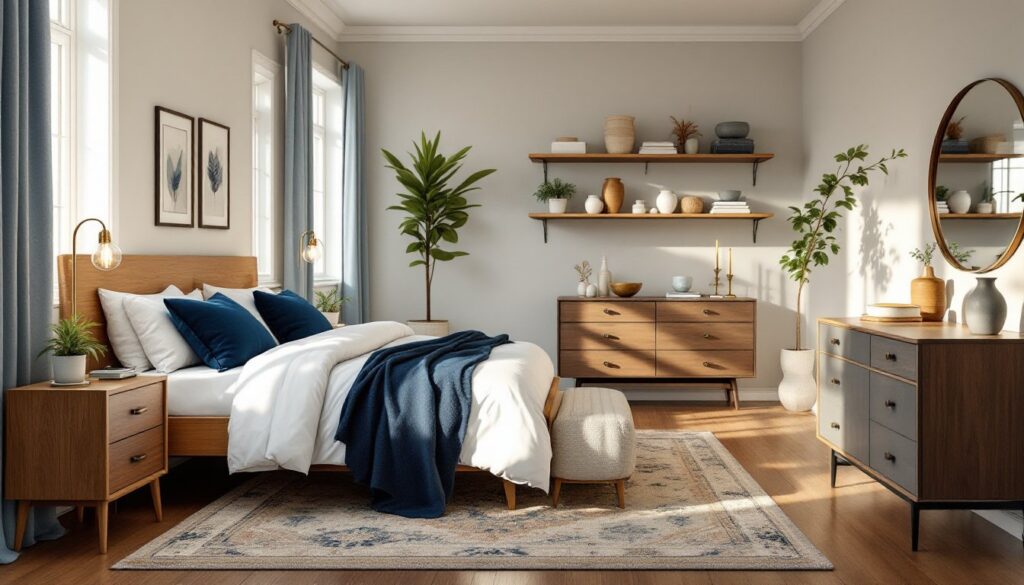
Start by choosing two or three base colors for walls, bedding, and larger pieces. Soft whites, warm grays, and pale blues work as versatile anchors. From there, layer in accent colors through textiles, artwork, and smaller furniture pieces. If your walls are soft gray and your bedding is white with navy accents, introduce the navy again through a dresser, side table, or decorative elements. This repetition creates coherence without requiring every piece to match.
The 60-30-10 rule works beautifully in bedrooms: 60% of the room in a dominant neutral (like walls and bed linens), 30% in a secondary color (maybe wood tones or a painted dresser), and 10% in accent colors (brass hardware, throw pillows, wall art). When you pull pieces from different sources and styles, this color discipline prevents the space from feeling like a mismatch. Young House Love and similar design-focused sites showcase real rooms where mismatched furniture feels cohesive because the color palette holds everything together.
Balancing Wood Tones and Finishes
The question that stops most people: “Won’t the different wood colors clash?”
Not if you’re intentional. The trick is deciding whether you’re embracing a mixed-wood look or anchoring everything with a dominant finish. Both strategies work.
Creating Harmony Across Different Stains
First, understand the difference between undertones. Oak tends toward warm, peachy yellows. Walnut leans cool and chocolate-brown. Maple sits neutral but often runs lighter. Pine has a warmer, honey quality. When you’re mixing, avoid pairing pieces that fight for attention, like a very warm honey oak next to a very cool gray walnut, without intentional separation.
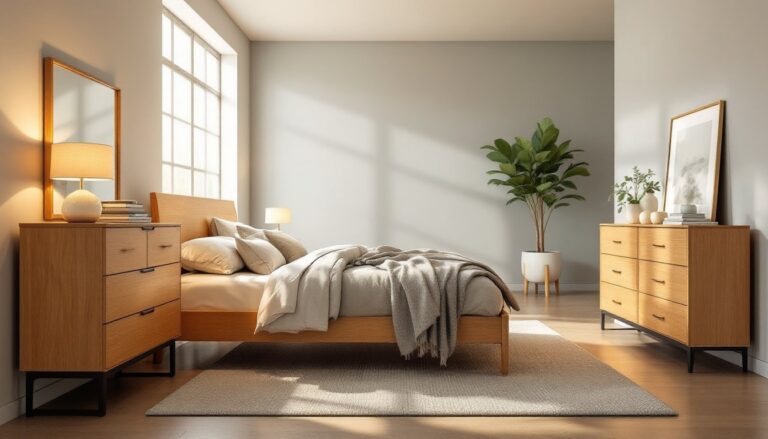
One approach: anchor the room with one primary wood tone for the largest pieces (bed frame and dresser, for example), then introduce secondary woods through accent pieces. A walnut nightstand and dresser paired with an oak bed frame won’t clash if they’re balanced, but if you add a light pine bookshelf and a dark mahogany bench, the room starts to feel scattered.
Alternatively, lean into the mixed-wood aesthetic deliberately. Pair warm and cool tones on purpose, using color and style unity to make the mix feel designed. A room with warm oak flooring, a cool walnut dresser, and a lighter pine bedside table works if the wall color, bedding, and accessories all tie the story together.
Finishes matter too. Matte and satin finishes feel more natural and current: they’re more forgiving when pieces aren’t perfectly matched. High-gloss pieces stand out and read as more formal or accent-focused. Stick mostly to matte and satin if you’re mixing, and use glossy finishes sparingly for impact.
Mixing Styles and Eras
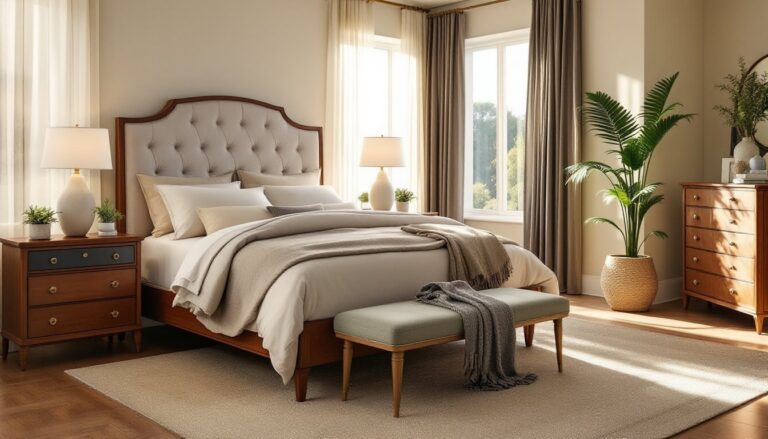
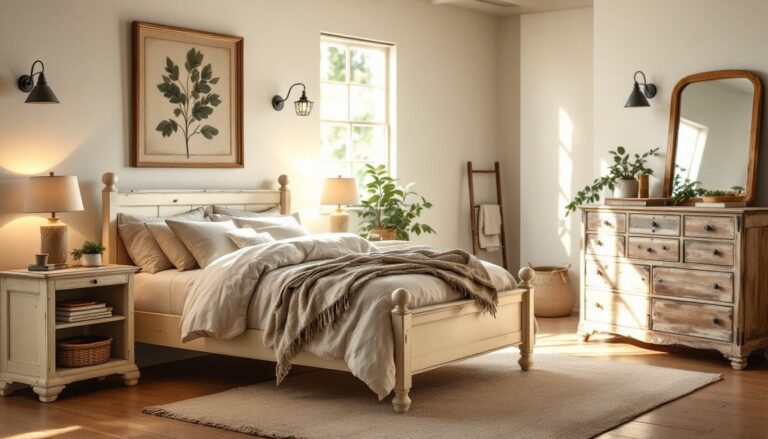
Pairing a mid-century modern dresser with a traditional four-poster bed might sound chaotic, but it works when you have a color anchor and a clear visual reason for the combination.
Start with a dominant style, let’s say modern, traditional, farmhouse, or eclectic, and use that as your north star. Everything else relates back to it. If your dominant style is contemporary minimalist, add a vintage wood dresser in a complementary tone, not a ornate Victorian piece that fights the simplicity. If you’re building a farmhouse-inspired room, mixing in industrial touches (metal bed frame, concrete or raw wood nightstands) makes sense: adding sleek chrome and glass contradicts the aesthetic.
The connector between different eras is often hardware and details. A vintage dresser with original brass pulls fits seamlessly into a modern room if the room’s other pieces also feature brass accents. A mission-style bookcase works in an eclectic bedroom if the room celebrates craftsmanship and natural materials across all furniture. Design Milk regularly features spaces that blend eras successfully, often because the designer has found a thread of material consistency or a unifying design principle.
Honestly assessing scale helps too. A petite Victorian table next to an oversized mid-century dresser can look intentional in a larger room but cramped in a small space. Match the visual weight of mixed pieces roughly to your room’s size and ceiling height.
Practical Tips for Success
Start with the bed. It’s usually the room’s largest, most-visible piece. Choose a bed frame you genuinely love, style, finish, and all, because everything else will relate to it. Working backward from the bed makes every other decision easier.
Measure before you buy. Pieces that seem perfect in a showroom can overwhelm a small bedroom or get lost in a large one. Measure your floor space, ceiling height, and doorways. Write down the dimensions of furniture you already own, then test new pieces against those proportions.
Hunt for one defining feature. Maybe it’s an unusual headboard, a dresser with interesting hardware, or a piece with a distinctive finish. Let that statement piece anchor your room’s personality, then pull supporting colors and styles from it.
Create symmetry where it matters. Nightstands don’t have to match, but they should feel balanced. If one is a tall, narrow table, pair it with another tall, narrow table rather than a short, wide one. This visual equilibrium matters more than exact matching.
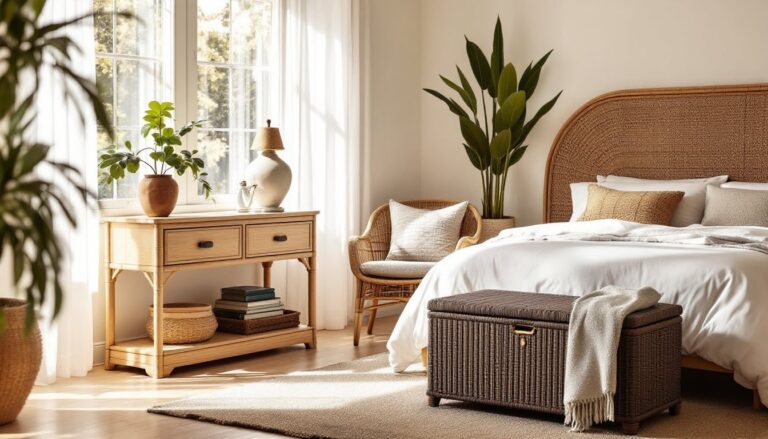
Accessorize with intention. Throw pillows, a bed runner, wall art, mirrors, and lighting are your hidden weapons. They let you tie together disparate furniture pieces and reinforce your color palette. Layer textures, linen, velvet, wood, metal, to add interest without adding more furniture. IKEA Hackers demonstrates how smart styling and simple modifications elevate budget pieces and create cohesion across mixed collections.
Consider placement and flow. In a small bedroom, position furniture to create a clear traffic path. In a larger room, you can be more playful. The way pieces relate spatially, not just visually, affects how they feel as a collection.
Don’t feel pressured to match everything else. Your lamp doesn’t have to match your nightstand. Your mirror frame doesn’t have to match your hardware. Cohesion comes from an overall color story and a shared sense of intention, not from uniformity.
Conclusion
Mixing and matching bedroom furniture isn’t a compromise, it’s a smarter, more honest way to design a room that works for your life and your budget. Start with a strong color palette, stay intentional about wood tones and style, and measure twice. The result is a bedroom that feels curated and personal, not like you’re sleeping in someone else’s idea of what a bedroom should be.