Table of Contents
ToggleFarmhouse style has become more than a fleeting design trend, it’s a timeless aesthetic that speaks to homeowners craving warmth, authenticity, and a break from sterile modern décor. Creating a farmhouse bedroom means blending vintage character with practical comfort, often sourced from reclaimed wood, distressed finishes, and pieces that look like they’ve been passed down through generations. Whether you’re starting from scratch or refreshing an existing space, building a farmhouse bedroom doesn’t require hiring a designer or draining your wallet. With the right furniture selections and styling approach, you can craft a bedroom that feels both inviting and personally connected to your life.
Key Takeaways
- Farmhouse bedroom furniture centers on authentic materials like reclaimed or distressed wood, wrought iron, and natural fabrics that age gracefully and celebrate imperfect finishes.
- Invest your budget in foundational pieces—a quality bed frame, sturdy dresser, and solid nightstand—while refreshing décor and textiles affordably through thrift stores and DIY refinishing techniques.
- Mix farmhouse style with existing décor by maintaining a neutral color palette of whites, creams, and soft grays, then layering textures and vintage finds to create cohesive, lived-in spaces.
- Essential farmhouse bedroom furniture includes a low-profile bed with visible wood joinery, substantial dressers with raised panels, and nightstands with open shelving for practical storage and display.
- Elevate farmhouse bedroom ambiance through strategic styling: layer textures, use soft lighting like Edison-bulb sconces, and incorporate natural elements such as woven baskets and botanical prints while keeping walls open and uncluttered.
What Defines Farmhouse Bedroom Furniture
Key Design Elements and Materials
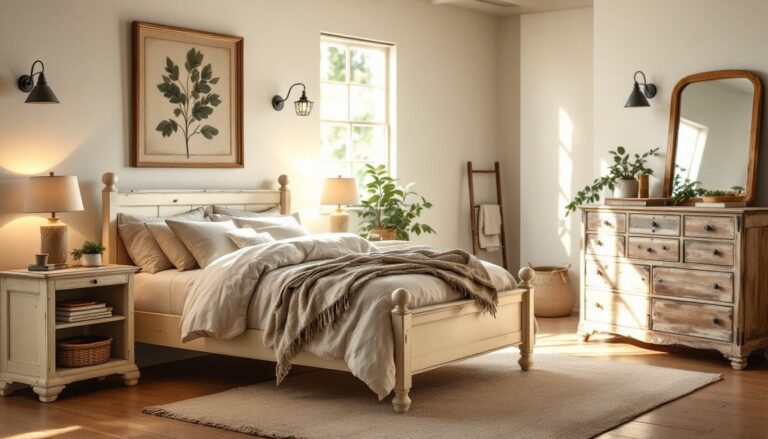
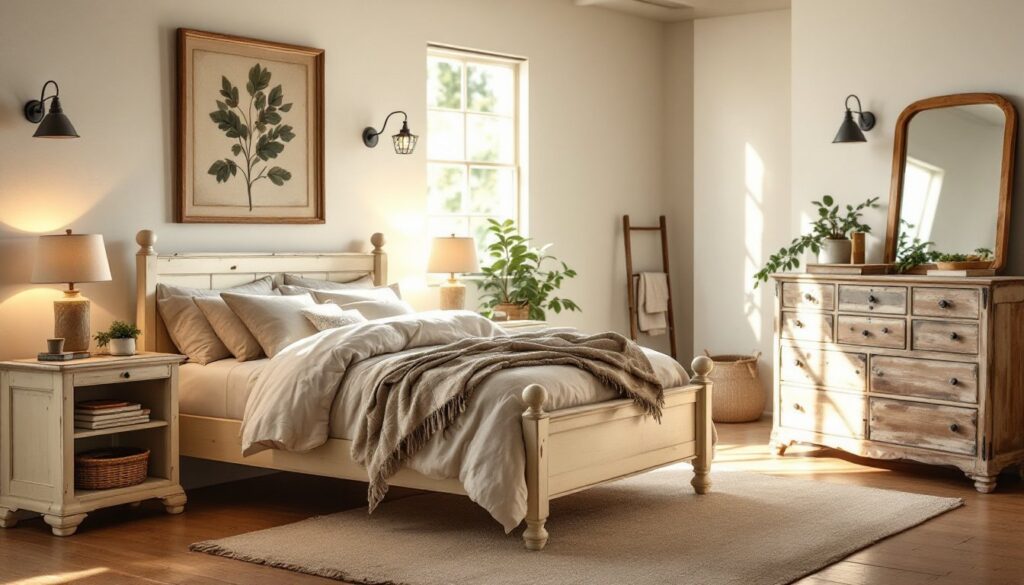
Farmhouse bedroom furniture centers on authenticity and texture. Think weathered wood, wrought iron accents, linen, and cotton, materials that age gracefully and feel substantial in hand. The style pulls inspiration from rural American homes of the early 20th century, but it’s not about perfectly matching reproduction pieces: it’s about the feeling of comfort and history.
The hallmark materials include reclaimed or distressed wood (often painted white, cream, or soft gray), metal hardware with a matte or aged finish, and natural fabrics like linen and cotton in neutral tones. Wood grain should be visible and celebrated, not hidden under glossy polyurethane. Finishes are deliberately imperfect: scratches, wear marks, and paint chips add character rather than detracting from it.
Key design markers include shiplap-style detailing, turned legs on bed frames and dressers, raised panel doors, and decorative corbels. Proportion matters too, farmhouse pieces tend toward generous sizing without feeling overstuffed. A bed frame sits lower and wider than modern designs, inviting you to sink into it. Nightstands have substantial bases and often include open shelving or a lower shelf for baskets. When exploring options, farmhouse style living rooms share many of these same core principles around texture, neutral palettes, and authentic materials.
Essential Farmhouse Bedroom Pieces to Invest In
Beds, Dressers, and Nightstands
Your bed is the anchor of a farmhouse bedroom, so invest here first. Look for frames with visible wood joinery, turned posts, and a footboard, elements that signal craftsmanship. A platform bed or low-profile frame in reclaimed wood, whitewashed pine, or painted wood works beautifully. Wrought-iron accents on the headboard add rusticity without looking agricultural.
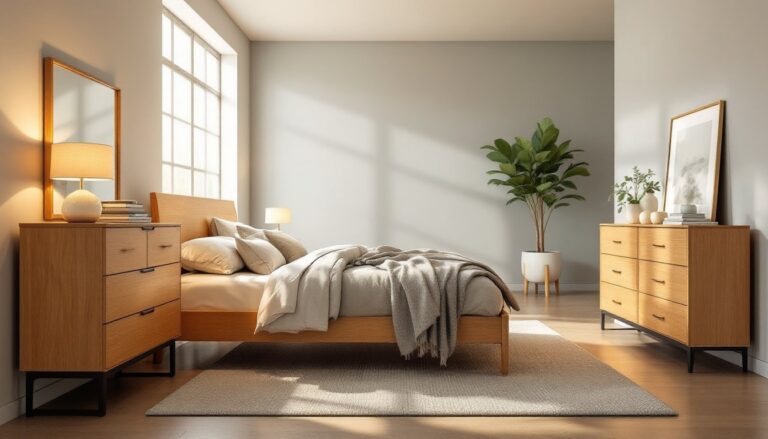
Dressers should be substantial pieces with multiple drawers, raised panels, and bracket feet. A dresser with a hutch-style mirror above it becomes both functional storage and a focal point. Wood tone can vary, light, medium, or dark finishes all work in farmhouse design, as long as the finish looks authentic rather than plastic-y.
Nightstands are workhorses. A wooden nightstand with an open lower shelf (perfect for a basket) and a single drawer combines storage with display space. Height should align roughly with your mattress top, usually around 24 to 28 inches, so reaching a lamp feels natural.
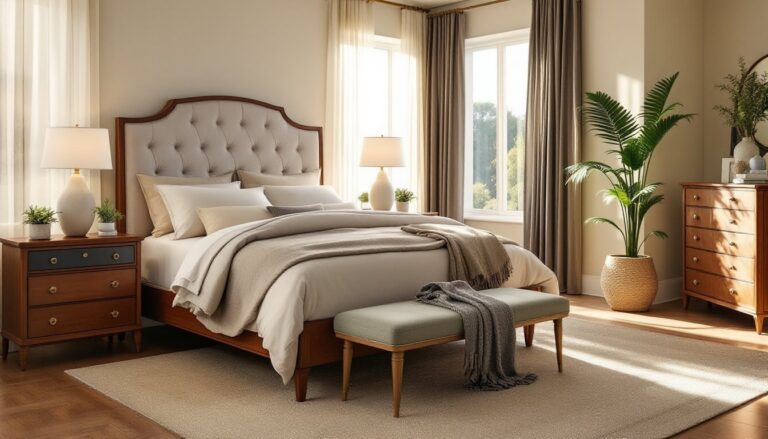
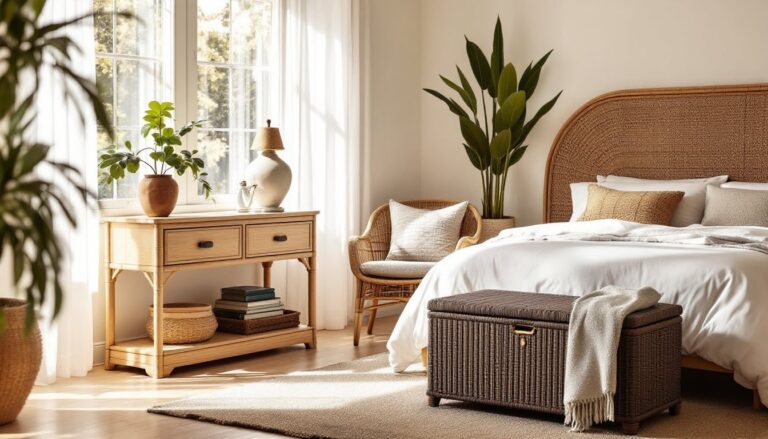
Beyond these big three, consider a storage bench at the foot of the bed, useful for linens, extra pillows, and visual interest. A dresser and nightstand pair from the same collection ensures cohesion without looking matchy-matchy if each piece shows its own character. When furnishing smaller bedrooms, bedroom chic spaces demonstrate how to maximize storage and functionality without sacrificing style. A wooden chest of drawers can replace a traditional dresser if space is tight, offering both storage and a surface for lamps or décor.
How to Mix Farmhouse With Your Existing Decor
Farmhouse style doesn’t demand starting over. You likely already own pieces that fit the aesthetic or can be adapted to it. A modern bed frame? Paint the headboard white or cream, or swap in a simple wooden footboard. A contemporary dresser? Layer it with a vintage mirror, linen runner, and grouped candlesticks to soften its lines.
The key is intentional mixing. Farmhouse pairs well with vintage industrial elements (think metal shelving, Edison-bulb lighting), vintage finds from antique shops (old trunks, weathered frames), and even some mid-century modern pieces if they’re in wood and aren’t glossy. The common thread is authenticity: pieces should look like they belong in a lived-in home, not a showroom.
Color palette is your friend here. Stick to whites, creams, soft grays, warm taupes, and muted greens, the neutral foundation that lets mixed-era pieces coexist peacefully. A modern upholstered bed in linen tones won’t clash with a century-old wooden dresser if both live in that neutral realm. Wall color should be soft and matte, avoid bright whites, which read as clinical. A gentle cream, pale gray, or warm beige lets furniture shine without competing.
Textiles tie everything together. Layer linen bedding, cotton throws, and woven rugs to unify different pieces. A faded quilt over a contemporary bed frame, paired with vintage-inspired nightstands, suddenly reads as farmhouse cohesion rather than design chaos. Browsing home decor inspiration can help you see how real homes blend styles successfully.
Budget-Friendly Ways to Refresh Your Bedroom
You don’t need to buy every piece new. Thrift stores, estate sales, Facebook Marketplace, and Craigslist overflow with solid wood dressers, nightstands, and bed frames, often for $50 to $300, that only need refinishing to shine. A distressed paint finish is easier than you’d think: sand existing varnish, prime with a bonding primer, apply two coats of your chosen color, then distress edges with 120-grit sandpaper to reveal the wood beneath. The result looks handcrafted and ages beautifully.
Focus your budget on pieces that need to last: a quality bed frame (look for solid joinery, not particleboard), a sturdy dresser, and a solid nightstand. These are the workhorses that will endure use and styling changes. Swap in affordable bedding in linen-look cotton blends, which cost far less than true linen but still deliver that texture. Layer textures instead of buying matching sets, a solid duvet, striped sheets, and a patterned quilt create visual interest and farmhouse authenticity.
Decor and textiles are where you can save and splurge strategically. A woven wall hanging or shiplap accent wall (peel-and-stick shiplap costs $30–$60 per pack and transforms a room) adds character without very costly. Thrifted wooden frames, vintage mirrors, and reclaimed hardware from salvage shops add personality for pennies. Ashley Furniture Santa Fe and similar retailers sometimes offer farmhouse-style pieces at mid-range price points, worth comparison shopping against custom or high-end options.
Styling Tips for Maximum Farmhouse Impact
Once your furniture is in place, styling elevates the whole room from functional to inviting. Layer textures ruthlessly: a chunky knit throw over the foot of the bed, a linen pillow mix on the headboard, and a wool area rug grounding the space create depth and warmth. Avoid matching sets: instead, layer solid colors with subtle patterns, plaids, ticking stripes, and botanical prints all sit comfortably in farmhouse spaces.
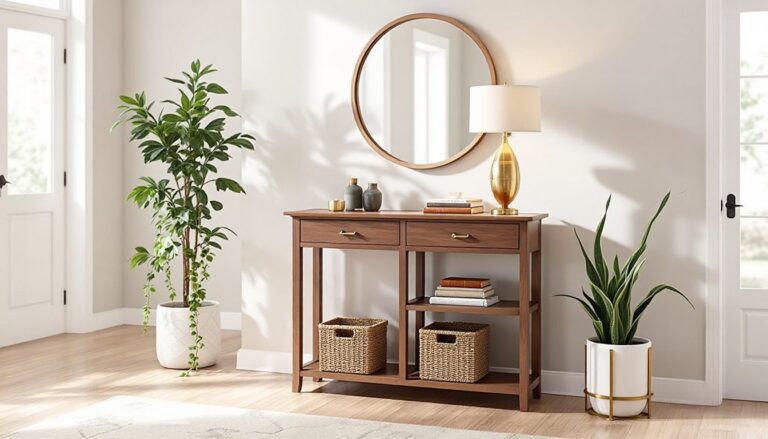
Empty surfaces feel cold. Style your nightstands and dresser top with intention: a table lamp with a fabric shade, a stack of books, a small potted plant, and a simple wooden tray corral items while adding character. Avoid cluttering: farmhouse style is clean, not chaotic. A single framed print or vintage photograph on the dresser mirror beats a gallery wall of 20 frames.
Lighting matters immensely. Swap overhead ceiling fixtures for softer options, a simple pendant, a drum shade fixture, or Edison-bulb sconces flanking the bed. These create intimate pools of light rather than harsh illumination, which is essential for farmhouse ambiance. Table lamps with natural linen shades soften light further.
Wall décor should feel curated, not crowded. A wooden sign with a meaningful phrase, a large vintage mirror, or a few botanical prints in simple frames work better than densely packed walls. Open wall space is part of the charm, it lets the eye rest and furniture take the spotlight. Consider the resources at Southern Living for inspiration on regional farmhouse aesthetics and how to adapt them to your climate and setting. Finally, introduce natural elements: a woven basket for blankets, a wooden ladder for hanging quilts, or branches in a tall vase bring outdoor calm indoors and reinforce the farmhouse connection to nature and simple living.