Table of Contents
ToggleWicker furniture has quietly become a bedroom design staple, and for good reason. Unlike heavy wood pieces or cold metal frames, wicker brings texture, warmth, and a laid-back sophistication to the bedroom, whether you’re going for beachy coastal vibes or eclectic bohemian charm. It’s durable enough for everyday use, lightweight enough to rearrange without calling in reinforcements, and versatile enough to work with nearly any color palette or design direction. This guide walks through what makes wicker work in bedrooms, the types of pieces worth considering, how to match wicker to your space, and the straightforward maintenance that keeps it looking fresh for years.
Key Takeaways
- Wicker bedroom furniture balances softness with structure, offering breathability and visual lightness without the coldness of metal or the visual weight of solid wood.
- Essential wicker bedroom furniture pieces include storage benches, headboards, nightstands, and ottomans—each serving multiple functions from storage to seating to design enhancement.
- Choose between natural rattan wicker for a classic honey-blonde tone, paper wicker for a bohemian aesthetic, or synthetic wicker for moisture resistance and easier maintenance based on your climate and style.
- Wicker works seamlessly with multiple design styles—from coastal and Scandinavian to bohemian and eclectic—because its natural palette enhances rather than dominates a room.
- Basic weekly dusting, immediate spill cleanup, and protection from direct sunlight keep wicker bedroom furniture looking fresh for 10 to 15 years with minimal maintenance effort.
- Quality wicker pieces with reinforced hardwood frames and sturdy hardware remain lightweight and easy to rearrange, making them ideal for seasonal bedroom redesigns or frequent movers.
Why Wicker Works for Bedroom Design
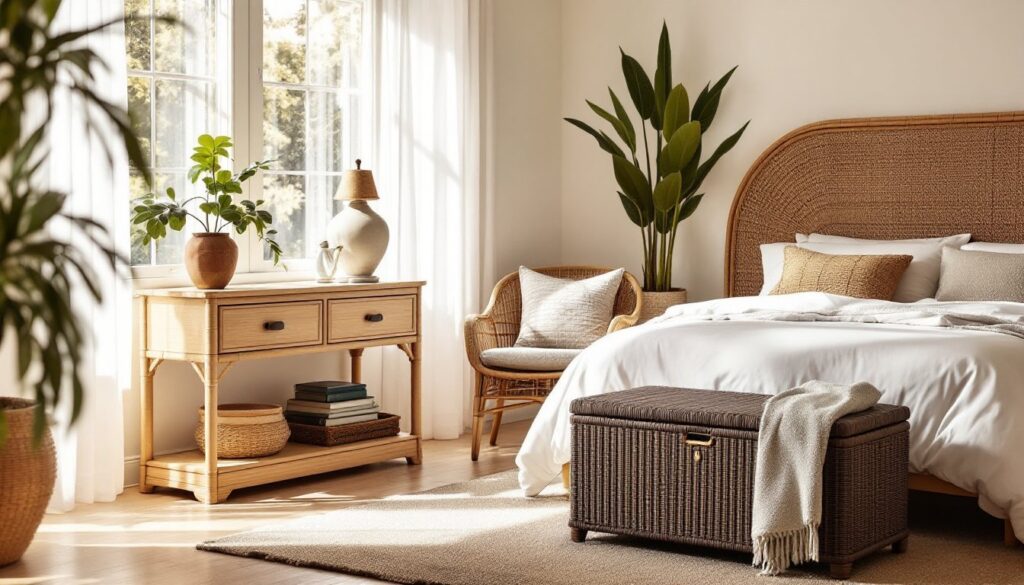
Wicker succeeds in bedrooms because it balances softness with structure. Unlike metal furniture that can feel cold or solid wood that demands visual weight, wicker offers breathability, both literally and aesthetically. A wicker nightstand won’t make your bedroom feel cramped: instead, it lets light and air flow through, keeping the space open and inviting.
The material also adapts beautifully to mixed décor styles. Wicker pairs equally well with crisp white bedding and nautical accents as it does with layered textiles and global prints. It reads as casual without being cheap, and intentional without feeling overdone. Plus, wicker’s natural color palette, from honey blonde to deep brown, anchors a room without demanding the spotlight. Many designers and home enthusiasts turn to wicker precisely because it enhances a space rather than dominating it, which is why Woodley Furniture: Transform Your home designs often incorporate wicker as a grounding element.
From a practical standpoint, wicker is forgiving. A loose weave is easy to dust, and minor surface imperfections won’t derail the piece’s lifespan. It’s also considerably lighter than solid wood furniture, making it ideal for anyone who rearranges their bedroom seasonally or moves frequently.
Types of Wicker Bedroom Furniture to Consider
Storage Benches and Ottomans
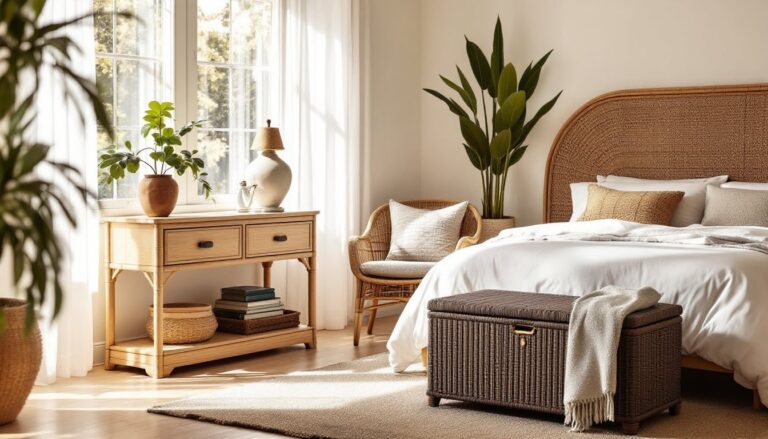
A wicker storage bench at the foot of your bed serves triple duty: seating, storage, and visual interest. Look for a bench with a lift-top lid so you can stash extra blankets, pillows, or out-of-season clothing without opening drawers or hunting through a closet. Dimensions typically range from 36 to 48 inches wide, and a depth of 16 to 20 inches keeps it proportional to most beds without eating up floor space.
Wicker ottomans work similarly but in smaller footprints, perfect for tucking beside a reading chair or at the corner of a bed frame. They’re lightweight enough to move if you need to vacuum or reconfigure your room layout. Quality wicker storage pieces have reinforced frames (look for hardwood or rattan cores) and sturdy hardware on lift-lids.
Headboards and Bed Frames
A wicker headboard instantly softens a bedroom’s focal point. These range from simple woven panels mounted to the wall behind a standard bed frame to full wicker bed frames where the headboard and frame are one integrated piece. Wall-mounted headboards are easier to install and don’t require moving the mattress: full-frame pieces create a unified look but demand more floor space and care during assembly.
When shopping, check the frame’s weight capacity, most quality wicker bed frames support standard mattress types without issue, but verify the specifications if you’re concerned. The weave pattern matters, too: tighter weaves look more polished and modern, while looser, chunkier weaves lean coastal or bohemian.
Nightstands and Bedside Tables
Wicker nightstands are the workhorse of wicker bedroom furniture. A standard width is 20 to 28 inches, with 24 inches being the sweet spot next to most beds. Height should match your mattress top, typically 26 to 28 inches, so grabbing a lamp or phone during the night feels natural.
Look for nightstands with at least one drawer and open shelf space for books or décor. The open construction means you won’t accidentally bang your toes on a solid base, and it visually lightens the piece. Some wicker nightstands include a woven back panel for a more finished look, while others leave the back open, choose based on whether your bed is against the wall or floats in the room.
Choosing the Right Wicker Style for Your Space
Wicker comes in several material and weave variations, and matching the right one to your space prevents buyer’s remorse. Natural rattan wicker, made from the stems of palm plants, has a warm, honey-blonde tone and tight, uniform weave. It’s classic and works with virtually any color scheme, though it can feel a bit formal if your space leans casual.
Paper wicker (also called paper cord or kubu wicker) has a slightly thicker, chunkier appearance and often reads as more bohemian or earthy. It’s durable and affordable, though it can fray if it rubs against rough fabrics or sharp edges.
Synthetic or resin wicker mimics natural wicker but resists moisture better, useful if your bedroom gets humid or if you’re near a coast where salt air can age natural materials faster. Synthetic options are also easier to clean and typically cost less, though purists argue they lack the warmth of real rattan.
Color matters for cohesion. Light, honey-toned pieces brighten airy bedrooms and pair beautifully with coastal or Scandinavian décor. Dark brown or espresso wicker grounds bohemian or eclectic rooms and works with jewel tones and patterned textiles. If you’re unsure, take a photo of your bedroom’s current palette and bring it to a furniture showroom, seeing wicker samples in context beats guessing from an online photo. Design inspiration sites like Homedit and Houzz showcase real rooms where wicker integrates successfully, which can spark ideas for your own space.
Care and Maintenance Tips
Wicker’s reputation for durability is earned, but it requires basic upkeep. Dust weekly with a soft brush or cloth to prevent debris from settling in the weave. For tighter weaves, a handheld vacuum with an upholstery attachment works well: for looser weaves, brush gently to avoid snagging fibers.
Spills happen. Wipe them immediately with a slightly damp cloth, don’t pour water into the weave, as it can weaken the core structure or encourage mold if moisture lingers. For stubborn stains, a mild soap and water solution applied with a soft brush usually suffices. Avoid harsh chemicals or abrasive cleaners, which can strip or damage the finish.
Place wicker furniture away from direct sunlight and heat sources like radiators or vents. UV exposure fades and weakens natural fibers over time, and heat accelerates drying and cracking. In dry climates or heated homes, mist your wicker pieces lightly with water once or twice a month to keep fibers pliable, think of it as a moisture refresh, not a cleaning.
Check joints and hardware annually. If a piece wobbles, tighten any visible screws or bolts. If the weave begins to fray or separate, a furniture repair specialist can often re-weave or reinforce weak spots. Resources like Country Living often feature maintenance tips for natural materials, which apply directly to wicker care. With this level of attention, quality wicker furniture lasts 10 to 15 years or longer without issue.