Table of Contents
ToggleOrlando’s subtropical climate is brutal on outdoor furniture. Intense sun, high humidity, salt spray from the Atlantic, and summer thunderstorms test materials relentlessly year-round. Whether you’re outfitting a small condo balcony or a sprawling backyard, choosing the right patio furniture means the difference between pieces that last years and those that fade, warp, or rust within months. This guide covers what actually works in Florida’s unforgiving conditions, how to evaluate materials, and how to keep your outdoor living space looking sharp without constant battle against the elements.
Key Takeaways
- Teak and commercial-grade aluminum are the top materials for patio furniture in Orlando, as they withstand intense humidity, salt spray, and UV exposure far better than budget alternatives.
- Patio furniture in Orlando requires monthly maintenance including salt removal from frames, mildew brushing from cushions, and checking wood for standing water to prevent long-term damage.
- Investing in quality cushions with quick-dry foam and machine-washable covers extends your outdoor furniture’s lifespan by years and significantly improves comfort despite the cost.
- Before hurricane season (June–November), secure lightweight patio furniture pieces and store cushions indoors to protect them from intense summer thunderstorms and saltwater spray.
- Mid-range patio furniture ($500–$1,500) offering solid aluminum or entry-level teak with decent cushioning typically lasts 7–10 years, providing better long-term value than budget options that fail in 3–5 years.
Understanding Orlando’s Outdoor Living Climate
Orlando sits squarely in the subtropical zone, which means year-round humidity averaging 70–80%, temperatures between 60°F in winter and 95°F in summer, and relentless UV exposure. The bigger threat than heat is moisture. Humidity accelerates rust on iron and steel, promotes mold and mildew on fabric, and causes wood to swell, crack, and rot even with protective finishes.
Salt spray isn’t as severe as coastal Miami or Tampa, but it’s present enough to corrode unprotected metal within months. Summer afternoon thunderstorms dump rain fast, expect 4–5 inches in a single storm, so water drainage and quick-dry fabrics aren’t luxuries: they’re necessities.
Alcove covered patios help, but even screened spaces catch moisture and salt-laden air. Uncovered decks and open patios face the full assault. Understanding this reality shapes material choices, and it’s why tropical furniture standards differ sharply from dry-climate recommendations.
Top Materials For Patio Furniture That Withstand Florida Conditions
Weather-Resistant Wood Options
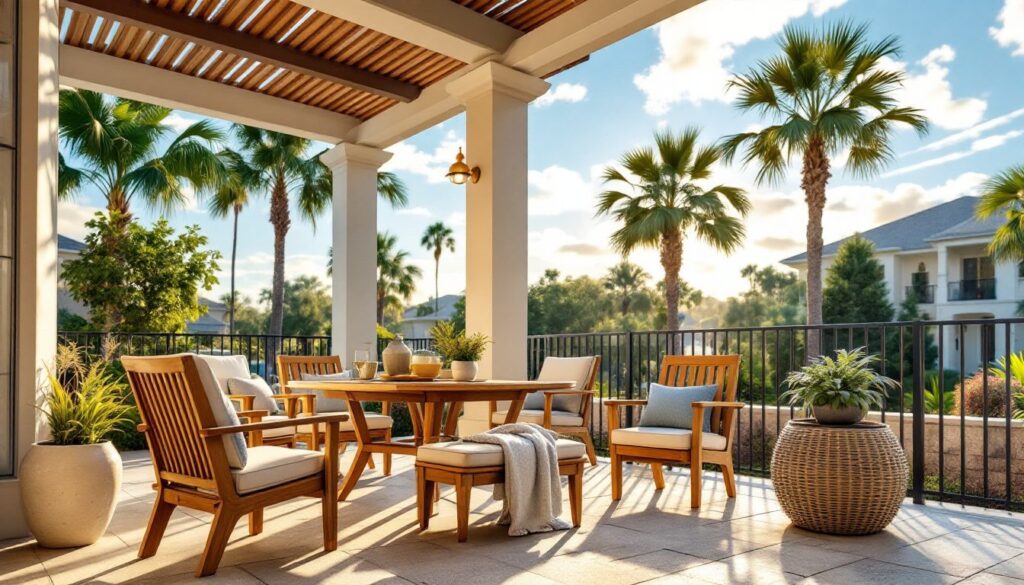
Teak is the gold standard for outdoor wood. Its dense cellular structure and natural oils resist rot, insects, and UV fading far better than pine or oak. Teak weathers to a silvery-gray patina if left unfinished, or you can oil it annually to maintain honey tones. It’s expensive, a four-piece teak set runs $2,500–$5,000, but pieces last decades. Teak doesn’t require cushions to survive, though outdoor fabric adds comfort.
Ipe (also called Brazilian walnut) is denser and harder than teak, nearly impervious to rot, and costs less. It’s less forgiving to work with for DIY repairs, but commercially built pieces are solid. Expect similar longevity to teak at a modest savings.
Shorea and other tropical hardwoods marketed as “teak-like” vary wildly in performance. Read reviews and check wood species, not just marketing claims. Avoid treated pine or pressure-treated lumber, they’re not designed for regular contact with skin or food.
Maintenance note: Even teak needs an annual rinse and light cleaning. Mold grows on surfaces regardless of wood type, and salt residue corrodes anything nearby.
Metal Furniture For Durability And Style
Aluminum is Orlando’s practical metal choice. It’s lightweight, won’t rust (aluminum oxidizes to a dull coating, not rust), and takes powder-coated finishes that hold color well. A quality powder coat lasts 5–7 years even in direct sun. Aluminum frames are often paired with sling fabric (a tight polyester mesh) or cushions. Inspect welds and joints, cheap aluminum bends or breaks under weight, while commercial-grade frames handle 300+ pounds.
Stainless steel resists corrosion better than painted steel but costs more and reflects heat aggressively. A stainless frame with teak slats is sleek and durable, though prices approach teak-only sets. Good choice if budget allows.
Wrought iron and mild steel need paint or powder coat to survive Orlando. Once the finish chips, rust accelerates. If you choose iron, inspect it monthly and touch up scratches immediately. Many homeowners prefer aluminum for lower maintenance.
Pair any metal frame with solution-dyed acrylic or olefin fabrics designed for outdoor use. These resist UV fading and mildew better than polyester. Sunbrella brand is widely available and reliable, though mid-range options like Mendler or Ballard Designs’ house brand perform similarly at lower cost.
Finding The Right Patio Furniture For Your Space And Budget
Start by measuring your patio or deck, account for foot traffic and door swings, not just the open area. A 10×12 covered porch fits a sectional plus dining: an open 8×8 deck demands two or three pieces, not a full suite that feels crowded.
Budget tiers break down clearly. Under $500 nets aluminum frames with basic cushions or basic wood pieces from box stores, serviceable but expect replacements in 3–5 years. $500–$1,500 buys solid mid-range aluminum or entry-level teak with decent cushioning, lasting 7–10 years. Above $1,500 enters premium teak, commercial-grade frames, and high-performance fabrics with 10–15 year lifespans.
Regional retailers and online shops offer better selection than big-box stores, but verify return policies and warranty details. Look for southern home design inspiration focused on outdoor entertaining, Southern Living covers regional furniture trends and porch design suited to humid climates. Gardenista spotlights garden design and outdoor living spaces that reflect how Florida homeowners actually configure patios.
Don’t skimp on cushions. A $300 aluminum set with $80 cushions underperforms a $300 set with quality $150 cushions. Cushion quality determines comfort and lifespan. Look for quick-dry foam and removable, machine-washable covers.
Care And Maintenance Tips For Year-Round Protection
Seasonal prep matters more in Orlando than most climates. Before hurricane season (June–November), secure or store lightweight pieces, anchor large sets, and confirm cushions are stored indoors. After summer storms, rinse salt spray and debris from frames and cushions immediately.
Monthly tasks:
- Wipe metal frames with a dry cloth to prevent salt buildup.
- Brush mildew off cushions with soapy water: air-dry completely before storing.
- Check wood for standing water in joinery: dry with towels to prevent rot initiation.
- Inspect fabric zippers and seams for mold, address early before it spreads.
Quarterly or seasonal:
- Oil teak or other hardwood per manufacturer recommendations (usually once or twice yearly).
- Hose down all pieces to remove pollen, salt residue, and algae buildup.
- Check and touch up any paint or powder coat damage on metal frames.
Storage: If storing cushions, use breathable canvas storage bags, not sealed plastic. Moisture trapped in plastic accelerates mildew. Place desiccant packs inside. Store furniture indoors if possible during extended off-season (rare in Orlando) or under a tarp secured loosely to allow air circulation.
Invest in a furniture cover for major pieces if they’ll sit unused more than a few weeks. Carver polyester or breathable fabric covers run $50–$200 depending on size and quality. They reduce UV exposure and collect debris rather than the furniture itself. Sunset magazine offers western-friendly outdoor entertaining ideas that translate well to Florida’s climate needs and offer styling guidance alongside practical durability lessons.
Conclusion
Orlando’s weather demands furniture that tolerates heat, humidity, salt, and intense sun without constant coddling. Teak and quality aluminum are your safest bets, while secondary materials like ipe and stainless steel add options at various price points. The real difference is honestly assessing your budget, measuring your space, and committing to basic seasonal maintenance. Cheap furniture that fails in three years costs more in the long run than mid-range pieces that last a decade. Choose materials suited to Florida’s climate from the start, and your patio becomes a functional year-round outdoor room instead of a weather-ravaged eyesore.