Table of Contents
ToggleBlue is more than just a color choice, it’s a strategy for creating a bedroom that feels both restful and refined. Whether you’re starting fresh or refreshing an existing space, blue bedroom furniture serves as the foundation for a cohesive, calming environment. The versatility of blue ranges from soft, barely-there tints that whisper tranquility to deep, saturated shades that command attention with quiet sophistication. In 2026, blue furniture continues to dominate bedroom design because it works across styles, from minimalist and Scandinavian to traditional and eclectic, and pairs effortlessly with nearly any accent color or material. This guide walks you through selecting the right shade, choosing essential pieces, and styling them to create a bedroom that feels like your personal sanctuary.
Key Takeaways
- Blue bedroom furniture creates a calming, restful environment by promoting relaxation through color psychology, making it ideal for improving sleep quality.
- Light blues work best in smaller spaces with limited natural light, while deep blues suit larger rooms and pair beautifully with warm metallics for a sophisticated look.
- Start your bedroom redesign with anchor pieces like an upholstered bed frame, painted dresser, or nightstands in your chosen shade of blue to set the room’s color foundation.
- Style blue bedroom furniture as a dominant neutral by layering with white, cream, or soft gray bedding, warm lighting, and natural wood accents to prevent a cold or flat appearance.
- Blue furniture is timeless and versatile across design styles—from minimalist to traditional—making it a practical investment that remains relevant and resalable for years.
Why Blue Is the Perfect Choice for Bedroom Furniture
Blue furniture works in bedrooms because the color itself promotes calm and reduces stress. Unlike warmer tones that energize or grounding earth tones that can feel heavy, blue creates a subtle psychological shift toward relaxation. Sleep research consistently shows that cooler colors support better rest, which is why designers and sleep specialists often recommend blue for sleeping spaces.
Beyond the science, blue is practical. It hides dust and minor wear better than lighter neutrals, and it doesn’t show every fingerprint like darker colors such as black or charcoal. Blue also pairs with an enormous range of secondary colors, warm wood tones, crisp whites, soft grays, or even unexpected accents like terracotta or mustard. This flexibility means your blue furniture adapts as your tastes evolve, without needing a complete overhaul.
Another advantage: blue furniture feels timeless without being boring. Fashion cycles come and go, but blue bedrooms remain desired and resalable. Whether you choose a navy bed frame or a dusty blue dresser, you’re investing in pieces that’ll feel relevant for years.
Choosing the Right Shade of Blue for Your Bedroom
Not all blues are created equal. The undertone, saturation, and lightness of your blue choice directly impact how the room feels and how well it coordinates with other elements. Selecting the wrong shade can make a space feel cold, dated, or mismatched, so take time to consider which direction suits your personal style and room conditions.
Light and Airy Blues
Light blues, think pale periwinkle, dusty sky blue, or soft denim, work wonderfully in smaller bedrooms or spaces with limited natural light. These shades open up a room visually and pair beautifully with Navy Blue Bedrooms: The Ultimate Guide to Timeless Design, offering contrast and depth. Light blue furniture feels fresh and contemporary, especially when paired with white trim, crisp linens, and natural wood accents.
One consideration: light blues can appear slightly washed out in rooms with cool-toned artificial lighting. If your bedroom relies on fluorescent or cool LED lights, test samples in the actual space before committing. Warm-toned bulbs (2700K) help light blues look richer and more inviting. Light blues also work exceptionally well in Kids Bedroom: Create a, where they support calm without feeling babyish.
Deep and Moody Blues
Deep blues, navy, indigo, cobalt, or teal-leaning sapphire, make bold statements and create cozy, intimate spaces. These shades ground a room and work particularly well in larger bedrooms with excellent natural light. A deep blue bed frame or accent dresser instantly elevates a space and suggests sophistication.
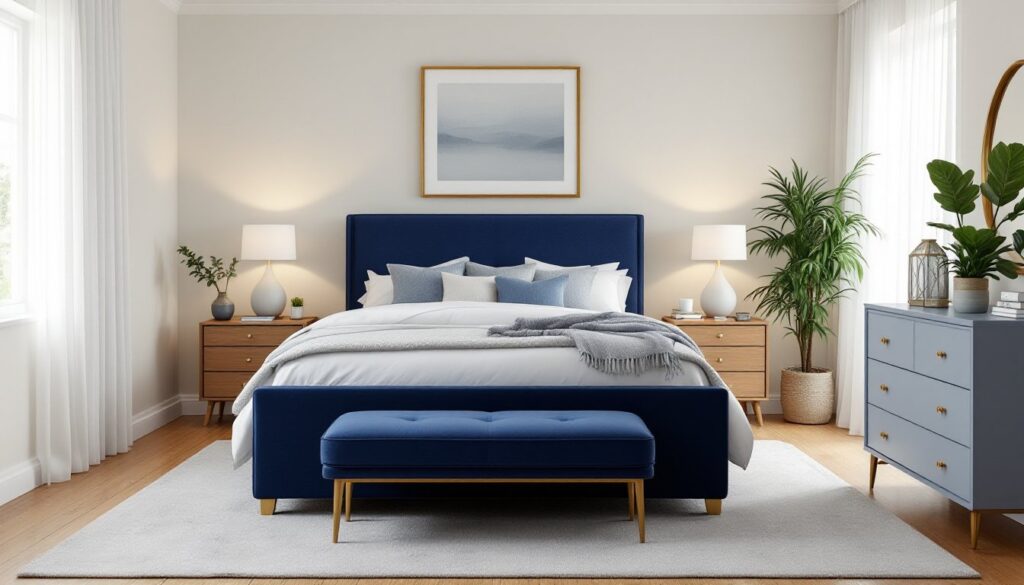
Deep blues pair exceptionally well with brass, gold, or warm metal accents, creating a luxe feel. They also provide excellent contrast for lighter bedding and accessories. The trade-off: deep blues can overwhelm smaller rooms if applied to all major furniture pieces. In tight spaces, use one substantial deep blue piece, say, an upholstered headboard, and balance it with lighter walls and accents.
Consider the room’s natural light exposure. Rooms with north-facing or limited sunlight can handle deep blue better than south-facing spaces that get intense afternoon sun. Test paint samples on furniture pieces under different lighting conditions to gauge the true tone.
Essential Blue Bedroom Furniture Pieces to Consider
Starting a bedroom redesign? Prioritize pieces that anchor the room and set the color tone. The bed is your foundation, whether you go for an upholstered blue headboard, a painted blue bed frame, or blue bedding depends on your budget and style preference. An upholstered platform bed in slate blue or navy creates a focal point and immediately signals the room’s color direction.
Dressers and nightstands in blue are equally impactful and often more affordable than beds. A painted dresser in dusty blue adds color without the investment of reupholstering a headboard. Nightstands don’t require much depth or space, making them excellent starter pieces if you’re testing blue in your bedroom. A pair of matching blue nightstands flanking the bed creates visual balance and intentionality.
Consider storage benches, accent chairs, or ottomans as secondary pieces. These items inject color and function without overwhelming the room. An upholstered ottoman in cornflower blue serves as extra seating, footrest, or storage depending on your needs. An accent chair in a lighter blue shade creates a reading nook and adds texture through fabric choice.
When selecting materials, think durability and maintenance. Upholstered pieces require occasional cleaning (fabric protection treatments help), while painted or stained wood pieces demand less maintenance but show surface damage more readily. Mix materials, perhaps a painted blue dresser with an upholstered blue bench, to add visual interest and balance maintenance concerns. Bedroom Chic: Transform Your Space Into a Stylish Sanctuary offers additional styling insights for coordinating multiple pieces.
Styling Tips for Blue Bedroom Furniture
Styling blue furniture successfully means treating it as a dominant neutral rather than a bold accent. Start with your blue pieces, then build around them with supporting colors and textures. White, cream, and soft gray walls or bedding allow blue furniture to command attention without competing with patterned wallpaper or complex wall colors.
Layering is key. Pair a blue bed frame with neutral bedding, then add texture through throw pillows, a quilted throw, or a patterned rug. This prevents the room from feeling flat or one-note. Brass, gold, or copper hardware and accents warm up cool blues beautifully, swap out standard silver handles on dressers for warmer metallics that complement the furniture’s tone.
Lighting shapes how blue furniture reads in your space. Warm overhead fixtures or bedside lamps make blue feel inviting, while cool or harsh fluorescent light can make the same shade feel clinical. Layer your lighting: use a dimmer switch on overhead lights, add a warm-toned lamp on each nightstand, and consider a decorative accent light near a reading chair.
Incorporate natural materials to soften blue’s coolness. Wood, whether warm honey tones, whitewashed, or dark stained, adds warmth and prevents the room from feeling cold. A wooden dresser or nightstands in natural finish paired with blue upholstery creates balance. Plants also warm up blue spaces and improve air quality, making the room feel more like a retreat. Interior design resources like Homedit and House Beautiful offer additional styling inspiration for coordinating blue pieces with accessories and wall treatments. MyDomaine also provides trend-forward tips for modern blue bedroom designs.
Finally, don’t forget about Teen Bedroom Makeover: Transform Your Space with Style and Functionality or Boy Bedrooms: Creative Design Ideas if you’re designing for younger residents, blue appeals across age groups and coordinates well with the shifting interests of growing children.
Conclusion
Blue bedroom furniture delivers both aesthetic appeal and functional calm, making it a smart choice for anyone seeking to improve their sleep environment. Whether you choose light, airy shades or deep, moody tones, blue works across design styles and adapts to your personal taste. Start with one key piece, a bed, dresser, or accent chair, and build from there. The key is committing to your chosen shade and styling it intentionally with supporting colors, textures, and lighting. Your bedroom will transform into a space that looks as good as it feels.