Table of Contents
ToggleCoastal bedroom furniture sets bring the calm and relaxation of the seaside right into your home, transforming a bedroom into a personal retreat. Whether you live near the ocean or landlocked, coastal design captures the essence of beach living, soft colors, natural textures, and an airy, uncluttered feeling. Unlike trendy styles that come and go, coastal furniture endures because it taps into our universal desire for peace and simplicity. If you’re ready to swap stress for serenity, coastal bedroom furniture sets offer a proven path to creating a space where you actually want to spend time.
Key Takeaways
- Coastal bedroom furniture sets prioritize light, natural materials, and relaxed aesthetics—including whitewashed wood, natural fibers like linen and cotton, and woven elements such as rattan to create an airy, uncluttered space.
- A complete coastal bedroom set should include a bed frame, nightstands, dresser, bench or storage chest, and accent furniture, all unified by consistent finishes and materials to ensure visual harmony and avoid a disjointed appearance.
- Use the 70-20-10 color rule—allocating 70% neutral tones (creams, whites, soft grays), 20% secondary colors (soft blues and greens), and 10% accent colors—to maintain the calm, cohesive seaside feeling that defines coastal design.
- When selecting quality coastal furniture sets, prioritize hardwood frame construction, natural fabric content with high thread density, and genuine whitewashed finishes over budget options that use particleboard or poor-quality materials that deteriorate quickly.
- Mid-range coastal bedroom furniture sets ($3,000–$7,000) typically offer the best balance of solid construction, durability, and thoughtful design details, lasting 15–20 years with proper care.
- Layer textures, keep surfaces clear, introduce soft warm lighting, and accessorize with restraint to maximize your coastal bedroom look while maintaining the peaceful, open aesthetic that makes the style both timeless and restorative.
What Defines Coastal Bedroom Furniture
Coastal bedroom furniture isn’t just about slapping a nautical anchor on everything and calling it a day. It’s a cohesive approach to furnishings that prioritizes light, natural materials, and a relaxed aesthetic. The core philosophy centers on creating an environment that feels open and unburdened, the opposite of heavy, ornate pieces or dark, enclosed designs.
Coastal style draws from both New England seaside cottages and laid-back Caribbean aesthetics, meaning it can adapt to different regional interpretations. What remains constant is the emphasis on airiness, accessible comfort, and materials that suggest the beach without screaming beach house.
Key Design Elements and Materials
The foundation of coastal furniture rests on a few recurring materials and finishes. Whitewashed wood dominates the look, think weathered driftwood tones achieved through actual driftwood or painted and distressed lumber. Reclaimed wood (or its convincing replicas) adds authentic character and depth.
Fabrics lean toward natural fibers: linen, cotton, and jute appear across upholstered headboards, bedskirts, and accent pillows. These breathe well and age beautifully, developing a soft patina over time. Metal accents are typically brushed brass, bronze, or wrought iron rather than shiny chrome, softer and more organic.
Woven elements like rattan, wicker, and seagrass appear in nightstands, storage benches, and accent chairs. These pieces add texture without visual weight. Paint finishes are typically low-sheen or matte to avoid that plastic, high-gloss look. Blues, greens, and grays dominate, but neutrals like sand, cream, and off-white form the backbone of any coastal palette.
The unifying theme across materials is this: does it feel like it belongs on a beach or by the water? If the answer is yes, it probably fits the coastal aesthetic.
Essential Pieces for a Complete Coastal Set
A functional coastal bedroom needs the same pieces as any bedroom, but selected with coastal principles in mind. Here’s what you’re actually working with:
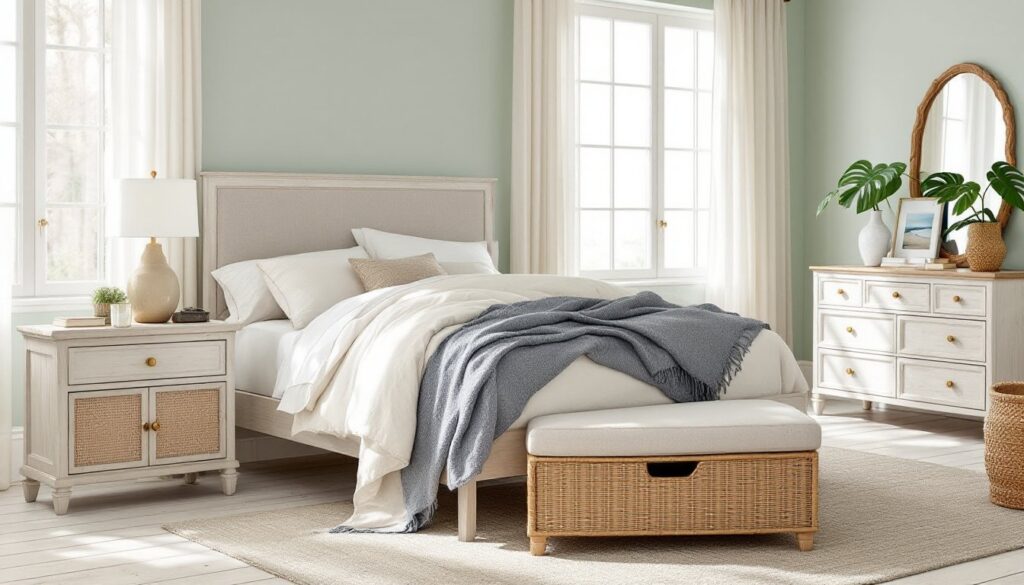
Bed frame, This is the anchor piece. Look for whitewashed wood, reclaimed wood, or upholstered frames with natural linen or cotton in neutral tones. Coastal beds often feature simple, clean-lined designs or subtle details like beadboard paneling on a headboard. Metal frames (wrought iron or brushed bronze) work too, as long as they’re not industrial or overly geometric.
Nightstands, Pair your bed with nightstands that echo the frame’s finish. Rattan-wrapped drawers, woven baskets, or wood with an open shelf for a relaxed vibe all work beautifully. The goal is accessibility without fuss.
Dresser, A whitewashed or natural wood dresser with plenty of drawer space balances storage and style. Many coastal dressers feature simple hardware (brushed brass knobs or driftwood pulls) and uncluttered surfaces.
Bench or storage chest, Placed at the foot of the bed, a simple wooden bench or upholstered storage trunk adds function and softness. Look for neutral fabric or natural wood finishes.
Accent furniture, A woven chair, rattan side table, or wooden shelving unit adds depth without clutter. These pieces should enhance the feeling of openness, not reduce it.
When choosing a complete set, prioritize cohesion in finishes and materials. A coastal bedroom set from a single manufacturer typically ensures visual harmony across pieces, finishes match, proportions feel balanced, and you avoid the pieced-together look. But, mixing carefully selected individual pieces from different brands works if you maintain a consistent material palette and color story.
Choosing the Right Color Palette
Color makes or breaks coastal design. The goal is a palette that feels calm, cohesive, and evocative of the seaside without becoming monotonous.
Neutrals as your base, Start with creams, whites, soft grays, sand tones, and warm beiges for large furniture pieces and walls. These recede visually, making the room feel larger and more restful. If pure white feels too stark, consider soft whites with warm undertones (ivory, cream, off-white) rather than cool, clinical white.
Blues and greens as accents, Introduce subtle blues (seafoam, slate, soft navy) and greens (sage, muted aqua, soft jade) through smaller pieces, textiles, and artwork. These shouldn’t dominate: they should feel like whispers of the ocean rather than bold statements. A upholstered headboard in soft blue or a few throw pillows in muted teal keeps the seaside feeling alive.
Warm metallics for polish, Brushed brass, bronze, and warm copper create visual interest without coldness. These finishes appear in hardware, mirrors, and light fixtures.
The 70-20-10 rule, Allocate roughly 70% of the room to neutral tones, 20% to secondary colors (the softer blues and greens), and 10% to accent colors or pops of warmth. This formula keeps the space balanced and prevents visual chaos.
Experience shows that successful coastal bedrooms avoid pure primary colors, overly saturated hues, and harsh contrasts. The relaxing effect depends on soft transitions between tones. If you’re unsure about committing to a color, test paint samples on walls in natural and artificial light over several days before purchasing. Coastal color is all about restraint and harmony.
How to Select Quality Coastal Furniture Sets
Not all coastal furniture sets are created equal. Price and quality don’t always align, so knowing what to assess is crucial before spending.
Construction matters most, Examine joinery and frame construction. Hardwood frames (oak, maple, birch) outperform softwood or plywood for longevity. Mortise-and-tenon joinery is superior to staples or glue alone. Run your hand under the bed frame or along drawer supports: you should feel solid wood, not cardboard-thin particleboard.
Fabric quality in upholstered pieces, Check fabric content and weave density. Natural fibers (linen, cotton, linen blends) age better than polyester and perform better in coastal environments where salt air and humidity are factors. Count the thread density: higher counts generally indicate durability.
Finish durability, Whitewashed finishes should feel smooth, not patchy or peeling. Ask if the finish is a coating (lacquer, polyurethane) or actual stain with distressing. A quality whitewashed look has depth and consistency. Real distressing is subtle: fake distressing looks cartoonish.
Hardware and details, Check that drawer pulls, hinges, and knobs are solid metal (not plastic) and move smoothly. Cheap hardware breaks first and is often expensive to replace.
Dust and climate protection, In coastal or humid areas, ask if wood is sealed or treated for moisture resistance. Solid wood expands and contracts with humidity: proper finish prevents warping.
Budget-Friendly vs. Premium Options
Budget-friendly sets ($1,000–$3,000) typically feature mixed materials (some solid wood, some engineered wood), finishes that mimic higher-end looks, and simpler designs. They’re great for renters or those testing the coastal style. Expect them to be functional but potentially less durable over 10+ years. Retailers like Wayfair, Overstock, and Ashley Furniture offer solid budget options.
Mid-range sets ($3,000–$7,000) balance quality and cost. You’ll find mostly solid wood, better joinery, and more thoughtful design details. These sets often last 15–20 years with care.
Premium sets ($7,000+) feature high-quality hardwoods, superior joinery, custom finishing, and designer craftsmanship. Expect 25+ year lifespans. Brands like Restoration Hardware, Pottery Barn, and high-end manufacturers justify the cost through materials and construction.
Regardless of budget, avoid sets that feel flimsy, have rough finishes, or use poor-quality fabric. A mid-range set with solid construction beats a budget set that wobbles or frays within three years. If you’re on a tight budget, consider buying pieces gradually rather than a rushed complete set.
Styling Tips to Maximize Your Coastal Bedroom Look
Once you’ve selected your coastal furniture set, styling ties everything together. The goal is to enhance the design without overdoing it.
Layer textures thoughtfully, Combine smooth surfaces (linen bedding, painted walls) with rough textures (jute, woven baskets, driftwood accents). This layering adds visual interest and depth. A bedroom with only smooth, slick surfaces feels cold: one layered with varied textures feels inviting.
Keep surfaces clear, Coastal style thrives on open space. Nightstands should hold a lamp, a glass of water, and maybe one book, not a cluttered shrine. Dressers look best with minimal decor (a mirror, a plant, perhaps a decorative tray). Clear surfaces let the furniture itself shine and reinforce the calm, airy feeling.
Introduce soft lighting, Harsh overhead lights destroy coastal ambiance. Add table lamps with natural linen shades, wall sconces, or string lights in warm white (not cool white, which feels clinical). Dimmer switches give flexibility for different moods.
Bring in natural elements, A potted fiddle leaf fig, a vase of dried grasses, or a collection of driftwood pieces connects the room to nature without feeling forced. Keep these minimal: one large plant beats five small struggling ones.
Use mirrors strategically, Mirrors with whitewashed, driftwood, or simple metal frames amplify light and expand the visual space. Place them opposite windows or light sources.
Select bedding carefully, Your duvet cover, sheets, and throw pillows set the daily tone. Stick with neutral base layers and introduce color through pillow covers and throws. Linen bedding is quintessentially coastal and breathes beautifully: cotton is more affordable and similarly versatile. Wash bedding before using to soften the feel.
Accessorize with restraint, A few well-chosen pieces (a coastal print, a woven wall hanging, a ceramic vase) matter more than numerous small objects. Each item should earn its place by either being beautiful, functional, or both. Homeowners often find that browsing Living Room Furniture Sets and Beachy Living Rooms for complementary design ideas helps extend a cohesive coastal vision throughout the home. Alternatively, design websites like Homedit and House Beautiful offer endless inspiration for coastal bedroom styling and color palettes.
Plan for seasonal refreshes, Swap throw pillows, change artwork, or rotate decorative pieces seasonally. This keeps the room fresh without major furniture changes and lets you adjust the coastal palette as you learn what resonates.