Table of Contents
ToggleModern bedroom furniture has moved beyond stark minimalism into something far more livable, clean lines paired with warmth, functionality married to aesthetics, and timeless design that doesn’t feel cold. If you’re furnishing a bedroom or refreshing what’s already there, understanding what makes furniture “modern” will help you invest in pieces that’ll feel current for years. This guide walks through the defining characteristics, essential pieces, materials, and styling strategies that separate thoughtfully designed modern bedrooms from those chasing trends. Whether you’re starting from scratch or swapping out a few key items, you’ll find the practical framework to build a bedroom that’s both visually cohesive and genuinely comfortable to live in.
Key Takeaways
- Modern bedroom furniture balances clean lines with warmth by prioritizing form that follows function, rejecting both sterile minimalism and trendy excess for enduring design.
- Platform beds with tapered legs, upholstered headboards, and floating nightstands form the foundation of modern bedroom furniture, eliminating visual clutter while maximizing functionality.
- Honest materials like solid hardwood (walnut, white oak) or quality veneer, combined with matte finishes and metal accents, create the sophisticated aesthetic that defines modern design.
- A restrained color palette of 2–3 neutral tones (whites, grays, warm taupes) with one deeper accent prevents visual chaos and keeps the bedroom calm without feeling monotone.
- Proper furniture scale and negative space are essential—undersized or oversized pieces defeat the modern philosophy, so match proportions to your room size for a cohesive, livable bedroom.
What Defines Modern Bedroom Furniture
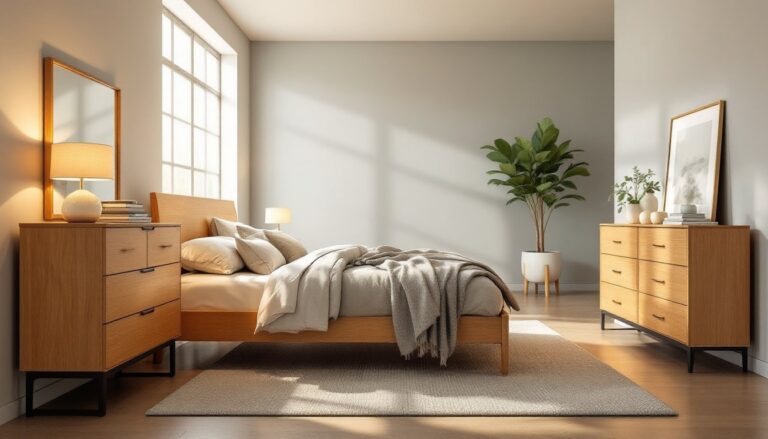
Modern bedroom furniture prioritizes form that follows function. You’re looking for pieces with intentional geometry, think straight lines, tapered legs, and purposeful angles, but without the cold severity of strict minimalism. Unlike mid-century modern (which emphasizes organic curves and retro materials) or contemporary design (which stays hyper-current), modern furniture is a steadier philosophy: it endures because it respects both beauty and practicality.
Key markers include open frameworks instead of skirted bases, visible wood grain or metal details, and a refusal to hide structural elements under decorative frills. A modern nightstand doesn’t pretend to be ornate: it celebrates its right angles and honest construction. Storage is built-in or deliberately displayed rather than concealed behind elaborate hardware. Color palettes lean neutral, whites, grays, warm taupes, deep charcoal, often accented with natural wood tones or matte black metal.
The philosophy also means proportionality and breathing room. Modern furniture pieces work best when there’s negative space around them: crowding a small bedroom with oversized modern furniture defeats the purpose. Scale matters. A platform bed frame without a footboard visually shrinks a bedroom because it reduces visual bulk, while a bed with a towering headboard can anchor a larger space without overwhelming it.
Essential Pieces for a Modern Bedroom
Beds and Frames
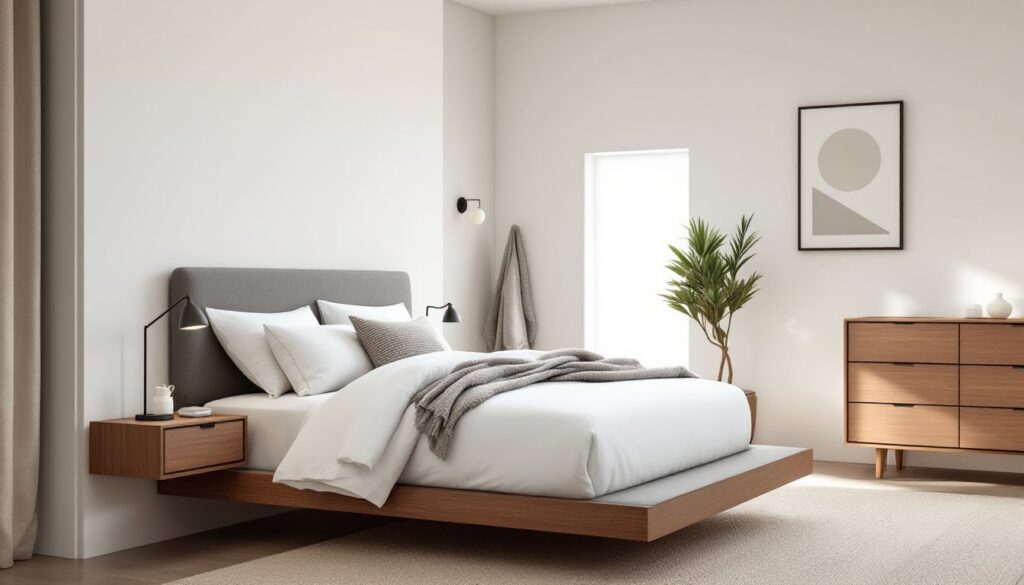
The bed is the foundation of any bedroom, and a modern frame sets the entire tone. Platform beds, whether low-profile or slightly elevated, are the workhorse of modern design. They eliminate the visual clutter of traditional box springs and bed skirts, exposing clean lines and often showcasing natural wood or upholstered panels. A solid wood platform bed with tapered legs (typically 4–6 inches of lift) gives you storage underneath while maintaining that uncluttered aesthetic.
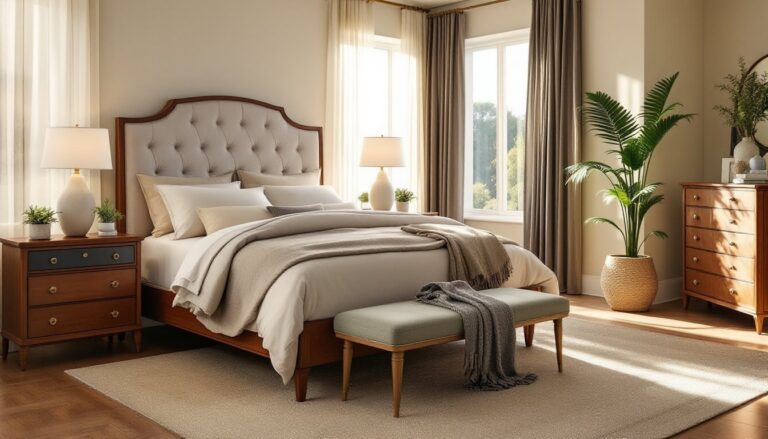
Upholstered headboards are a smart play, especially in neutral fabric like linen or performance fabric. They add softness to the hard geometry of modern frames and help with sound dampening. Aim for simple geometry, a square or rectangle, rather than ornate wingbacks. Solid wood headboards work too, though you’ll want consistent grain direction and matte or satin finishes to avoid looking too formal.
Headboard height matters more than most realize. A headboard that reaches about 48–54 inches above the mattress surface looks proportional without dominating. Go taller only if your ceiling is high (9+ feet) or you’re creating an intentional focal point.
Storage and Nightstands
Nightstands in modern bedrooms aren’t afterthoughts, they’re functional sculpture. Look for pieces with open shelving or drawers that sit flush (no ornate hardware sticking out to collect dust). A low nightstand (20–24 inches tall) paired with a bed that sits around 26–28 inches gives you ergonomic reach without awkwardness. Floating nightstands save floor space visually and are brilliant for small bedrooms, though they do require wall studs and proper installation.
Dressers and chest storage should echo the bed frame’s DNA: straight lines, proportional legs, and hardware-forward design (or no hardware at all if drawers slide on quality glides). Walnut or white oak veneer offers authentic wood grain at a more accessible price point than solid wood throughout. If budget allows, solid wood fronts with veneer sides are a smart compromise. Storage benches at the foot of the bed add function and visual weight, especially in larger rooms.
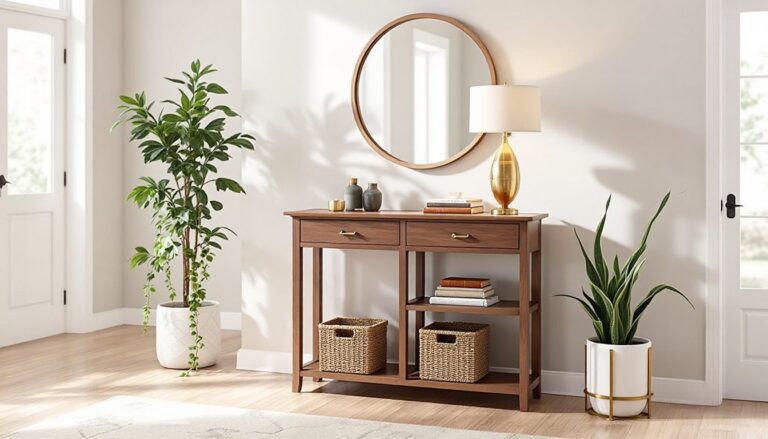
Built-in wardrobes or floor-to-ceiling shelving elevates any modern bedroom, though custom work requires hiring a carpenter. Ready-made modular systems (like those from modern entryway furniture brands) can create similar effect with less cost, though they demand meticulous installation.
Materials and Finishes That Elevate Modern Design
Material honesty matters in modern design. You’re choosing between authentic materials or convincing alternatives, and both are defensible as long as you know what you’re buying.
Solid hardwood (walnut, white oak, ash) is the gold standard for longevity and tactile satisfaction. These woods age beautifully and can be refinished if needed. The downside: cost. Walnut ranges from $1,200–$2,500+ for a quality platform bed frame, depending on size and finish. Plywood or engineered wood with veneer costs 40–60% less and looks nearly identical if the veneer is high-quality. The risk is edge-banding that peels or veneer that delaminates after a few years, so examine seams and edges closely before buying.
Metal accents, usually steel or aluminum in matte black, brushed nickel, or chrome, add definition and prevent all-wood bedrooms from feeling overly warm or rustic. Legs, bed frame rails, or shelving brackets in metal keep things visually grounded and modern.
Upholstered elements (headboards, storage benches) benefit from performance fabrics like microfiber, polypropylene blends, or specialty linens that resist staining and wear. Standard fabric may look better initially but shows wear faster in a bedroom that sees daily use. Budget 20–30% more for performance upholstery: it’s worth it.
Finishes should emphasize matte or satin surfaces. Glossy or high-gloss finishes feel dated in modern spaces and show fingerprints constantly. A matte lacquer on painted pieces or a satin urethane on wood maintains cleanliness and sophistication. Resources like Design Milk frequently showcase current finish trends and material choices worth studying.
Color Palettes and Styling Tips for Modern Bedrooms
Modern bedrooms thrive on restraint. A primary palette of 2–3 colors prevents visual chaos and keeps the space calming (important since you sleep there).
Neutral foundations are the entry point: whites, off-whites, light grays, warm taupes, or soft greiges for walls and larger furniture. These act as a canvas and prevent the room from feeling monotone even though the limited palette. Layer in secondary accents, one deeper tone like charcoal, deep navy, or warm terracotta, through an accent wall, upholstered headboard, or storage piece. This gives the room personality without clashing.
Wood tones function as a neutral too. Warm walnut and cool white oak read differently but both anchor a modern space. Mixing wood tones is fine, say, a walnut dresser with a white oak bed, as long as both are in the same saturation family (both warm or both cool).
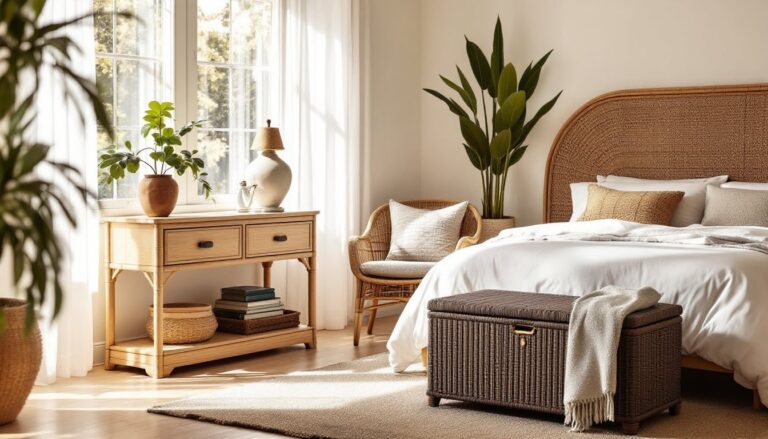
Textiles add softness without pattern: think linen sheets, a chunky knit throw, and a textured area rug in neutral fibers. If you want pattern, reserve it for one accent pillow or a single throw blanket, not everywhere. Patterns in modern bedrooms are typically geometric, abstract, or linear rather than florals or motifs.
Art and accessories should be minimal and intentional. Two framed pieces above the bed or a single statement mirror are stronger than a gallery wall. Bedside lighting, either task lamps with simple shades or wall sconces in matte metal, should be functional first, decorative second. Resources like Homedit offer curated galleries of real modern bedrooms that illustrate how restraint actually creates impact.
Scaling furniture to room size prevents modern spaces from feeling cold. A small bedroom with a queen bed, single nightstand, and lean dresser feels more intimate than an undersized twin frame and no storage. A larger bedroom can accommodate a statement headboard, a storage bench, and an accent chair without overcrowding. The modern philosophy works at any scale when proportions are respected.
Conclusion
Building a modern bedroom isn’t about buying the trendiest pieces or spending the most money, it’s about understanding principle and applying it consistently. Honest materials, intentional geometry, neutral color discipline, and proper scale create spaces that look polished without feeling sterile. Start with a quality bed and frame, add storage that’s both functional and visually clean, and let your material and color choices tie everything together. The result is a bedroom that feels current in 2026 and will remain quietly sophisticated for years to come.