Table of Contents
ToggleA firepit surrounded by comfortable seating transforms your backyard from an empty lot into a gathering spot where neighbors linger, kids roast marshmallows, and evening conversations stretch past sunset. Outdoor patio furniture with firepit integration isn’t just a trend, it’s a practical way to extend your living space and add real value to your home. Whether you’re working with a small urban patio or sprawling suburban yard, the right firepit furniture setup creates a focal point that draws people outside. This guide walks you through selecting materials, arranging layouts, styling your space, and keeping everything in shape year-round.
Key Takeaways
- Outdoor patio furniture with firepit creates a functional gathering space that extends your living area and increases home value by providing warmth, ambient light, and a natural focal point for your backyard.
- Choose firepit materials based on durability and maintenance: cast iron and powder-coated steel offer reliability, while aluminum, wood, and synthetic wicker seating each provide different aesthetic and comfort benefits.
- Arrange seating 18–24 inches from the firepit in a circular or arc formation, keeping the pit at least 10 feet from structures, with 4–6 chairs being ideal for most residential backyards.
- Match your firepit patio furniture style to your home’s aesthetic—whether rustic farmhouse, contemporary, or Mediterranean—and layer the design with rugs, side tables, lighting, and landscaping to enhance ambiance.
- Maintain your firepit and furniture with monthly cleaning, annual sealant application, proper off-season cushion storage, and prompt repairs to ensure durability and longevity across all seasons.
Why Firepit Patio Furniture Is a Game-Changer for Your Outdoor Space
Outdoor patio furniture with firepit functionality solves a common problem: homeowners often invest in seating but then struggle to create atmosphere and comfort after dark. A firepit changes that equation instantly. It provides warmth on cool nights, creates ambient light, and gives people a natural reason to gather in one spot rather than scatter across the yard.
Beyond the comfort factor, a dedicated firepit seating area increases your home’s usable square footage during spring, summer, and fall. Real estate agents recognize this value, outdoor living spaces consistently return strong ROI in home sales. The firepit becomes an anchor point for your landscape design, too. Everything else, plants, lighting, pathways, naturally orientates toward it.
From a practical standpoint, firepit furniture requires less maintenance than other outdoor upgrades like decks or pools. You’re not managing chemicals or structural integrity: you’re simply caring for weather-resistant materials. And safety-wise, a properly sized patio firepit set gives everyone adequate clearance and seating without overcrowding the space.
Choosing the Right Firepit Furniture Set for Your Backyard
Material Options: From Metal to Wicker
Your furniture material determines durability, upkeep, and comfort. Cast iron firepits are the industry standard, they handle extreme heat without warping and last decades with basic care. But, cast iron rusts if not sealed properly, so factor in regular maintenance (apply high-heat paint or oil seasonally).
Steel firepits (often powder-coated) cost less than cast iron and resist rust better out of the box. They’re lighter, which matters if you ever need to reposition the pit. Steel doesn’t handle extreme temperature swings as gracefully as cast iron, but it’s reliable for most residential use.
For seating surrounding your pit, you’ve got three main lanes: metal, wood, and synthetic wicker.
Metal furniture (aluminum or steel frames with sling fabric) withstands weather exceptionally well. Sling seats won’t absorb water, dry quickly, and resist fading better than cushions. Downside: they feel less cozy than upholstered options, and aluminum frames can get hot in direct sun.
Wood furniture (teak, cedar, or pressure-treated pine) delivers that natural, inviting aesthetic. Real wood stays cooler to the touch and feels premium. The trade-off: wood needs regular sealing or staining to fight rot and UV damage. Pressure-treated lumber requires less maintenance than cedar or teak, though it’s less visually striking.
Synthetic wicker (resin wicker over aluminum frames) offers a middle ground. It looks upscale, requires minimal maintenance, and resists weather better than natural wicker. Cushions add comfort but need storage or covers during off-season. Quality matters here, cheap wicker unravels: premium brands hold up for years.
Layout and Seating Configuration
Start by measuring your patio’s usable space. The firepit itself should sit at least 10 feet from structures (your house, fences, trees) to prevent heat damage and ensure safety. Most residential firepits occupy a circular footprint of 3–4 feet in diameter.
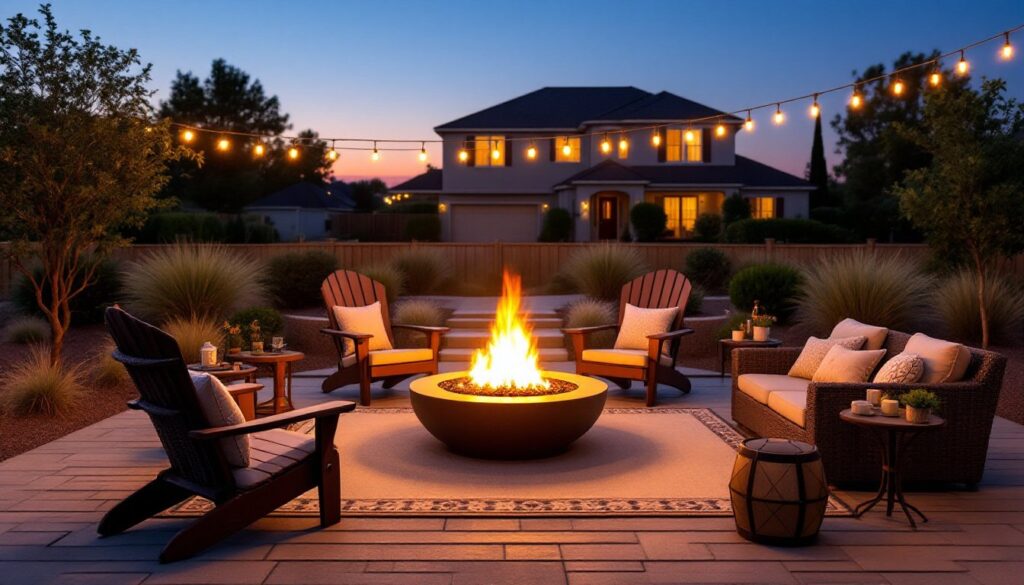
Arrange seating in a gentle arc or circle around the pit. This orientation lets people see each other while enjoying the fire. Aim for 18–24 inches between the edge of the firepit and the closest seat, close enough to feel warmth, far enough to be safe if sparks fly. If you have kids or pets, lean toward the wider distance.
For a typical backyard, 4–6 chairs work well. Smaller patios benefit from a 13 Big Ideas for Smaller Patios approach that maximizes seating without clutter, benches on two sides, individual chairs on others. Rectangular patios often work better with benches: circular or open yards suit lounge-style arrangements.
Design Styles and Arrangement Ideas
Your firepit furniture set should reflect your home’s existing aesthetic. A modern farmhouse needs different styling than Southwestern or contemporary minimalism.
Rustic or farmhouse style pairs well with natural wood chairs, metal firepits, and linen cushions in neutral tones. Think Adirondack chairs or wooden benches surrounding a black steel pit. This look suits suburban and rural properties and encourages a relaxed, unpretentious vibe.
Contemporary design leans toward sleek metal frames, minimalist lines, and monochromatic cushions. A matte-black or copper firepit becomes sculptural, less a heat source, more an art piece. Pair it with low-profile seating and simple landscaping.
Mediterranean or Moroccan influences bring warmth through terracotta, jewel tones, and ornate metalwork. Lanterns, low seating, and patterned textiles elevate the ambiance. This works beautifully in dry climates and pairs well with drought-resistant plants.
Regardless of style, layering matters. Add a fire-resistant outdoor rug under and around your seating area to define the space visually. Include side tables for drinks and s’more supplies, weather-resistant wood or metal works best. String lights overhead create continuity between the fire’s warmth and ambient lighting. Consider outdoor living design inspiration from landscape-focused resources to see how professional designers balance hardscape, plants, and furniture.
Plant placement affects your layout too. Low shrubs or ornamental grasses flanking the seating area soften hard edges without blocking sightlines or creating fire hazards. Keep vegetation at least 10 feet away from the firepit itself.
Maintenance Tips to Keep Your Firepit Furniture Lasting
Outdoor furniture endures UV exposure, rain, temperature swings, and temperature cycling that would destroy indoor pieces. A maintenance routine keeps your investment intact.
Firepit care: Clean ash from inside the pit after each use, accumulated ash traps moisture and promotes rust. Inspect the interior and grates seasonally for cracks or deterioration. If you have a steel pit, brush off rust spots with a wire brush and reapply high-heat paint if needed. Cast iron pits benefit from a light oil coating applied annually: avoid regular cooking oil, use food-grade mineral oil or specialized cast iron conditioner.
Furniture cleaning: Wipe down metal frames monthly with a soft cloth. For sling chairs, mild soap and water work fine: rinse thoroughly. Wooden pieces should be cleaned gently with a soft brush and dried immediately to prevent water stains. Once or twice yearly, apply exterior wood sealant or stain appropriate to your wood species. Wicker furniture needs occasional vacuuming to remove dust from tight weaves: spot-clean with mild soap as needed.
Cushion storage: Remove and store cushions when not in use, even outdoor-rated cushions degrade faster if left exposed year-round. Store them in a dry garage or shed, sealed in a breathable storage bag. Before putting them away, ensure they’re completely dry to prevent mildew.
Seasonal prep: In colder climates, drain and disconnect your firepit if it has gas lines before winter. Cover the pit with a weather-resistant cover (not airtight, it needs to breathe). Inspect furniture for damage, repair loose fasteners, and store or cover cushions as mentioned. In spring, do the reverse: inspect for winter damage, reapply sealant if needed, and check gas lines for leaks before relighting. Southern Living’s approach to seasonal outdoor care offers regional insights for homes in different climates.
Repair damage promptly. A small rust spot on metal, a loose cushion zipper, or a cracked wood slat won’t get better on its own, they’ll spread. Most hardware stores stock touch-up paints, fasteners, and sealants designed for outdoor use.
Conclusion
Building a firepit patio furniture setup doesn’t require a contractor or five-figure budget. Start with a quality firepit (cast iron or powder-coated steel), add comfortable seating in materials that suit your climate and style, arrange everything thoughtfully for safety and sightlines, and commit to basic seasonal maintenance. The result is an outdoor space your family will use year-round, a gathering place that adds genuine value to your home and quality to your daily life.