Table of Contents
ToggleImagine stepping into a living room that feels like a cozy cave but with a stylish twist. Primitive living rooms blend rustic charm with modern comfort, creating spaces that invite both relaxation and conversation. They’re not just for survivalists or hipster enthusiasts; they’re for anyone who craves a break from the cookie-cutter designs of today’s homes.
These spaces celebrate natural materials, earthy colors, and a touch of whimsy, making them perfect for those who appreciate the beauty of simplicity. Think wooden beams, stone accents, and a dash of vintage flair. It’s a design trend that’s as much about storytelling as it is about aesthetics. So, if you’re ready to trade in your sterile, beige walls for something that feels alive, let’s dive into the world of primitive living rooms and discover how they can transform your home into a sanctuary of rustic elegance.
Understanding Primitive Living Rooms
Primitive living rooms blend rustic charm with modern comfort, creating warm spaces ideal for relaxation and conversation. These areas focus on using natural materials, earthy colors, and vintage elements, allowing a departure from traditional home decor.
Definition and Characteristics
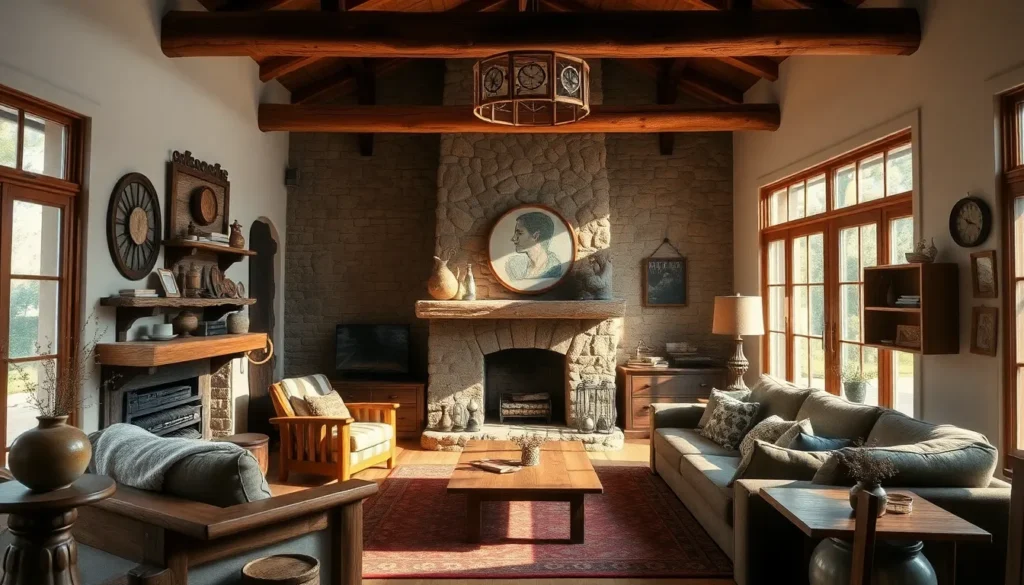
Primitive living rooms emphasize simplicity and authenticity. Key features often include exposed wooden beams, stone fireplaces, and handcrafted furniture. Natural textiles like wool and linen enhance tactile experiences. Open spaces contribute to a sense of freedom and connection with nature. An earthy color palette of browns, greens, and soft neutrals fosters warmth and serenity. Overall, these spaces reflect an appreciation for nature and craftsmanship, inviting a relaxed atmosphere.
Historical Context
Primitive living rooms trace roots back to early human settlements. Originally, these areas served as communal spaces for gathering and warmth. Early inhabitants used available materials, shaping the concept of comfort with creativity. Traditional designs inspired contemporary interpretations, merging past aesthetics with modern needs. Throughout history, functional elements like hearths represented security and nourishment. Understanding this evolution highlights a deep connection between environment and human experience, shaping modern interpretations of primitive living spaces.
Design Elements of Primitive Living Rooms
Primitive living rooms feature a blend of rustic charm and natural simplicity. These spaces focus on elements that create a warm and inviting atmosphere.
Natural Materials
Natural materials play a crucial role in primitive living rooms. Wood is commonly used for floors, beams, and furniture, providing a warm and organic feel. Stone accents often appear in fireplaces, creating a focal point that enhances the room’s rustic appeal. Textiles like wool and linen contribute to comfort and tie the space together. Antiques and vintage pieces add authenticity, showcasing craftsmanship and history. Incorporating these materials fosters a connection to nature, making the living space feel grounded and serene.
Color Palettes
Color palettes in primitive living rooms emphasize earthy, muted tones. Warm shades like browns, greens, and rusty reds create a cozy environment. Neutrals like beige and cream also provide a soothing backdrop, allowing natural materials to shine. Accent colors can include deep blues or warm oranges, which breathe life into the space without overwhelming it. The overall palette promotes harmony and tranquility, establishing a welcoming atmosphere that invites relaxation and conversation.
Furniture and Decor in Primitive Living Rooms
Primitive living rooms emphasize functionality alongside aesthetics. Seating options like oversized sofas and wooden chairs provide comfort while maintaining a rustic look. Tables made from reclaimed wood serve multiple purposes, including dining and gathering. An open layout encourages connection, making these spaces perfect for family interactions.
Functional Design
Functional design remains central in primitive living rooms. Multi-purpose furniture like ottomans and storage benches ensures practicality. Simplicity prevails with minimalistic decor that highlights essential elements. Natural light enhances the ambiance, so large windows or strategically placed mirrors support brightness. Textured rugs define areas without detracting from the room’s organic feel.
Handmade and Vintage Pieces
Handmade and vintage pieces play a significant role in defining primitive living rooms. Each handcrafted item speaks to the skill of artisans, adding unique character. Vintage accessories, such as antique lamps and rustic picture frames, create history within the space. Mixing contemporary and traditional elements allows for personal expression while embracing timeless charm. Earthy tones in pillows or throws complement furniture, reinforcing the overall aesthetic.
Creating Your Own Primitive Living Room
Creating a primitive living room combines rustic charm with modern comfort. Focus on natural materials and simplicity to craft a warm atmosphere.
Tips for Design
Consider using exposed wooden beams for structural impact. Incorporate stone fireplaces to enhance the cozy aesthetic. Choose handcrafted furniture that showcases artisan skill; each piece tells a story. Opt for earthy color palettes, including muted greens and browns, to promote tranquility. Enhance comfort through natural fabrics like wool and linen. Use oversized sofas to create inviting conversation areas. Add vintage accents to deepen authenticity and connect historical elements. Prioritize an open layout to facilitate family interactions and ensure spaciousness.
Sourcing Materials and Decor
Seek reclaimed wood for furniture and flooring choices, emphasizing sustainability. Visit local flea markets or antique shops for authentic vintage finds. Utilize artisans and crafters for unique, handmade decor items. Explore nature for inspiration; rocks, branches, and natural fibers can become decorative elements. Research eco-friendly sources to maintain an environmental consciousness. Identify stores that specialize in rustic home decor; many provide quality options aligned with primitive living principles. Combine various textures through pillows and throws to evoke a layered look.
Embracing the essence of primitive living rooms offers a unique opportunity to create spaces that resonate with warmth and authenticity. By integrating natural materials and vintage elements, individuals can cultivate an inviting atmosphere that encourages relaxation and connection. The blend of rustic charm with modern comfort not only enhances the aesthetic appeal but also fosters a deeper appreciation for craftsmanship and nature.
With thoughtful design choices and an emphasis on simplicity, anyone can transform their living area into a sanctuary that reflects personal style and values. This approach not only honors the historical roots of communal spaces but also invites a sense of tranquility into everyday life.