Table of Contents
ToggleSpending eight hours a day in the wrong office chair can wreck your back, tank your productivity, and leave you dreading your workspace every morning. Yet most people treat the office chair as an afterthought, a piece of furniture to fill the gap under their desk rather than an investment in comfort and health. Whether you’re setting up a home office for the first time or upgrading from that hand-me-down seat, choosing the right office chair makes a tangible difference in how you feel at the end of the day. This guide walks you through what separates a genuinely supportive chair from one that’ll have you wincing by 2 p.m., and how to match the right chair to your specific workspace and budget.
Key Takeaways
- A quality office chair directly impacts your back health, productivity, and focus—investing in proper seating prevents chronic pain and fatigue that accumulate over weeks and months.
- Essential office chair ergonomic features include adjustable lumbar support, proper seat height range (16–20 inches), adjustable armrests, and a waterfall seat edge to maintain your spine’s natural curves.
- Task chairs excel for 6–8 hour work blocks, executive chairs suit collaborative spaces, and gaming chairs offer style but often sacrifice true lumbar science—choose based on your actual workspace and workflow.
- The best value office chair typically costs $300–400 with adjustable lumbar support rather than budget racing chairs under $200 that deteriorate quickly under real use.
- Test office chair models in person for at least a full work week before committing, taking advantage of 30–60 day trial periods and sales during back-to-school and year-end clearance seasons.
- Prioritize adjustability, lumbar support, and seat height range over aesthetics or trendy features—the right chair should disappear into your routine and let you focus on work without discomfort.
Why Office Chair Quality Matters More Than You Think
A quality office chair isn’t a luxury, it’s a tool that directly impacts your work performance and long-term health. Poor seating forces your body into unnatural positions, compressing nerves and straining muscles. Over weeks and months, this creates chronic pain, fatigue, and reduced focus when you need it most.
Your spine has three natural curves that a good chair maintains. A cheap office chair flattens or exaggerates these curves, forcing you to compensate with your legs, shoulders, and neck. The result? By Friday, you’re sore. By next month, you’ve got a real problem.
Beyond pain, the right chair signals that your workspace, and your work, matters. When homeowners and remote workers invest in proper seating, they report better focus, fewer breaks for discomfort, and a measurable increase in work quality. That’s not psychology: it’s physics and ergonomics working together. Solid wood office furniture pairs well with a supportive chair to create a cohesive, functional workspace that actually supports your daily grind.
Understanding Office Chair Ergonomics and Design Types
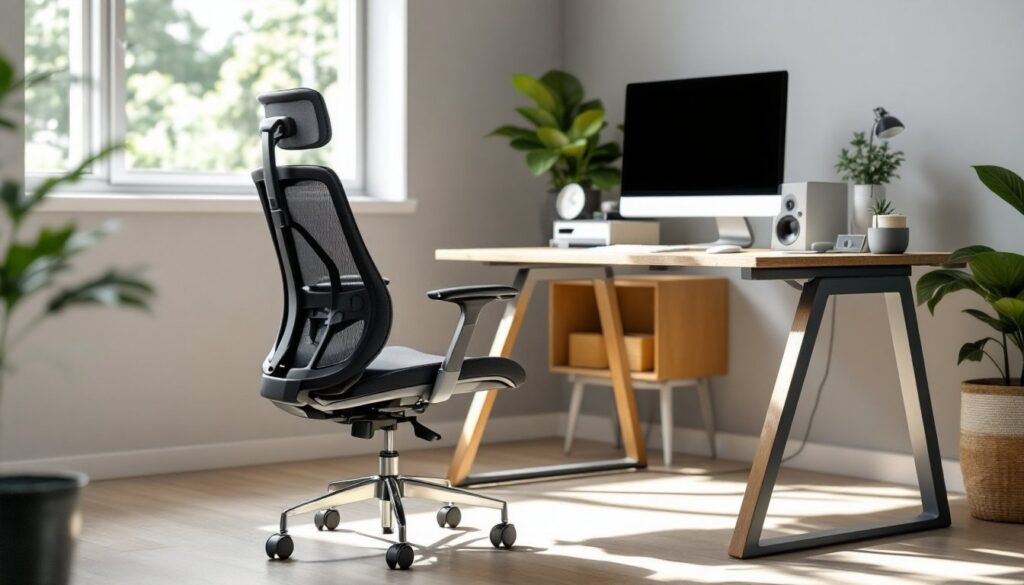
Ergonomic office chairs are built around your body’s needs, not the other way around. Key features include lumbar support (the lower back curve), adjustable seat height to keep your feet flat and knees at 90 degrees, armrests that let your shoulders relax, and tilt tension so you can recline without toppling backward.
Look for chairs with a waterfall seat edge, the front curves downward to avoid cutting off circulation to your legs. Mesh backing breathes better than leather if you’re sitting for extended stretches, while cushioned seats offer more comfort for shorter work blocks.
The base matters too. Five-wheel casters on a sturdy base provide stability and mobility. Pneumatic height adjustment (a gas cylinder) is the industry standard, it’s reliable and smooth.
Task Chairs vs. Executive vs. Gaming Chairs
Task chairs are purpose-built for 6–8 hours of work. They’re lighter, compact, and focus on adjustability over flash. No bells and whistles, just solid lumbar support and good height range. Perfect for small spaces.
Executive chairs are larger, often leather-upholstered, with more cushioning and armrests. They look authoritative and are comfortable for collaborative work or video calls, but they take up more room and can feel stuffy in a tight workspace.
Gaming chairs prioritize style and recline range. They’re fun and adjustable, but many sacrifice true lumbar science for marketing appeal. They work fine if you swap between intense focus and laid-back brainstorming, but they’re overkill if you just need to sit and write emails. Office furniture rental options let you test different types before committing to a permanent buy.
Key Features to Evaluate Before Buying
When you’re sitting in a demo chair (or looking at specs online), these non-negotiables matter most:
Seat Height Range: Your feet should rest flat on the floor or a footrest, with your thighs parallel to the ground. Most people need a range between 16 and 20 inches (measured from the base to the top of the seat cushion). Check the product specs, nominal height isn’t the same as actual range.
Lumbar Support: This is the deal-maker. Adjustable lumbar support lets you dial in the curve for your unique spine. Fixed lumbar support is cheaper but less forgiving if you’re not average-shaped.
Armrest Adjustability: Your arms should rest with elbows bent at roughly 90 degrees, shoulders relaxed. Adjustable armrests (height and width) beat fixed ones, especially if you alternate between typing and note-taking.
Material Durability: Mesh lasts longer than cloth in high-use environments. Leather looks sharp but requires maintenance. Budget fabrics pill and tear quickly, expect higher replacement costs over time.
Tilt Lock and Tension: You should be able to lock the backrest upright for focused work and adjust tilt tension so reclining doesn’t feel like collapsing. Test this in person if possible.
Weight Capacity: Check the manufacturer’s rating. Most quality chairs handle 250–300 pounds, but confirm before buying. Contemporary design magazines like Design Milk often review durability claims on trending furniture pieces.
Matching Your Office Chair to Your Home Workspace
Your ideal chair depends on your space, your workflow, and how many hours you actually spend sitting.
Small Rooms: A compact task chair with a smaller base footprint works better than a sprawling executive seat. You need to move around the chair without gymnastics. Mesh backing saves visual weight too.
Collaborative Spaces: If your home office doubles as a meeting spot or you take frequent video calls, an executive chair or a polished task chair with good aesthetics matters. Guests shouldn’t see a beat-up racing chair behind you on camera.
Long Work Days (7+ hours): Invest in adjustable lumbar support and premium cushioning. This isn’t where you skimp. You’re paying for comfort that compounds over months and years.
Short Bursts: A decent task chair with basic lumbar support handles 3–4 hour blocks fine. You don’t need the Cadillac version.
Aesthetic Match: Your office chair sets the tone for the room. Neutral blacks, grays, and blues blend with most decor. If you’re going bold, make sure the rest of your workspace can absorb the color, a bright red chair demands a thoughtful layout. Reception desk furniture and other workspace pieces should complement your chair’s visual weight. Home design resources like Homedit showcase how cohesive furniture choices elevate a whole space.
Budget-Friendly Tips for Finding Quality Office Chairs
You don’t need to spend $800 to get a solid chair. Here’s where smart shopping pays off:
Set a Baseline: Determine your actual needs. A $300–400 task chair with adjustable lumbar support beats a $200 racing chair that looks cool but crumbles under real use. Mid-range chairs often offer the best value-to-comfort ratio.
Buy During Sales: Office furniture goes on sale around back-to-school (August) and year-end clearance (December). Online retailers frequently discount previous-year models when new inventory arrives.
Check Return Policies: Many retailers offer 30–60 day trial periods. Buy it, sit in it for a full work week, then return it if it doesn’t fit. That’s worth more than any review.
Avoid Gimmicks: RGB lighting, wireless charging, and “ergonomic” claims with no adjustability are marketing, not engineering. Stick to basic, proven features.
Refurbished Options: Manufacturer refurbished chairs (not random used ones) often cost 20–30% less and come with warranties. Businesses upgrade frequently, so the secondary market is solid.
Test Before Committing: If possible, visit a showroom or a coworker’s space and actually sit in a few models. Five minutes of hands-on testing beats an hour of spec-reading. Rooms To Go chairs for living room collections sometimes include office seating that bridges home and work aesthetics, and you can see them in person. Luxury design sites like Elle Decor occasionally feature high-end office chairs that justify their price with materials and craftsmanship, knowing what premium looks like helps you spot genuine quality at mid-range prices.
Conclusion
Choosing an office chair is choosing how you spend your working hours. The right chair disappears, you forget you’re sitting and focus on work. The wrong chair nags at you all day. Prioritize adjustability, lumbar support, and seat height range above aesthetics or trendy features. Test before buying if you can, and give yourself permission to upgrade if the first choice doesn’t click. Your back will thank you, and your productivity will too.