Table of Contents
ToggleWrought iron patio furniture has been a steadfast choice for outdoor spaces for over a century, and it’s not hard to see why. Unlike lightweight aluminum or trendy resin wicker, wrought iron combines classical elegance with genuine staying power. Add quality cushions to the mix, and you’ve got seating that’s both comfortable and built to weather storms, literally. Whether you’re furnishing a small balcony or an expansive garden patio, wrought iron with cushions strikes that rare balance between investment-level durability and everyday livability. This guide walks you through what makes wrought iron worth your budget, how to pick cushions that won’t fail, and how to keep everything looking sharp for years.
Key Takeaways
- Wrought iron patio furniture with cushions lasts 15–25 years when properly maintained, far outlasting budget alternatives that fail within five years.
- Invest in high-quality cushion fabrics like Sunbrella (5–7 year lifespan) and foam rated 4–5 PCF to match the durability of your wrought iron frame.
- Wrought iron is restorers-friendly—chips and rust spots can be repaired with basic tools, touch-up paint, and elbow grease without professional help.
- Choose cushion thickness based on furniture type: 4 inches for dining chairs and 5–6 inches for lounge furniture to balance comfort and aesthetics.
- Seasonal cushion storage and twice-yearly finish inspections prevent rust and fabric degradation, keeping your wrought iron patio furniture looking sharp for decades.
- Pair wrought iron with solid, jewel-tone cushions or subtle patterns for a sophisticated look that complements the furniture’s classical elegance and ornamental design.
Why Wrought Iron Patio Furniture Is Worth the Investment
Wrought iron isn’t cheap, a quality four-piece set with chairs can run $800 to $2,500 depending on design complexity and metal thickness. So why consider it? First, the lifespan argument: a well-maintained wrought iron set can last 15 to 25 years, while budget outdoor furniture often fails in 5 years or less.
The metal itself is inherently strong. Wrought iron (not to be confused with cast iron, which is more brittle) is forged and shaped by hand or machine, creating dense, tough material that handles wind, weight, and temperature swings without cracking or warping. Unlike wood, it won’t splinter or rot. Unlike plastic, it won’t fade or become brittle in UV light.
Second, the aesthetic appeal holds up. Wrought iron’s ornamental curves, scrollwork, and finishes, whether powder-coated matte black, oil-rubbed bronze, or verdigris, age gracefully rather than looking dated. A 1950s wrought iron dining set looks as period-appropriate today as it did then. Compare that to mid-century wicker or colored resin furniture that screams its era.
Third, restorability matters. If the finish gets dinged or rust creeps in, you can sand, repaint, or refinish wrought iron yourself with basic tools and elbow grease. A broken joint can be re-welded. Try that with molded plastic. The garden design ideas featured on major design sites often spotlight wrought iron as a foundational investment piece precisely because it becomes a backdrop for rotating seasonal styling.
Choosing the Right Cushions for Your Wrought Iron Set
The moment you add cushions, comfort jumps, and so does maintenance responsibility. A $400 wrought iron chair without cushions will last 20 years. The same chair with $150 cushions that fail in year three defeats the point. Choose wisely.
Material and Weather Resistance
Not all outdoor cushion fabrics are created equal. Sunbrella and similar solution-dyed acrylic fabrics are industry standards for a reason: the dye is bonded inside the fiber, so fading happens slower and mildew resistance is built in. These fabrics typically cost $40 to $80 per cushion cover, but they’ll hold color and resist water for 5 to 7 years with basic care.
Polyester blends (often labeled as “outdoor” fabric) are cheaper, $15 to $40 per cushion, and water-resistant on the surface. But, they fade faster and can trap moisture between the cushion and the metal frame, leading to mildew growth and rot. If budget is tight, polyester can work if you remove and store cushions during wet seasons.
Foam density matters too. Cushion fill is graded by pounds per cubic foot (PCF). Cushions rated 2.5 to 3.5 PCF compress too easily and flatten within a year or two. 4 to 5 PCF foam holds shape and resists body impressions much longer. It’s worth paying extra. Matching fabric and core: a Sunbrella cover on 5 PCF foam will set you back $100 to $150 per cushion but will last eight-plus years. A bargain polyester cover on cheap foam? You’ll be shopping again in two years.
Comfort and Thickness Considerations
Cushion thickness ranges from 3 to 6 inches. Thicker isn’t always better, 4 inches is the sweet spot for dining chairs, offering support without looking cartoonish. For lounge furniture, 5 to 6 inches is appropriate.
If your wrought iron frames have a sculptural or ornamental seat (think classic scroll-back designs), measure the seat depth and width before ordering. A 20-inch-deep seat needs a different cushion profile than a 16-inch one. Loose cushions are easier to remove for cleaning but can shift: custom-fitted or strapped cushions stay put better but are harder to launder. Most DIYers prefer loose cushions for practicality, you can pull them off and hose them down or throw the covers in a washing machine on a gentle cycle.
Maintenance and Care Tips for Longevity
Wrought iron itself is low-maintenance compared to wood, but it’s not zero-maintenance. The finish, whether paint, powder coat, or oil, is your first line of defense against rust.
Inspection: Twice a year (spring and fall), look for chips, scratches, or exposed metal. Early spots are easy fixes: deep rust requires grinding and repainting. Pay special attention to welded joints and corners where moisture collects.
Cleaning: A soft brush and mild soap-and-water solution remove dust and pollen. For stubborn grime, a non-abrasive magic eraser works without damaging the finish. Avoid pressure washers, the force can push water into crevices and speed corrosion. Dry everything thoroughly, especially after rain or hosing down.
Touch-ups: Keep a small can of matching paint or touch-up pen handy. A $10 bottle of metal-specific primer and enamel stops a small chip from snowballing into rust. If a larger area needs attention, lightly sand the spot with 120-grit sandpaper, apply primer, then topcoat.
Cushion care: Bring cushions indoors during heavy rain, extended wet seasons, or winter in freeze-thaw climates. Even Sunbrella fabric will degrade faster if constantly saturated. Spot-clean spills immediately. At season’s end, store cushions in a dry, dark place (UV light fades fabric even off the furniture).
Rust treatment: If rust does appear, wire-brush the affected area, apply a rust converter (a chemical that stops rust progression), let it cure per product instructions, then paint over it. A garden design blog often recommends treating rust immediately rather than letting it spread, a philosophy that applies to furniture as much as garden structures.
Styling Your Outdoor Space With Wrought Iron Pieces
Wrought iron’s versatility is part of its charm. The same ornate bistro set works in a Mediterranean courtyard, a cottage garden, or a formal urban balcony. Cushions let you shift the mood.
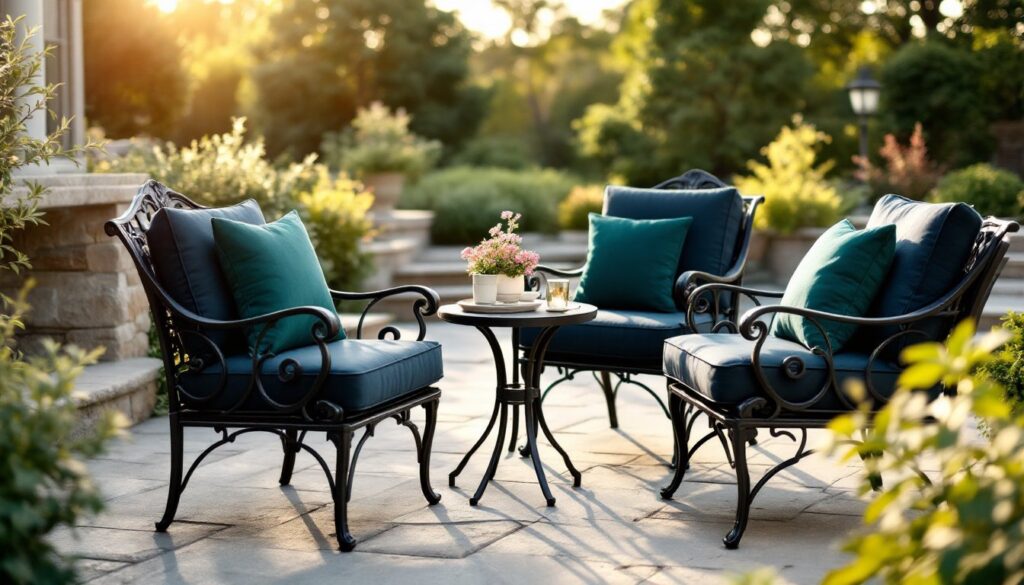
Color psychology applies outdoors too. Deep jewel-tone cushions (navy, forest green, burgundy) pair naturally with classic black or bronze wrought iron for a sophisticated, grounded look. Lighter neutrals (cream, taupe, soft gray) brighten a shaded patio and feel contemporary. Bold patterns or tropical prints work if the iron frame is simple: ornate scroll-work pairs better with solid or subtle geometric cushion prints.
Layout matters. Wrought iron chairs are often heavier than aluminum alternatives, so arrange them intentionally rather than scattering them. A conversation cluster around a small wrought iron side table feels cohesive. Adding a rug anchors the space, outdoor-rated jute or polypropylene rugs define zones and complement the permanence of iron furniture. Southern and western design traditions embrace wrought iron heavily: Southern Living and Sunset regularly showcase how wrought iron frames outdoor entertaining spaces from Charleston porches to California patios.
Scale your cushions to the piece. A massive wrought iron loveseat needs chunky 5-inch cushions: delicate bistro chairs look wrong with oversized padding. Mixing wrought iron with other materials, say, a stone or ceramic side table, or natural wood accents, prevents the space from feeling too heavy or museum-like.
Conclusion
Wrought iron patio furniture with quality cushions is a commitment, but it’s one that pays dividends over decades. The metal outlasts trends and weather: the cushions keep you comfortable and let you refresh the look seasonally. Pick durable fabrics, maintain the finish, and store soft goods offseason, and you’ll have a patio setup that works as hard as you do.