Table of Contents
ToggleBrown furniture has quietly become the backbone of sophisticated living room design. Unlike trendy colors that fade from favor, brown brings genuine warmth, versatility, and timeless appeal to any space. Whether you’re drawn to chocolate leather sofas, walnut wood tables, or warm taupe upholstery, brown living room furniture offers a foundation that works with nearly any decor style, from farmhouse to contemporary. This guide walks you through selecting, styling, and maintaining brown furniture pieces that anchor your space with both comfort and character.
Key Takeaways
- Brown living room furniture serves as a timeless, sophisticated anchor that works across design styles and hides wear better than lighter fabrics, making it ideal for active families and pet owners.
- Select quality brown sofas with hardwood frames and appropriate depth (30–32 inches), pair with walnut or dark oak coffee tables, and flank seating with side tables at eye level to create functional, balanced layouts.
- Style brown furniture with intentional color palettes—soft creams for calm spaces or jewel tones like emerald and sapphire for personality—and mix textiles (leather, wool, linen) to add visual depth and avoid a flat appearance.
- Maintain leather sofas with monthly dusting and annual conditioning while avoiding direct sunlight, vacuum upholstered pieces weekly, and use coasters and placemats on wood tables to prevent damage and extend furniture lifespan to 10–15+ years.
Why Brown Furniture Works for Modern Living Spaces
Brown isn’t bland, it’s a powerhouse neutral that absorbs light warmly rather than reflecting it like gray or white. This quality makes rooms feel instantly cozier without feeling dated. Brown pairs beautifully with jewel tones (emerald, sapphire), soft neutrals (cream, beige), and earthy accents (terracotta, olive). Because colors for living rooms impact mood and perceived space size, choosing brown as your anchor means you’re working with a hue that stays relevant across design cycles.
From a practical standpoint, brown hides wear better than lighter fabrics. Coffee spills, pet paw prints, and daily dust show less on brown upholstery than on gray or white, a real consideration in homes with active families or pets. Also, brown wood tones complement both warm and cool undertones in your home, making it easier to layer additional furnishings without visual conflict. When you step back and look at homes that still feel inviting five or ten years later, brown furniture is often doing the heavy lifting in the background.
Essential Brown Furniture Pieces for Your Living Room
Sofas and Sectionals
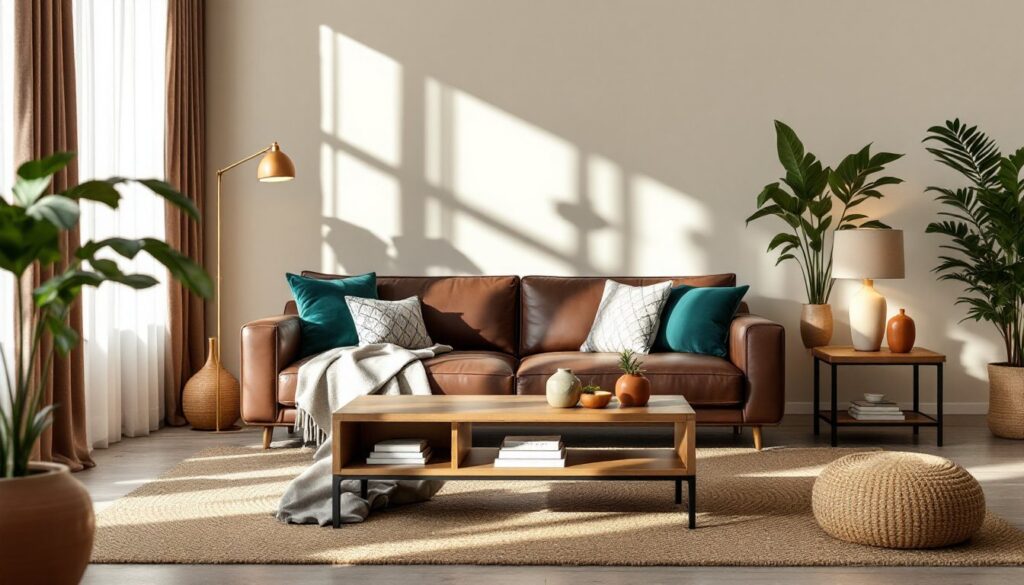
A brown sofa is your living room’s anchor. Choose genuine leather (easier to clean, ages beautifully) or quality upholstery (softer feel, more fabric options). For real longevity, look for hardwood frames, check the legs and structure to confirm, not just the marketing language. If you’re working with limited space, small living rooms with sectionals can maximize seating without the visual bulk of separate pieces.
Consider depth carefully. A 36-inch-deep sofa feels like a cave and eats floor space: 30–32 inches is more functional for average-sized rooms. If you plan to recline or nap, depth matters more. Match the sofa’s scale to your room, a massive sectional will overwhelm a 12-by-14-foot living room, while a love seat looks lost in a sprawling great room.
Coffee Tables and Side Tables
Walnut or dark oak coffee tables in brown tones ground the seating area and provide visual weight. A 36-to-48-inch table works for most living rooms (measure your floor space first to avoid overcrowding). Look for open shelving underneath rather than solid bases, this keeps the space feeling open and gives you functional storage.
Side tables matter more than people realize. A single brown wood end table flanking your sofa gives you a place to set drinks, lamps, and remotes without needing to stand. Pair tables should be similar in height (within 2 inches of your sofa arm) so lamps sit at eye level when seated. If budget is tight, farmhouse style living rooms often feature mismatched brown wood tables that look intentional rather than random.
Styling Brown Furniture: Color Palettes and Accent Combinations
Brown furniture thrives when paired with a intentional color strategy. Start with your sofa as the base, then build outward. A classic approach pairs brown with soft whites and creams, think cream throw pillows, an ivory area rug, and natural linen curtains. This keeps the room feeling spacious and calm.
For more personality, add one accent color. Deep jewel tones, forest green, navy, burgundy, contrast beautifully against brown without clashing. A single emerald velvet chair or sapphire patterned throw pillows break monotony while staying cohesive. Warm neutrals (caramel, honey, tan) in rugs and wall colors layer richness without visual chaos.
Textile variety matters as much as color. Pair your brown leather sofa with a wool throw, linen pillows, and a jute or natural fiber rug. This tactile mix prevents the room from feeling flat. According to interior design inspiration resources, mixing matte and subtle sheen (leather sofa, matte paint, glossy ceramic accents) creates depth modern rooms need. Avoid matching everything, intentional variation reads as curated rather than matchy.
Caring for Your Brown Furniture: Maintenance and Longevity Tips
Leather brown sofas need different care than upholstered pieces. Wipe leather monthly with a damp microfiber cloth to remove dust. Once or twice a year, condition leather with a quality leather conditioner (not furniture polish) to prevent cracking. Avoid direct sunlight, which fades and dries leather over time, use sheer curtains or UV-blocking window film if your living room gets afternoon light.
For upholstered brown furniture, vacuum weekly with an upholstery attachment to prevent dust from settling into fibers. Blot spills immediately with a clean, dry cloth (don’t rub). A fabric protectant spray (like Scotchgard) applied after purchase adds a stain-resistance layer. Test any cleaner on a hidden seam first, some fabrics require professional cleaning, especially natural fibers like linen or cotton.
Wood tables and frames need different attention. Dust monthly with a soft cloth, never paper towels. Use a wood-specific cleaner quarterly (not all-purpose spray, which can strip finish). Coasters under drinks and placemats under hot dishes prevent water rings and heat marks, prevention beats refinishing. If your brown wood shows scratches, wood filler matched to the stain shade is a quick fix: deeper damage requires professional refinishing.
Leather living rooms have become increasingly popular partly because leather maintenance is genuinely simpler than many realize. Store excess furniture in climate-controlled spaces (unfinished basements lead to warping), and rotate cushions quarterly to even out wear. With these habits, quality brown furniture lasts 10–15+ years.
Conclusion
Brown living room furniture isn’t a safe default, it’s a deliberate choice that brings warmth, sophistication, and genuine functionality to your space. By selecting solid pieces (quality frames, durable fabrics, genuine wood), pairing them with a cohesive color strategy, and maintaining them properly, you build a living room that improves with age rather than looking tired. Start with your sofa, anchor it with a good coffee table, and let the rest layer in gradually. Brown works because it’s patient, forgiving, and genuinely versatile.