Table of Contents
ToggleGray has quietly become the backbone of modern living room design, and for good reason. It’s neutral enough to play well with almost any accent color, durable enough to handle years of family life, and sophisticated enough to elevate a room without shouting for attention. Whether you’re starting from scratch or refreshing an existing space, gray furniture offers flexibility, longevity, and a professional polish that trends come and go but never quite outdates. This guide walks you through selecting, styling, and living with gray furniture in your home.
Key Takeaways
- Gray furniture works as a versatile design foundation because it bridges warm and cool tones, hides wear better than lighter colors, and complements nearly any accent color without becoming outdated.
- Selecting the right shade of gray furniture depends on your room’s lighting and existing finishes—light grays suit naturally lit spaces, charcoal anchors larger rooms, and greige offers a safe middle ground for most living rooms.
- Start your gray furniture strategy with a quality sofa as your anchor piece, then layer in affordable, swappable items like accent chairs, throw pillows, and ottomans that let you evolve your style over time.
- Gray furniture truly shines when styled with complementary colors, varied textures, and thoughtful accessories like metallics and wall art that add personality without overwhelming the neutral base.
- Proper lighting, including overhead fixtures and layered lamps, is essential to prevent gray-dominated rooms from feeling flat and to create visual warmth and depth.
Why Gray Furniture Works in Modern Living Rooms
Gray furniture has earned its place as a design workhorse, and it’s not by accident. The color sits at the intersection of cool and warm, meaning a charcoal sofa doesn’t feel cold, and a light gray sectional doesn’t disappear into white walls. Gray creates visual continuity, it bridges bold accent colors, balances darker woods, and anchors lighter elements without fighting for dominance.
From a practical standpoint, gray is forgiving. It hides dust better than white or black, shows less pet hair than deep navy, and photographs well in natural light. If you’re someone who likes to rearrange furniture or swap seasonal accents, gray provides a stable foundation that won’t clash with new throw pillows or artwork you introduce down the line. It also works across design aesthetics: minimalist, transitional, industrial, mid-century modern, and even traditional spaces all benefit from gray’s adaptability.
The trend isn’t going anywhere, either. Major design publications and retailers continue to feature gray as a cornerstone neutral, which means furniture availability, finish options, and quality levels remain strong.
Choosing the Right Shade of Gray for Your Space
Not all grays are created equal, and picking the wrong undertone can leave your room feeling muddy, cold, or off-balance. The key is understanding undertones, the subtle warm or cool cast beneath the gray surface, and how they interact with your existing lighting and finishes.
Light grays (often called greige when they lean warm) work best in spaces that get consistent natural light and where you want an airy, open feeling. They reflect light, making smaller rooms feel larger. Charcoal and darker grays anchor larger spaces and create drama, but they can make small rooms feel cramped if they’re the dominant color. Mid-tone grays are the safest middle ground: they work in most lighting conditions and pair well with both bold and soft accents.
Before committing, bring home paint samples or furniture swatches and observe them at different times of day. North-facing rooms tend to make grays look cooler: south and west-facing rooms warm them up. If your living room has warm-toned wood floors or cabinets, a greige (gray-beige blend) often feels more cohesive than a pure, cool gray.
Light Gray, Charcoal, and Greige: Understanding the Spectrum
Light gray furniture feels open and contemporary. It pairs well with bright whites, soft blues, and warm wood tones. The downside: it shows wear faster and demands more frequent vacuuming if you have pets or kids.
Charcoal gray is the sophisticate’s choice. It grounds a room, pairs beautifully with metallics and jewel tones, and conceals stains well. The risk is that it can feel heavy in smaller spaces or rooms without adequate lighting. Many designers use charcoal as an accent piece rather than the main sofa.
Greige splits the difference, it’s warm enough to feel inviting but gray enough to stay neutral. Colors for Living Rooms: explores how hue selection shapes the entire room’s feeling. If you’re uncertain, greige is often the safest bet for living rooms that need to feel both sophisticated and comfortable.
Essential Gray Furniture Pieces to Consider
Your gray furniture strategy depends on layout, household size, and how you use the space. Start with your anchor piece, typically the sofa, and build from there. A quality gray sofa becomes the investment: accent chairs, ottomans, and console tables are easier (and cheaper) to swap out if your style evolves.
When shopping, pay attention to fabric type. Linen is breathable and casual but shows wrinkles. Microfiber is durable, pet-friendly, and easy to clean but can feel synthetic. Leather or faux leather is the most durable and luxurious-feeling option but requires occasional conditioning. Blends (like linen-poly or wool-poly) often offer the best balance of durability, comfort, and appearance.
Consider scale and proportion too. A low-slung modern sofa in a traditional room with high ceilings can feel undersized, just as an oversized sectional will swallow a small living room. Most sofas are 84–90 inches wide: sectionals range from 6 to 12+ feet. Measure your space, account for traffic flow, and leave at least 18 inches between the sofa and coffee table.
Sofas, Sectionals, and Accent Chairs
A gray sofa is often the heart of a living room. Choose a fabric that matches your household’s activity level: high-traffic families benefit from performance fabrics or leather, while quieter homes can embrace linen or more delicate weaves.
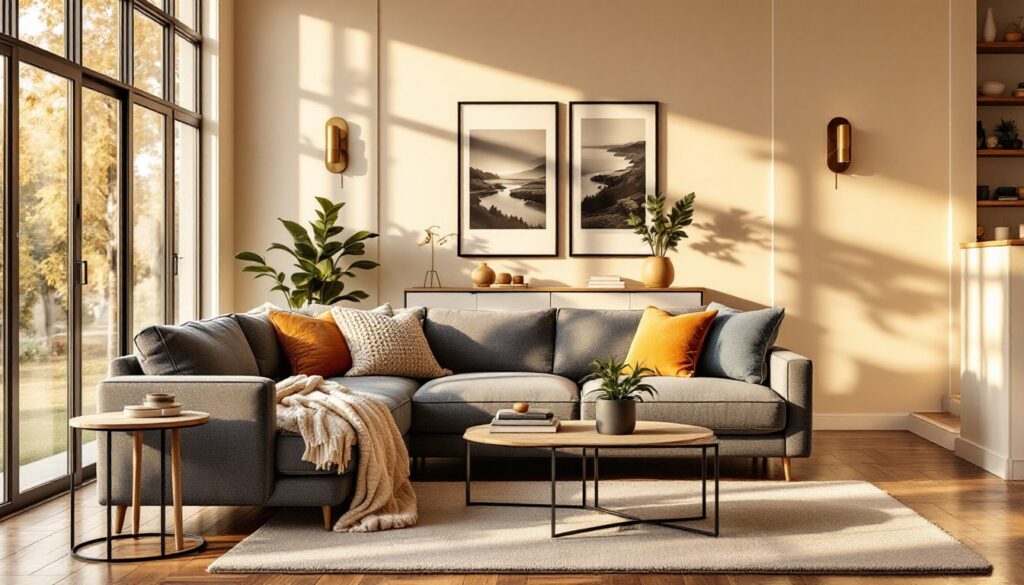
Sectionals are increasingly popular, especially in Small Living Rooms with layouts. A gray sectional provides more seating than a traditional sofa without feeling bulky, and the configuration is flexible, L-shaped, U-shaped, or modular pieces can be rearranged as your life changes.
Accent chairs add layering and flexibility. A single gray accent chair (or a pair) breaks up sofa monotony and creates conversation zones. Rooms To Go Chairs offers specific guidance on chair placement and pairing. If you want more personality, consider a chair in a contrasting fabric (a darker gray leather paired with a lighter gray linen sofa, for example) or add texture through a nubby weave or tufted detailing.
Styling and Decorating Around Gray Furniture
Gray furniture is a canvas, not a conversation starter on its own. The magic happens when you layer in color, texture, and personality.
Start with throw pillows and blankets. These are the cheapest way to refresh your look seasonally or when trends shift. Pair cool grays with warm gold accents and terracotta, or go full modern with charcoal gray and whites. Texture matters as much as color: a chunky knit throw, a faux fur pillow, and a smooth velvet cushion create visual interest even if they’re all in the same color family.
Wall color is your next-biggest decision. White or off-white walls let gray furniture shine and make the room feel expansive. Warm neutrals (creams, soft taupes) add coziness. Deeper wall colors, navy, forest green, or warm charcoal, create an enveloping, sophisticated atmosphere, but they require good natural or artificial lighting to avoid feeling dark. House Beautiful Living Rooms: frequently showcases bold color pairings with neutral furniture.
Flooring should complement, not compete. Light wood (oak, ash) feels fresh with light gray: dark wood (walnut, espresso) adds richness with charcoal gray. Rugs ground the furniture arrangement and soften acoustics, a 5×7 or 8×10 wool or high-quality synthetic rug typically anchors a seating area without overwhelming it.
Accessories seal the look. A gallery wall of black and white photography, a statement-making metal coffee table, potted plants, or a console table with decor items all personalize the space. Metallics, brushed gold, matte black, or polished chrome, bridge gray and other colors elegantly. Resources like Homedit and Design Milk regularly feature gray living rooms styled with unexpected color combinations and textures that show just how versatile the palette really is.
If you’re working with a Living Room Furniture Sets: Transform Your Space with Style approach (buying a coordinated sofa, loveseat, and chairs together), don’t let the set limit your styling. Break it up with contrasting accent pieces, mix fabric types, and remember that Living Rooms with Black and other monochromatic schemes prove that playing within a tight color range doesn’t have to feel boring if you vary texture and form.
Lighting ties everything together. Overhead fixtures cast even light, but table lamps and floor lamps create warmth and visual layers, especially important in rooms with gray as the dominant color. A dimmer switch gives you flexibility to shift the mood from energetic daytime gathering space to cozy evening retreat.
Conclusion
Gray furniture is a long-term investment that pays dividends in flexibility, durability, and timeless appeal. The key is selecting the right shade for your light and lifestyle, building your collection around a quality anchor piece, and then personalizing through color, texture, and thoughtful accessories. Whether you’re drawn to soft greige, sophisticated charcoal, or practical mid-tone gray, you’re choosing a foundation that grows with your home and your style. Start with what you love, trust your instincts, and don’t be afraid to experiment with layers and color.