Table of Contents
ToggleSmall living rooms demand smarter furniture choices. The best furniture for small living rooms isn’t just about fitting pieces into tight spaces, it’s about selecting pieces that work harder, look better, and actually improve how you use the room. Whether you’re furnishing an apartment, condo, or compact house, the right sofa, storage solutions, and seating can transform a cramped layout into a functional, inviting space. This guide walks you through the furniture decisions that matter most, from multi-functional pieces to strategic scale choices that keep everything from feeling cramped.
Key Takeaways
- Multi-functional furniture pieces like sofas with built-in storage, nesting tables, and storage ottomans are essential for maximizing space without sacrificing functionality in small living rooms.
- The best furniture for small living rooms should measure proportionally to your space—your sofa width shouldn’t exceed two-thirds of the wall it faces, and aim for depths under 36 inches to preserve walkway flow.
- Choose sofas with exposed legs, track arms, and light neutral colors to create visual openness, as these design elements help rooms feel larger and less cramped.
- Vertical storage solutions like wall-mounted shelving and tall media consoles use floor space efficiently, keeping clutter hidden while maintaining clear sightlines.
- Measure doorways, hallways, and traffic patterns before purchasing any furniture to avoid oversized pieces that don’t fit your layout and can’t be maneuvered into the room.
- Invest in quality frames and performance fabrics for durability, and layer seating with accent chairs and poufs instead of forcing a large sectional into a tight space.
Multi-Functional Furniture Pieces That Maximize Your Space
Multi-functional furniture is your secret weapon in small living rooms. These pieces do double duty, or triple duty, without eating up extra square footage. A sofa with built-in storage pulls double weight: it seats people and stashes blankets, remotes, or magazines underneath. Nesting tables stack when you don’t need them, then spread out when guests arrive. Storage ottomans become footrests, seating, and hidden storage in one compact footprint.
The real win with multi-functional pieces is that they don’t announce themselves as “space-savers.” Unlike some cramped furniture designed purely for tiny apartments, quality multi-functional items look and feel intentional. They become your room’s backbone.
Sofas With Built-In Storage And Modular Options
A sofa is typically the largest piece in a living room, so choosing one with storage under the seat cushions or within the frame is smart math. Look for sofas with lift-up cushions or pull-out drawers: these hide clutter while keeping the visual footprint clean. When selecting a sofa for compact spaces, aim for a model in the 70–80 inch range, wide enough for two people but not so sprawling it dominates the room.
Modular sofas deserve special attention. These sectional-style pieces let you arrange them to fit your layout exactly. Need an L-shape in one corner? Rearrange the modules. Want a straight line along a wall? Swap the configuration. This flexibility means a single modular set works through multiple furniture arrangements, making it far more practical than buying a fixed sectional that might become a permanent obstacle.
When evaluating sofas, look at the depth (how far it extends from arm to arm) and the cushion firmness. A sofa deeper than 36 inches can feel like a bed, leaving less walkway space. Modular options with adjustable seats, like those featuring hardwood frames and sintered stone legs, handle small room traffic patterns well because they’re designed for flexibility.
Coffee Tables And Nesting Tables For Flexible Layouts
A traditional coffee table is a footprint hog. Nesting tables solve this by stacking into a single compact unit. Pull out one or two when you need surface space for a drink or remote, then collapse them back together when you need the floor clear. Glass or light wood tops also help because they feel less heavy visually, which matters in tight quarters.
Consider the height and leg design: a table with exposed legs (versus a solid base) looks airier. Go for tables in the 18–24 inch height range to keep sight lines open. Some homeowners pair a small round nesting table with a low media console to create more surface variety without clutter.
When shopping for coffee tables online or in stores, measure your sofa height and subtract about 10–12 inches, that’s your ideal table height. A table that’s too tall or too short kills the visual balance.
Choosing The Right Sofa For A Compact Living Room
Your sofa choice shapes everything else in a small living room. Start by measuring your space and your doorways. A gorgeous sectional means nothing if you can’t get it through the door, this is surprisingly common and easy to overlook. Check the door width, hallway width, and stair dimensions before ordering.
Next, consider how you actually live. If you work from home, a sofa that doubles as a lounging spot matters more than one built for formal entertaining. If guests rarely stay long, a loveseat or apartment-scale sofa (around 60–72 inches) works better than a full sectional. Prioritize what the room needs to support.
Color and fabric play a big role too. Light, neutral tones like gray, beige, or off-white make a sofa recede visually, opening up the room. Darker colors anchor the space but can make it feel smaller. For durability in high-traffic small spaces, performance fabrics (synthetic materials engineered to resist stains) often outlast natural linen or cotton, which matters if the sofa sits near a kitchen or gets heavy use.
Arm style also affects how compact a sofa feels. Track arms (narrow and tucked in) take less visual space than rolled or pillow arms. A sofa with track arms and a low profile typically looks more streamlined in a small room. Feet height matters too, sofas on legs create visual breathing room underneath, while skirted bases feel more closed off.
Smart Storage Solutions That Keep Clutter Out Of Sight
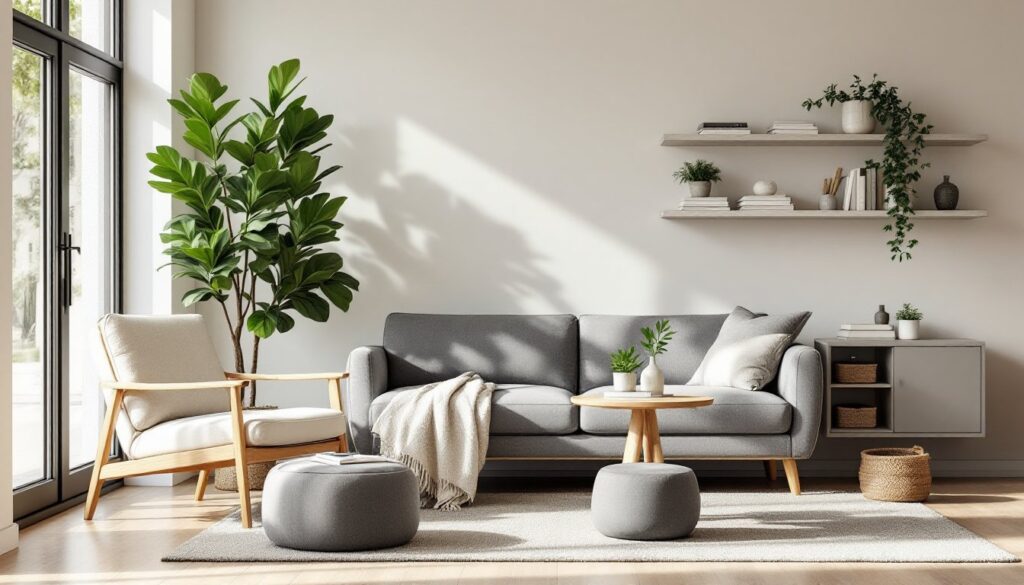
Storage is the unsung hero of small living rooms. Without dedicated places to stash items, even a tidy space feels crowded. Wall-mounted shelving works magic because it uses vertical space instead of eating floor area. Install shelves above a console table, beside a window, or along a blank wall to display books, plants, or decor while keeping surfaces clear.
Storage benches (or storage ottomans) are practical furniture pieces that double as seating, footrests, or extra beds for overnight guests. Choose one with a lift-top and look for dimensions around 36–48 inches long and 16–18 inches tall. They fit snugly at the foot of a sofa or against a wall without blocking sightlines.
Media consoles with closed storage compartments hide remotes, cables, and entertainment clutter. Look for units with a mix of open shelves (for visual interest) and closed cabinets (for concealed storage). Vertical media consoles (taller and narrower) work better in small rooms than sprawling horizontal ones. Wall-mounted TV systems also free up precious floor space compared to furniture-based stands.
Wire or woven baskets are inexpensive storage that look intentional, not utilitarian. Tuck one under a console, beside a chair, or on a lower shelf to collect blankets, magazines, or toys. The key is choosing baskets in colors that complement your room, they shouldn’t feel like afterthoughts.
Seating Options Beyond The Sofa: Chairs And Ottomans
A sofa alone doesn’t have to be your only seating. Small chairs or accent chairs add flexibility. Look for single-seat styles in the 24–28 inch width range, narrow enough to tuck into a corner without sprawling. Armchairs with exposed wood legs feel lighter than fully upholstered styles and work well as a secondary seat.
Pouf ottomans (circular, low-profile stuffed seats) are versatile additions. They roll easily, serve as footrests, double as occasional seating when guests arrive, and some even hide storage inside. A 20–24 inch diameter pouf fits easily into corner spaces or beside a chair.
While Rooms To Go Chairs and other big-box retailers offer affordable options, focus on frame quality over price. A chair with a hardwood frame and decent padding will outlast a cheap alternative that starts sagging after two years. If budget is tight, thrift or secondhand chairs can offer good bones at lower cost, just replace the cushions if needed.
Wall-mounted shelving with a small side table creates a reading nook without needing traditional furniture. Pair it with a compact accent chair, and you’ve added a functional zone without eating floor space. The goal is layering seating, not filling the room with it.
How Scale And Proportions Affect Small Room Design
Scale is the difference between a furnished room and an overstuffed box. In small spaces, choosing furniture sized to the room’s dimensions, not your ideal furniture, makes all the difference. A sofa that’s right for a 20×14 room will feel enormous in a 12×12 space. When evaluating furniture measurements, work backward from your room dimensions.
As a rough guide, your sofa shouldn’t be wider than two-thirds of the wall it faces. If your wall is 12 feet, your sofa should be around 75–84 inches, leaving breathing room on either side. Taller furniture (bookcases, shelves) can work if it draws the eye upward, making the room feel spacious. Low, sprawling pieces do the opposite, they flatten the space.
Keep colors for living rooms light and simple. Light walls and light furniture make a room feel bigger. If you want a bold accent color, apply it through smaller moveable pieces (pillows, throws, a rug) rather than a large upholstered sofa. This keeps the visual “weight” from crushing the space.
Furniture legs versus skirted bases matter too. Sofas and chairs with exposed legs create a sense of openness because you can see the floor underneath. Skirted or fully upholstered bases block that sightline and make furniture feel heavier. In small rooms, go for exposed legs whenever possible. Finally, consider the small living rooms with sectionals approach only if your layout genuinely supports an L-shape without blocking traffic flow. When in doubt, a smaller straight sofa plus a pouf or small chair offers more flexibility.