Table of Contents
ToggleMoving into your first apartment is a milestone, but the blank walls and empty rooms can feel daunting, especially when you’re watching your budget. The good news: you don’t need a designer’s budget or a showroom-full of furniture to create a functional, livable space. This guide walks you through selecting furniture for a new apartment by prioritizing essentials first, then layering in pieces that match your lifestyle and wallet. Whether you’re furnishing from scratch or upgrading what you’ve got, smart choices now mean fewer costly replacements later.
Key Takeaways
- Start with essential furniture for your first apartment—a quality bed, nightstand, sofa, and coffee table—then add extra pieces only after you’ve lived in the space and understand your needs.
- Choose durable, affordable furniture by shopping mid-range retailers, reading honest reviews, and looking for solid wood frames and quality spring systems rather than cheap particle board alternatives.
- Measure doorways, hallways, and room dimensions before buying any furniture to avoid costly mistakes like sofas that won’t fit up staircases or pieces that overwhelm small spaces.
- Select materials and finishes that stand the test of time: solid hardwood, performance fabrics, and satin or semi-gloss finishes hold up better than cheaper alternatives and reduce the need for replacements.
- Maximize small apartments by choosing multipurpose furniture like beds with drawers, ottomans with storage, and wall-mounted shelving instead of filling every corner with single-function pieces.
- Leave negative space in your rooms and avoid the temptation to furnish everything at once—a thoughtful, modest first apartment filled intentionally beats a crowded space packed with unnecessary items.
Start With The Essentials
Before you fall in love with that trendy accent chair or mid-century media console, nail down what actually matters. A functioning bedroom means a bed frame (with a decent mattress), a nightstand for a lamp and phone, and enough floor space to move around. Your kitchen needs basics: maybe a small table or counter seating if your layout allows it. The living room is where things get flexible, but you’ll want at least a sofa and somewhere to set a coffee cup.
Honestly, the temptation to fill every corner right away is real. Resist it. Start lean. You can add a bookshelf, wall art, or extra seating later once you’ve lived in the space and understand the traffic flow. Many first-apartment dwellers buy furniture they don’t need and spend months squeezing around them. Think of essentials as the foundation: everything else is negotiable.
One more thing: measure your doorways, hallways, and rooms before you buy anything. A sofa that looks reasonable online becomes a nightmare when it won’t fit up the stairwell. Jot down ceiling height, window placement, and any quirky architectural features. These details shape what’ll work, not just aesthetically but practically.
Choosing Durable, Affordable Pieces
Your budget is real. The trick is spending smart now so you’re not replacing wobbly shelving or a sagging sofa in two years. Mid-range retailers often nail the sweet spot, better construction than the cheapest options, less markup than high-end boutiques. Look for solid wood frames, not particle board that swells if it ever gets damp. Upholstered pieces should use eight-way hand-tied springs or quality sinuous springs, not just foam over a sheet of plywood.
When you’re comparing options, read reviews from people who’ve actually lived with the product for months, not days. Ignore the “gorgeous” five-star reviews: hunt for the realistic ones that mention durability and how the piece held up. A bed frame from a trusted source might cost $300 instead of $100, but if it’s still solid in five years, you’ve won.
Here’s a pro tip: scratch-and-dent sections, floor models, and returns are goldmines. Many retailers offer these at 20–40% off. Sure, that dining table might have a tiny scuff on the leg, buffing compound or stain usually fixes it. You’re paying for function, not flawless packaging.
Materials That Stand The Test Of Time
Solid hardwood, oak, maple, or birch, ages well and can be refinished. It’s heavier, costs more upfront, but it lasts. Plywood with veneer is okay if the veneer is thick and glued properly: thin veneer peels. Avoid MDF and particleboard for structural pieces.
For upholstery, natural fibers like linen and cotton breathe better than synthetics, though they stain easier. A performance fabric (synthetic blend designed for durability) works well in a first apartment where life’s messy. Leather develops character but requires occasional conditioning. Metal frames (steel or aluminum) don’t warp, which is why metal bed frames often outlive wood ones.
Paint and finish matter too. A matte finish hides dust but scratches show: a satin or semi-gloss finish is tougher. Ask what’s under the finish, some pieces are sealed, others aren’t, affecting how easily they clean up after spills.
Bedroom Furniture Setup For Beginners
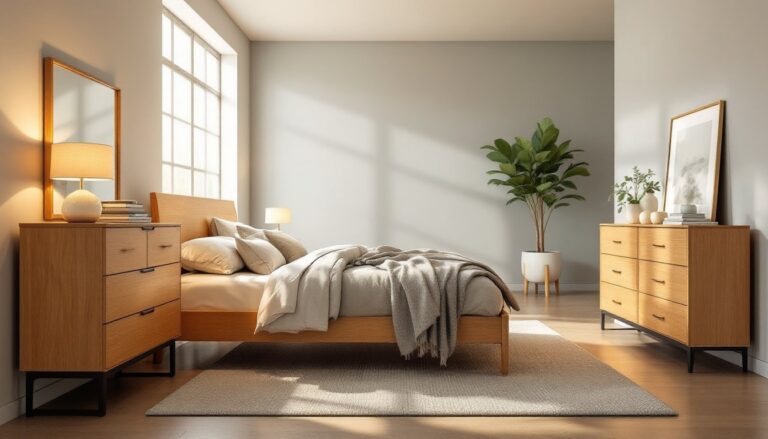
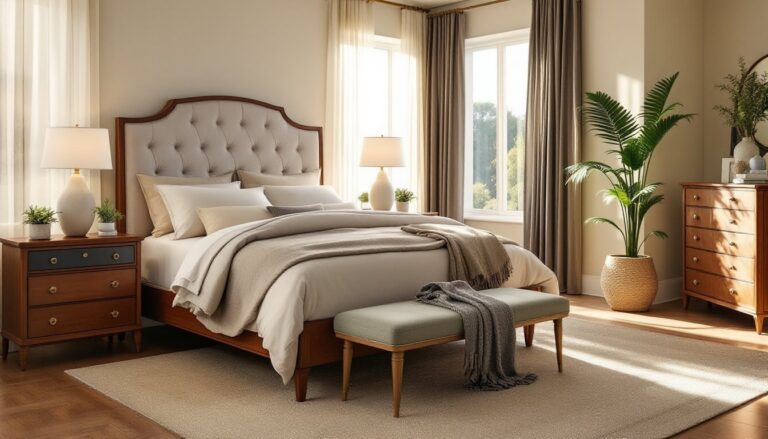
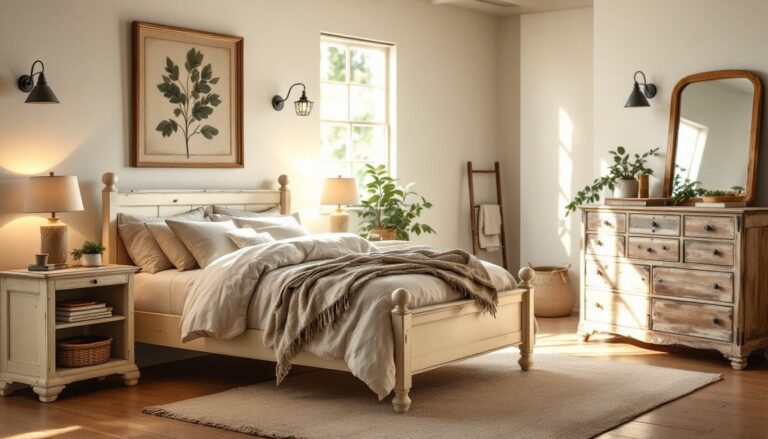
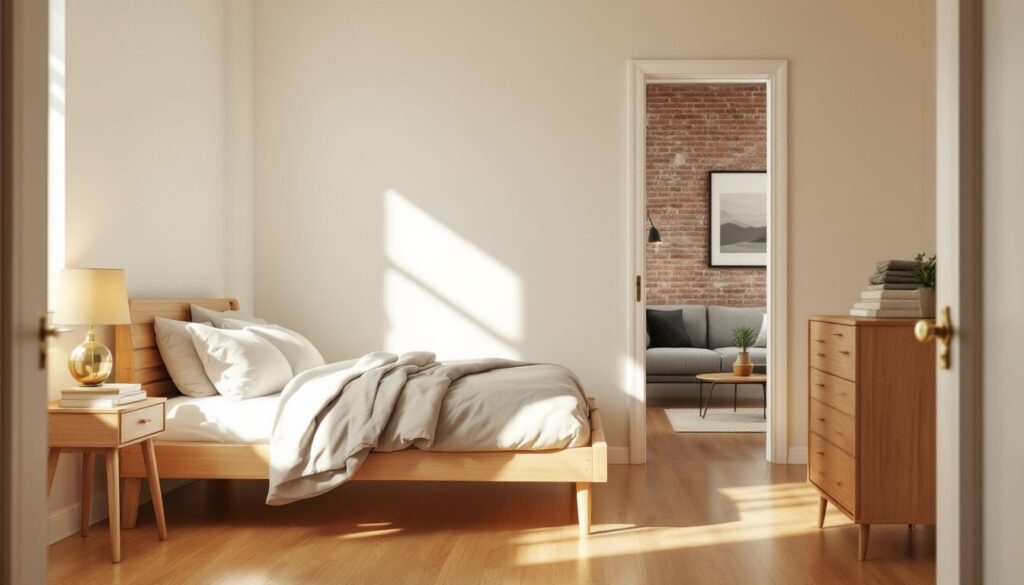
Your bedroom’s job is simple: sleep well and get dressed. That’s it. A bed is non-negotiable: don’t cheap out here because you spend eight hours in it. A queen-size bed is the sweet spot for most adults, a full-size is tighter, a king eats floor space. The frame matters as much as the mattress. Look for a frame with solid support (slats or a platform deck), not just four legs and a squeaky box spring.
A single nightstand is the bare minimum. One with a drawer handles phone chargers, glasses, and the book you’re reading. If your room’s generous, a second nightstand balances the look and gives your partner somewhere to dump stuff. A small dresser or wardrobe handles clothes without needing a walk-in. If your apartment’s closet is tiny (and many are), a tall narrow dresser or an open clothing rack can supplement storage.
Skip the bedroom TV for now. Seriously. Bedrooms are better for sleep when screens stay out. If you absolutely need one, a small 24–27 inch monitor on an arm mount takes less space than a stand. Keep the bedroom cool, dark, and calm. A bedside lamp beats overhead lighting for reading or late-night bathroom trips.
One pro move: a low platform bed or bed frame under 12 inches tall makes a small room feel bigger. High frames waste dead space underneath where you’ll just stack things anyway.
Living Room Layout And Must-Have Items
The living room is your social hub and your decompression zone. Start with a sofa, your only real must-have. A 72–80 inch sofa fits most apartments without overwhelming the room. If your space is tiny, a loveseat or apartment-scale sectional (under 85 inches) works. Skip extra chairs unless you have floor space and actually entertain regularly: they’re the first thing people squeeze past.
A coffee table is next. Keep it proportional to your seating: a 36–48 inch table works with a standard sofa. Wood or metal legs feel lighter than a solid block: glass tops multiply the sense of space in a small room. Make sure it’s sturdy, wobbly tables are hazards and eyesores.
Television mounting is your call. A wall mount saves floor space: a low console lets you hide media boxes. If you rent, a console might be smarter because you won’t drill into walls. A media console 48–60 inches wide holds a TV, a streaming device, and a few books without eating the whole room.
Lighting matters more than people think. Overhead fixtures cast harsh shadows: a floor lamp behind the sofa or in a corner softens the space. Living Room Furniture Sets: Transform your layout with intentional placement, the sofa faces the TV or windows, secondary seating angles toward the sofa. Natural traffic flow (the path from the door to the kitchen) shouldn’t force people over the coffee table.
Don’t fill every corner. Negative space makes a room breathable. One accent wall, a plant, or a print adds personality without clutter.
Storage Solutions To Maximize Small Spaces
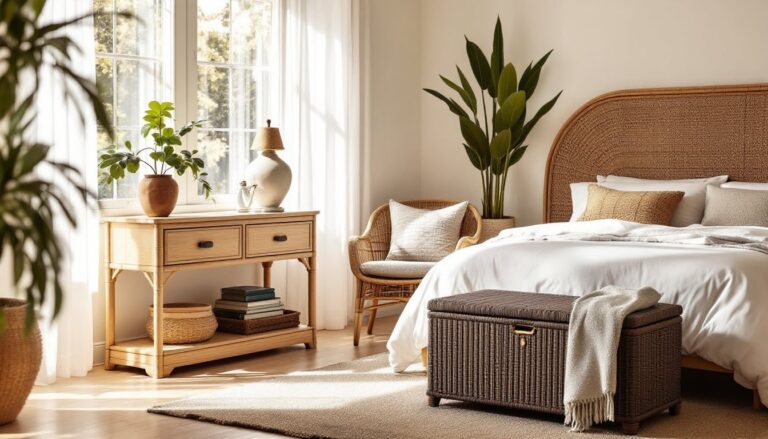
First apartments are rarely spacious. Every piece of furniture is an opportunity to store stuff, so choose strategically. Ottomans with hidden storage do double duty: footrest and stash spot. A bed with drawers underneath ($200–400) replaces a dresser. Wall-mounted shelving (floating shelves or a simple bookcase) goes vertical when floor space is gold.
Kitchen storage is tight, so open shelving or slim pantry cabinets help. A rolling cart (24–30 inches wide) squeezes between appliances or into a corner, holding spices, oils, or coffee gear. Bedroom closets need help: slim hanging organizers, shelf dividers, and stackable bins make every inch count. How you organize is as important as what you buy.
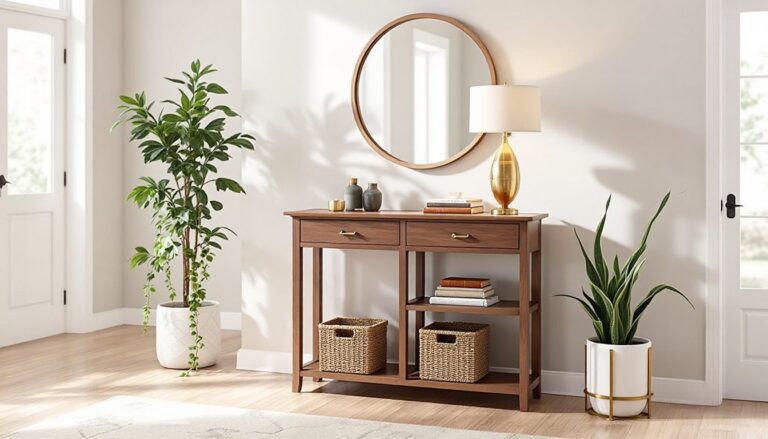
Dining options vary with space. A small bistro table (24–36 inches) serves double duty, meal prep and laptop work. A bar-height console table against a wall mimics a dining setup without dominating the room. Bench seating tucks under and stacks better than chairs. Modern Entryway Furniture: Transform your entry with a narrow console and hooks, a catch-all for keys and bags.
Sourced from Apartment Therapy, small-space dwellers often swear by multipurpose pieces: a bench with storage, a sofa with a chaise that converts, nesting tables that expand as needed. The fewer single-function items you own, the less cluttered your space feels.
Measurements matter here. Furniture Measurements: A Comprehensive guide helps you nail dimensions before you buy. A shelf that looks roomy online can feel cramped when it’s full of real items. Leave 20% of space empty so things don’t look suffocating.
Conclusion
Furnishing a first apartment doesn’t require spending thousands or settling for flimsy particleboard. Prioritize essentials, choose durable materials within your budget, and measure before you commit. Inspiration from sources like Young House Love and Homedit shows what’s possible, but your space is unique. Build slowly, live in your rooms first, and add pieces that solve real problems, not Pinterest dreams. A thoughtful, modest first apartment beats a crowded one every time.